
Albion
Streaming build
Checking storage…330 MB
Preload in background
JIT compiler
Rate this game
- Played
- All the time
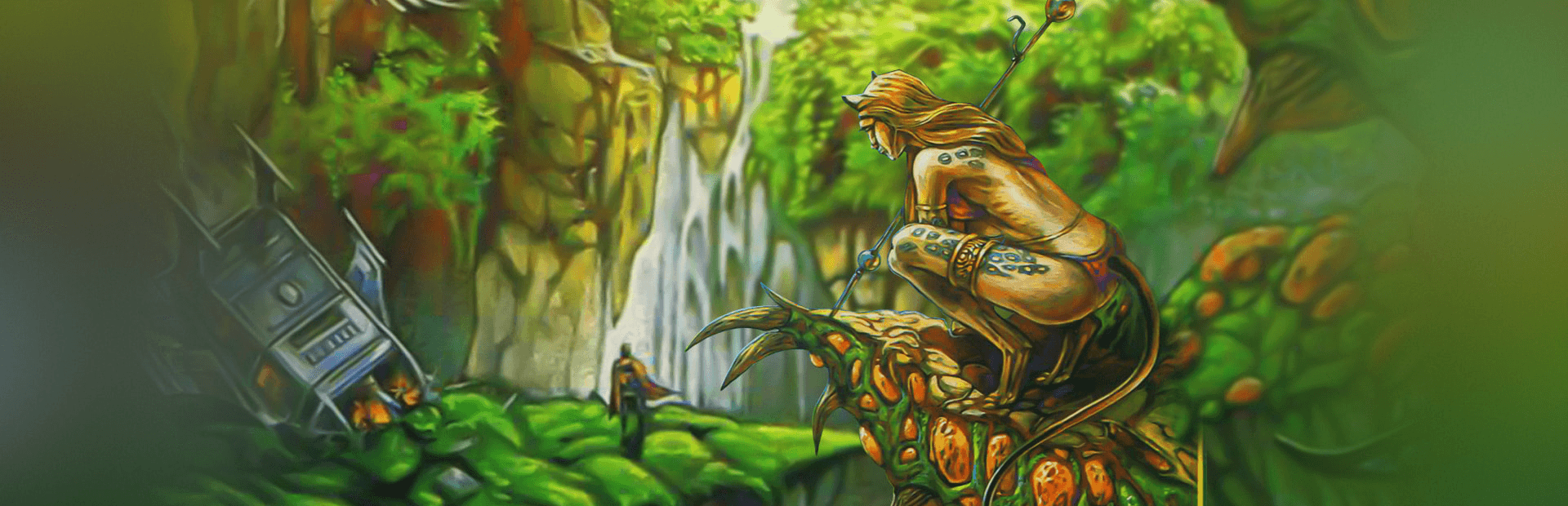
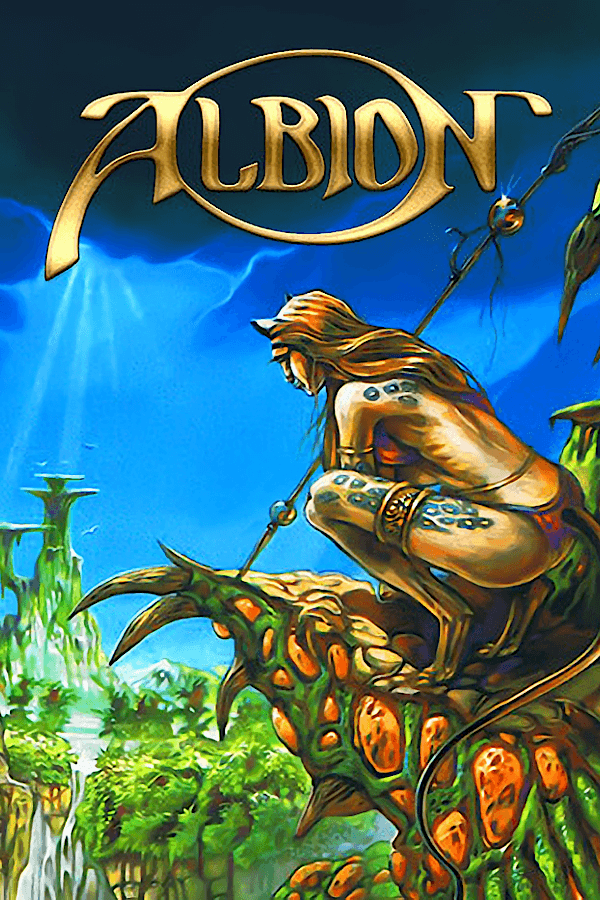
When you crash land in Albion as space pilot Tom Driscoll, you quickly realize your employer's desert survey was wrong: the planet is full of dense foliage, sentient feline humanoids, and ancient Celtic magic.
Crash landing into two perspectives at once
You start aboard the Toronto, a massive corporate mining vessel heading toward what should be a dead world. Within twenty minutes, Driscoll and xenobiologist Rainer Hofstedt drop to the surface in a shuttle, system failure hits, and you wake up on grass under a foreign sky. That transition sets up the entire conflict, as you realize your company is about to strip-mine a living biosphere full of native cultures who worship the earth beneath their feet.
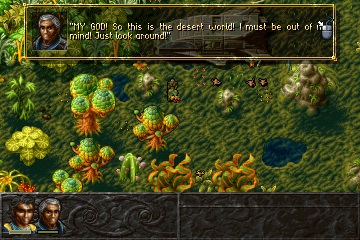
Exploration bounces between two distinct graphical systems. Overworld travel and interior buildings use a top-down two-dimensional view that feels like Ultima VII, where you click terrain to navigate and rifle through chests. Step inside a major city or dungeon, however, and the engine shifts into a full first-person view with scaling wall sprites and raycasted corridors.
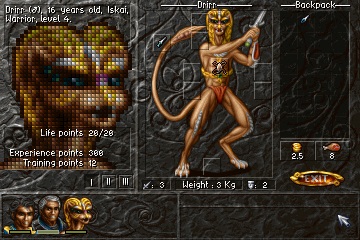
That perspective switch gives dungeon runs an immediate sense of scale, but it also creates real physical frustration. The pseudo-3D engine uses coarse sprite-scaling, meaning narrow hallways turn into blocky patterns that can give you a headache during long maze sequences. Outside, your pathing can be halted dead by a small patch of shrubbery because the collision box on tiny decor sprites is surprisingly unforgiving.
Tactical combat on a tactical grid
When battle triggers, the perspective shifts once more to a strategic turn-based grid. Your party sits on a six-by-six square formation, facing off against native fauna, hostile beasts, or corporate security units. You assign actions to each companion during the planning phase, selecting attacks, spells, or item uses before watching the entire turn animate in 3D.
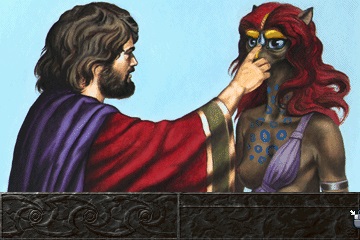
Managing your party of up to six characters demands constant attention to position and turn order. Your frontline fighters hold choke points, while soft backline casters weave healing and combat magic. Surviving requires strict inventory management and puzzle-solving savvy, as you carry pickaxes to breach cracked stone walls or stand on hidden floor plates to open iron gates.
The progression curve hits like a wall if you drift into new territories unprepared. Early encounters carry a severe difficulty spike, and the lack of accessible resting spots means damaged party members drop fast. Weight restrictions compound the danger quickly; picking up too much scrap leaves your companions encumbered and unable to move or defend effectively during unexpected ambushes.
Amiga lineage and MS-DOS sound hardware
The development of this 1996 release carries a clear lineage. Core designers including Jurie Horneman, Erik Simon, and artist Thorsten Mutschall worked at Thalion Software, building technical expertise on German Amiga hits like Amberstar and Ambermoon. When Thalion folded, key staff moved to Blue Byte Software GmbH to build a spiritual follow-up.
Project leads originally prototyped the code on Amiga AGA hardware. Commodore's sudden bankruptcy in 1994 forced the team to pivot production completely to PC MS-DOS, rewriting systems in C. That background shows in the visual style, where clean pixel art meets complex inventory screens that demand precise mouse control.
Audio is where the production shines across mid-nineties hardware configurations. Composer Matthias Steinwachs wrote musical tracks that take full advantage of specialized sound boards. The sound card engine supports a massive list of period hardware:
- Sound Blaster, Sound Blaster Pro, and Sound Blaster 16
- Roland MT-32 and LAPC-I MIDI modules
- Gravis UltraSound with custom patch playback
- AdLib Gold and Ensoniq Soundscape boards
- General MIDI synth routing
Running the game on a Roland MT-32 or Gravis UltraSound yields rich atmospheric ambient tracks that make long dungeon crawls far more enjoyable than basic FM synthesis ever could manage.
Why the interface still tests your patience
Playing through the campaign requires wrestling with a few bizarre user interface quirks. Misclicking near the interactive frame edge during standard movement or combat targeting can register as a hit on the main menu bar, opening system options right in the middle of a delicate turn. Combining mouse movement with arrow-key navigation feels clumsy until your hands get used to the split layout.
Despite those interface hurdles, the story written by the team delivers an extraordinarily rich setting. The alien culture of the Iskai feline race features custom vocabulary, distinct social structures, and believable political divides that lift the writing above standard fantasy tropes. Uncovering how their world links to lost human Celtic tribes provides a narrative push that makes pushing through hard dungeons worthwhile.
If you enjoy classic role-playing RPGs from this era, the slow pace and vast dialogue trees offer hours of deep party management. It lacks modern quality-of-life features, but its atmospheric world design holds up well against competing DOS titles of the late nineties.
How to play Albion today
You can run this classic Albion MS-DOS game without hunting down vintage computer hardware or dealing with complex system floppy installs. The full adventure is accessible through modern browser emulation, making it simple to start the story of the Toronto and the Iskai people in a matter of seconds.
You can play Albion online right now directly in your Web browser. You can launch Albion free in your browser, jump past the old system prompts, and begin exploring its vast alien surface with no setup required.
How Albion is played — the keys the game listens to, grouped by what they do.
- Movement
- Left click — Move party
Highlighted keys are mapped — hover or tap one to see what it does.
Specific keyboard hotkeys were not detailed in the retrieved manual excerpts.
Players' controls
Touch and gamepad controls
The on-screen keyboard and gamepad mapping the browser player uses on a phone, a tablet or a controller, as opposed to the real keys above. $PRO members make their own in the player and share them here; anyone can pick one to play with.
Make your own touch controlsPRO
- 1Open the editorSign in below, then pick what to make. The game starts with the editor open over it.
- 2Place your keysAdd keys and drag them where your thumbs rest, or map a controller's buttons. Test plays the game with them; Save keeps them, and you play with them from then on.
- 3Share themShare them right after saving in the game, or name and share them here. Players vote, and the best become this game's controls for everyone.
Go PROSee how it worksSign in+20 XP for sharing · +50 XP if yours become the game's own
- The game's own controlsKeyboardGamepadWhat every player starts with.In use
6 screenshots
From the archive
No reviews yet
Tell the community what you think of Albion. Reviews are public and tied to your username.
No archived manuals for Albion yet
No manuals archived for this title yet. Sign in to upload the first scan.
Cheat codes, console commands and memory pokes for Albion — each one verified and attributed.
Sign in to submitNo cheats yet for this title
Know a working cheat, poke or trainer? Add it with the button above. Moderators check every entry before it goes live.
No archived soundtrack for Albion yet
No soundtrack archived for this title yet. Sign in to upload the first rip.
No save states for Albion yet
No save states for this title yet. Sign in to share one.
Discussions
Sign in to post- Threads0
- Total posts0
- Online now6
Community · Albion
Who's contributing, and what's new
- Reviews0
- Threads0
- Uploadsapproved0
- Contributors0
Recent activity
Nothing here yet
Reviews, discussion threads and approved uploads appear here as members add them.