Commanding a division of heavy tanks in ARSENAL Taste the Power feels grand until the diesel runs out in middle of enemy territory and your supply trucks blow up on a landmine.
Most real-time strategy games in late 1997 asked you to collect timber, ore, or spice, dump it in a refinery, and spam armored vehicles straight toward the enemy base. TACTICAL Soft Inc. took a different path with this top-down
Most real-time strategy games in late 1997 asked you to collect timber, ore, or spice, dump it in a refinery, and spam armored vehicles straight toward the enemy base. TACTICAL Soft Inc. took a different path with this top-down strategy game. In this alternate history World War II setting, where a European alliance battles a massive Communist invasion, firepower is only half the battle. Every vehicle consumes fuel as it moves and fights, requiring a constant chain of gasoline trucks to keep your front lines moving.
If you ignore logistics, your offensive grinds to a dead stop. A squad of heavy tanks out of gas becomes sitting target practice for enemy field artillery. This single supply mechanic completely changes how you plan attacks. You cannot simply send a strike force across the map and forget about them. You must protect your supply corridors, construct forward refueling depots, and babysit supply trucks across disputed land.
Veterans of the genre used to standard base-building mechanics will immediately feel the tension. Units gain combat experience as they survive battles, rising in rank and combat effectiveness. Losing an experienced crew because a fuel truck took a bad turn into enemy air defenses is genuinely painful. You have to micromanage everything, or your force collapses entirely.
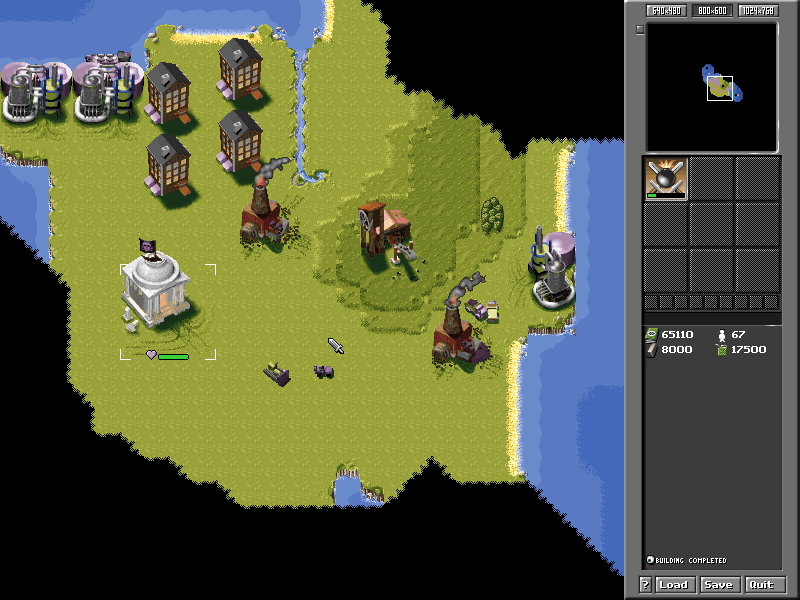
The progression system in this 1997 release forces you to prove your worth early. Before you can jump into the single-player campaigns or set up custom games, you must clear the ten-mission tutorial. Reaching the third tutorial mission opens custom matches, but unlocking the main story campaigns requires earning the rank of Captain. The two full campaigns offer ten brutal missions each, built around tight resource management and aggressive AI harassment.
Research plays a massive role in long-term strategy, drawing inspiration from turn-based 4X games. You manage a broad technology tree to unlock advanced armor, naval vessels, and air combat units. Aircraft must land at built airfields or aircraft carriers to refuel and rearm, adding another layer of coordination to combined-arms pushes. You can even unlock four game-changing special weapons:
If you want to skip the industrial grind and test late-game tech immediately, typing the cheat code eureka instant-unlocks the entire research tree. Be careful, though. Typing that exact code twice immediately grants your computer opponents full tech and endless resources, turning an easy match into an unwelcoming nightmare.
One of the stranger technical features of this TACTICAL Soft Inc. title is its wraparound map design. Maps have no true edges or physical borders; scrolling continuously in one direction brings you right back to where you started. This makes flank attacks continuous and base defense tricky, as enemies can strike from directions you thought were secure boundaries.
Custom game mode lets you pick from five strange factions: Normo, Psycho, Shyzo, Parano, and Fanato. While Normo relies on standard military hardware, the other four factions each hold unique superweapons while sharing the rest of the technology tree. The random map generator creates varied terrain across multiple SVGA display resolutions, ranging from classic 640x480 up to crisp 1024x768 modes that you can toggle on the fly during gameplay.
The presentation takes good advantage of hardware from the era. On a mid-tier Pentium with a Sound Blaster card, the gunfire and engine rumbles hit with crisp punch. Registered CD-ROM releases featured full Redbook audio tracks, providing a heavy orchestral backdrop to land battles, whereas shareware copies relied on quieter ambient noise and locked out high-tier units.
For all its clever logistical mechanics, the game has clear flaws that frustrated players then and still sting now. Managing fuel trucks individually becomes a severe headache during large engagements across huge maps. When four separate combat groups call for refueling simultaneously, the interface struggles to keep up with your orders, leading to traffic jams and stranded units.
The save system also carries a notoriously clunky bug. If you try to save a game without creating a proper profile name and manually picking an empty slot, the file simply fails to write. Many players thought their campaign progress was lost forever due to this awkward interface quirk. The difficulty curve in campaign mode also hits like a wall once enemy air power comes into play.
Despite those rough edges, anyone who loves deep logistics and tactical planning should give this neglected classic a spin today. You can play ARSENAL Taste the Power online right now. Experience this unique ARSENAL Taste the Power MS-DOS game free in your browser with zero hassle, no disk mounting, and no manual setup needed. Jump straight into the commander's seat, build your refineries, and make sure those supply trucks stay fueled up before your front line collapses under pressure.
Commanding a division of heavy tanks in ARSENAL Taste the Power feels grand until the diesel runs out in middle of enemy territory and your supply trucks blow up on a landmine.
Most real-time strategy games in late 1997 asked you to collect timber, ore, or spice, dump it in a refinery, and spam armored vehicles straight toward the enemy base. TACTICAL Soft Inc. took a different path with this top-down
Most real-time strategy games in late 1997 asked you to collect timber, ore, or spice, dump it in a refinery, and spam armored vehicles straight toward the enemy base. TACTICAL Soft Inc. took a different path with this top-down strategy game. In this alternate history World War II setting, where a European alliance battles a massive Communist invasion, firepower is only half the battle. Every vehicle consumes fuel as it moves and fights, requiring a constant chain of gasoline trucks to keep your front lines moving.
If you ignore logistics, your offensive grinds to a dead stop. A squad of heavy tanks out of gas becomes sitting target practice for enemy field artillery. This single supply mechanic completely changes how you plan attacks. You cannot simply send a strike force across the map and forget about them. You must protect your supply corridors, construct forward refueling depots, and babysit supply trucks across disputed land.
Veterans of the genre used to standard base-building mechanics will immediately feel the tension. Units gain combat experience as they survive battles, rising in rank and combat effectiveness. Losing an experienced crew because a fuel truck took a bad turn into enemy air defenses is genuinely painful. You have to micromanage everything, or your force collapses entirely.
The progression system in this 1997 release forces you to prove your worth early. Before you can jump into the single-player campaigns or set up custom games, you must clear the ten-mission tutorial. Reaching the third tutorial mission opens custom matches, but unlocking the main story campaigns requires earning the rank of Captain. The two full campaigns offer ten brutal missions each, built around tight resource management and aggressive AI harassment.
Research plays a massive role in long-term strategy, drawing inspiration from turn-based 4X games. You manage a broad technology tree to unlock advanced armor, naval vessels, and air combat units. Aircraft must land at built airfields or aircraft carriers to refuel and rearm, adding another layer of coordination to combined-arms pushes. You can even unlock four game-changing special weapons:
If you want to skip the industrial grind and test late-game tech immediately, typing the cheat code eureka instant-unlocks the entire research tree. Be careful, though. Typing that exact code twice immediately grants your computer opponents full tech and endless resources, turning an easy match into an unwelcoming nightmare.
One of the stranger technical features of this TACTICAL Soft Inc. title is its wraparound map design. Maps have no true edges or physical borders; scrolling continuously in one direction brings you right back to where you started. This makes flank attacks continuous and base defense tricky, as enemies can strike from directions you thought were secure boundaries.
Custom game mode lets you pick from five strange factions: Normo, Psycho, Shyzo, Parano, and Fanato. While Normo relies on standard military hardware, the other four factions each hold unique superweapons while sharing the rest of the technology tree. The random map generator creates varied terrain across multiple SVGA display resolutions, ranging from classic 640x480 up to crisp 1024x768 modes that you can toggle on the fly during gameplay.
The presentation takes good advantage of hardware from the era. On a mid-tier Pentium with a Sound Blaster card, the gunfire and engine rumbles hit with crisp punch. Registered CD-ROM releases featured full Redbook audio tracks, providing a heavy orchestral backdrop to land battles, whereas shareware copies relied on quieter ambient noise and locked out high-tier units.
For all its clever logistical mechanics, the game has clear flaws that frustrated players then and still sting now. Managing fuel trucks individually becomes a severe headache during large engagements across huge maps. When four separate combat groups call for refueling simultaneously, the interface struggles to keep up with your orders, leading to traffic jams and stranded units.
The save system also carries a notoriously clunky bug. If you try to save a game without creating a proper profile name and manually picking an empty slot, the file simply fails to write. Many players thought their campaign progress was lost forever due to this awkward interface quirk. The difficulty curve in campaign mode also hits like a wall once enemy air power comes into play.
Despite those rough edges, anyone who loves deep logistics and tactical planning should give this neglected classic a spin today. You can play ARSENAL Taste the Power online right now. Experience this unique ARSENAL Taste the Power MS-DOS game free in your browser with zero hassle, no disk mounting, and no manual setup needed. Jump straight into the commander's seat, build your refineries, and make sure those supply trucks stay fueled up before your front line collapses under pressure.
How ARSENAL Taste the Power is played — the keys the game listens to, grouped by what they do.
Highlighted keys are mapped — hover or tap one to see what it does.
The complete hotkey map from the manual or in-game F1 guide is not fully documented in the provided notes.
The on-screen keyboard and gamepad mapping the browser player uses on a phone, a tablet or a controller, as opposed to the real keys above. $PRO members make their own in the player and share them here; anyone can pick one to play with.
Cheat codes, console commands and memory pokes for ARSENAL Taste the Power — each one verified and attributed.
Sign in to submitHow ARSENAL Taste the Power is played — the keys the game listens to, grouped by what they do.
Highlighted keys are mapped — hover or tap one to see what it does.
The complete hotkey map from the manual or in-game F1 guide is not fully documented in the provided notes.
The on-screen keyboard and gamepad mapping the browser player uses on a phone, a tablet or a controller, as opposed to the real keys above. $PRO members make their own in the player and share them here; anyone can pick one to play with.
Cheat codes, console commands and memory pokes for ARSENAL Taste the Power — each one verified and attributed.
Sign in to submit