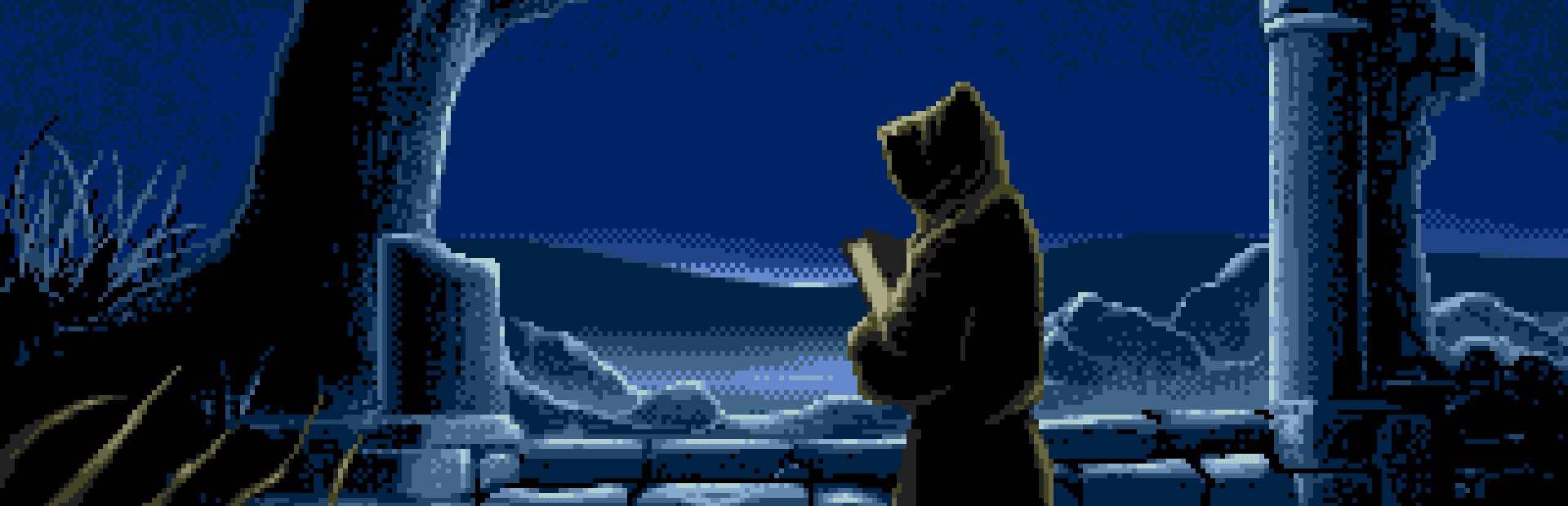
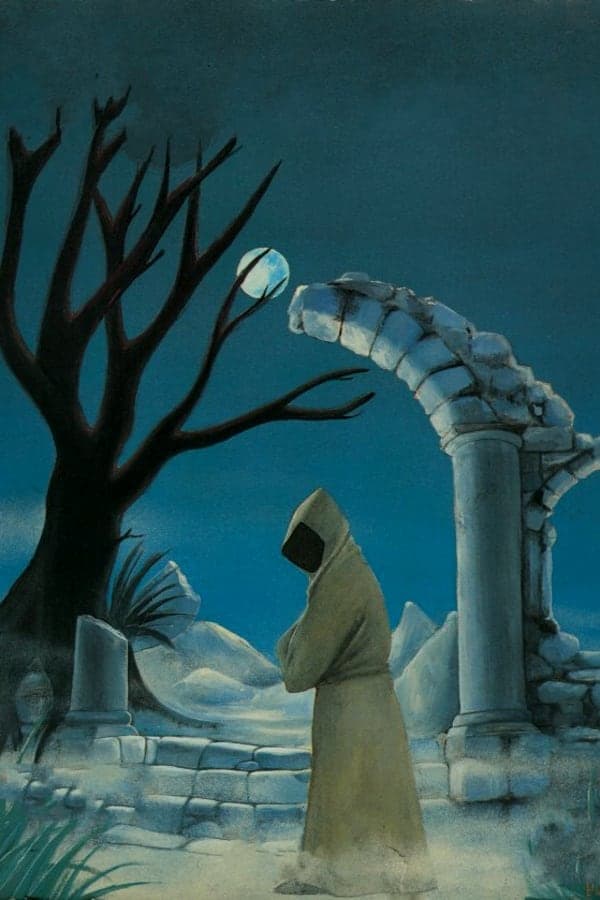

aka La Secte Noire
Black Sect promises a dark, atmospheric occult mystery across foggy moors and hidden lairs, but playing it turns into a brutal test of patience against unforgiving puzzle design and a ticking clock.
You arrive in a isolated village on the Yorkshire Moors following the murder of your grandfather, the town's local leader. A sinister order known as the Black Sect has stolen an ancient Grimoire, and your job is to track down their subterranean hideout and retrieve the spellbook before time runs out. On paper, it sounds like a classic occult mystery, but sitting down with this 1993 release quickly reveals a trial of endless friction.
When French developer Lankhor rebuilt their 1990 Amstrad CPC text-and-graphics title La Secte Noire into this full mouse-driven MS-DOS release, point-and-click design had already moved forward. Compared to contemporaries like Gabriel Knight: Sins of the Fathers or Day of the Tentacle, this game feels like a throwback to an older, far harsher era of computer gaming. It swaps text parser commands for an icon bar, but it retains all the uncompromising logic of 1980s adventure design.
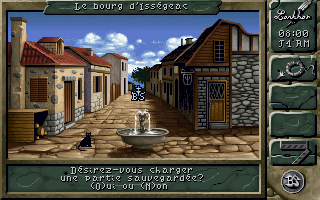
The adventure splits into two distinct halves: first, searching the surface areas around the village to discover the lair, and second, navigating the traps inside the cult's underground quarters. You spend the opening hours wandering flip-screen landscapes containing a cemetery, a church, deep wells, and muddy riverbanks. Navigating these rooms is straightforward enough, but interacting with them is where the trouble starts.
The interface relies on an icon bar where actions are far too specific for their own good. Instead of a general verb like "use", you are forced to figure out the exact physical manipulation the developers intended. For instance, holding a knife requires you to choose between standard item usage or physically breaking something with it. Selecting the wrong verb variant makes the game act as if you tried nothing at all, forcing you into exhaustive trial-and-error clicking on every object you find.
This strictness is compounded by severe pixel-hunting. Vital keys, small tools, and subtle clues match the 256-color VGA background art so closely you will easily walk right past them. Missing a single tiny object hidden near a riverbed or tucked behind a gravestone halts your progress entirely, leaving you to comb every screen pixel by pixel.
Even if you find every key and item, the game actively works to ruin your playthrough through mechanical traps. A clock constantly ticks down in the background, limiting how many mistakes you can make before an automatic failure state triggers. There are instant deaths lurking behind innocent-looking doors, strict carrying limits on your inventory, and permanent dead ends where dropping or misusing an item thirty minutes ago makes the ending impossible to reach.
To make matters worse, the game limits you to just five save slots. In a game overflowing with unwinnable states, restricting how often and where you can preserve your progress feels unnecessarily mean. You never know if your current save file is a healthy run or a doomed state where you forgot a crucial object three areas back.
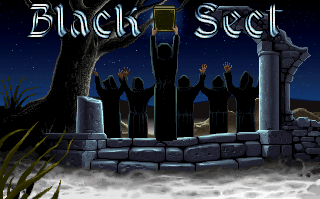
Localization quirks add another layer of unexpected confusion. While the game received an English release on PC, large portions of text were left completely untranslated from the original French. Reading through room descriptions or object names occasionally drops you right back into French without warning, which can make already cryptic puzzle clues even harder to parse.
Designers Jean-Claude Lebon and Jean-Pierre Godey aimed to transform their old Amstrad title into a visual flagship for Lankhor, complete with a dark musical score. Sound designer "Maximum of Sound" (Mos) adapted the game's moody main theme specifically for AdLib sound cards, giving the PC speaker and early Yamaha FM synthesis chips a surprisingly creepy atmosphere to output.
The visual upgrade was substantial, but the commercial reality was bleak. Rumors at the time suggested the project burned through much of the profits earned by Lankhor's popular racing game Vroom. The game struggled on shop shelves, selling fewer than 3,000 copies in its initial year across MS-DOS, Atari ST, and Amiga. Players who were buying slick, story-focused releases from LucasArts and Sierra simply had little appetite for an unforgiving European text-adventure hybrid with mouse icons slapped over it.
The VGA background art holds up reasonably well, and the sound design sets an eerie tone for a 1990s adventure game. However, the obscure puzzle logic, dead-end states, and cumbersome interface make finishing it without a walkthrough an exercise in frustration. You are looking at a tough, unforgiving piece of French PC gaming history that only die-hard puzzle purists will survive.
If you want to test your patience against this difficult Lankhor release, you can play Black Sect online for free right in your browser. The entire Black Sect MS-DOS game runs directly in your window with nothing to install and no setup, letting you explore the spooky moors and experience its brutal puzzle logic instantly.
Black Sect promises a dark, atmospheric occult mystery across foggy moors and hidden lairs, but playing it turns into a brutal test of patience against unforgiving puzzle design and a ticking clock.
You arrive in a isolated village on the Yorkshire Moors following the murder of your grandfather, the town's local leader. A sinister order known as the Black Sect has stolen an ancient Grimoire, and your job is to track down their subterranean hideout and retrieve the spellbook before time runs out. On paper, it sounds like a classic occult mystery, but sitting down with this 1993 release quickly reveals a trial of endless friction.
When French developer Lankhor rebuilt their 1990 Amstrad CPC text-and-graphics title La Secte Noire into this full mouse-driven MS-DOS release, point-and-click design had already moved forward. Compared to contemporaries like Gabriel Knight: Sins of the Fathers or Day of the Tentacle, this game feels like a throwback to an older, far harsher era of computer gaming. It swaps text parser commands for an icon bar, but it retains all the uncompromising logic of 1980s adventure design.
The adventure splits into two distinct halves: first, searching the surface areas around the village to discover the lair, and second, navigating the traps inside the cult's underground quarters. You spend the opening hours wandering flip-screen landscapes containing a cemetery, a church, deep wells, and muddy riverbanks. Navigating these rooms is straightforward enough, but interacting with them is where the trouble starts.
The interface relies on an icon bar where actions are far too specific for their own good. Instead of a general verb like "use", you are forced to figure out the exact physical manipulation the developers intended. For instance, holding a knife requires you to choose between standard item usage or physically breaking something with it. Selecting the wrong verb variant makes the game act as if you tried nothing at all, forcing you into exhaustive trial-and-error clicking on every object you find.
This strictness is compounded by severe pixel-hunting. Vital keys, small tools, and subtle clues match the 256-color VGA background art so closely you will easily walk right past them. Missing a single tiny object hidden near a riverbed or tucked behind a gravestone halts your progress entirely, leaving you to comb every screen pixel by pixel.
Even if you find every key and item, the game actively works to ruin your playthrough through mechanical traps. A clock constantly ticks down in the background, limiting how many mistakes you can make before an automatic failure state triggers. There are instant deaths lurking behind innocent-looking doors, strict carrying limits on your inventory, and permanent dead ends where dropping or misusing an item thirty minutes ago makes the ending impossible to reach.
To make matters worse, the game limits you to just five save slots. In a game overflowing with unwinnable states, restricting how often and where you can preserve your progress feels unnecessarily mean. You never know if your current save file is a healthy run or a doomed state where you forgot a crucial object three areas back.
Localization quirks add another layer of unexpected confusion. While the game received an English release on PC, large portions of text were left completely untranslated from the original French. Reading through room descriptions or object names occasionally drops you right back into French without warning, which can make already cryptic puzzle clues even harder to parse.
Designers Jean-Claude Lebon and Jean-Pierre Godey aimed to transform their old Amstrad title into a visual flagship for Lankhor, complete with a dark musical score. Sound designer "Maximum of Sound" (Mos) adapted the game's moody main theme specifically for AdLib sound cards, giving the PC speaker and early Yamaha FM synthesis chips a surprisingly creepy atmosphere to output.
The visual upgrade was substantial, but the commercial reality was bleak. Rumors at the time suggested the project burned through much of the profits earned by Lankhor's popular racing game Vroom. The game struggled on shop shelves, selling fewer than 3,000 copies in its initial year across MS-DOS, Atari ST, and Amiga. Players who were buying slick, story-focused releases from LucasArts and Sierra simply had little appetite for an unforgiving European text-adventure hybrid with mouse icons slapped over it.
The VGA background art holds up reasonably well, and the sound design sets an eerie tone for a 1990s adventure game. However, the obscure puzzle logic, dead-end states, and cumbersome interface make finishing it without a walkthrough an exercise in frustration. You are looking at a tough, unforgiving piece of French PC gaming history that only die-hard puzzle purists will survive.
If you want to test your patience against this difficult Lankhor release, you can play Black Sect online for free right in your browser. The entire Black Sect MS-DOS game runs directly in your window with nothing to install and no setup, letting you explore the spooky moors and experience its brutal puzzle logic instantly.
How Black Sect is played — the keys the game listens to, grouped by what they do.
Highlighted keys are mapped — hover or tap one to see what it does.
Control scheme can be toggled between keyboard-only mode and mouse plus keyboard in the setup menu.
The on-screen keyboard and gamepad mapping the browser player uses on a phone, a tablet or a controller, as opposed to the real keys above. $PRO members make their own in the player and share them here; anyone can pick one to play with.
Cheat codes, console commands and memory pokes for Black Sect — each one verified and attributed.
Sign in to submitHow Black Sect is played — the keys the game listens to, grouped by what they do.
Highlighted keys are mapped — hover or tap one to see what it does.
Control scheme can be toggled between keyboard-only mode and mouse plus keyboard in the setup menu.
The on-screen keyboard and gamepad mapping the browser player uses on a phone, a tablet or a controller, as opposed to the real keys above. $PRO members make their own in the player and share them here; anyone can pick one to play with.
Cheat codes, console commands and memory pokes for Black Sect — each one verified and attributed.
Sign in to submit