
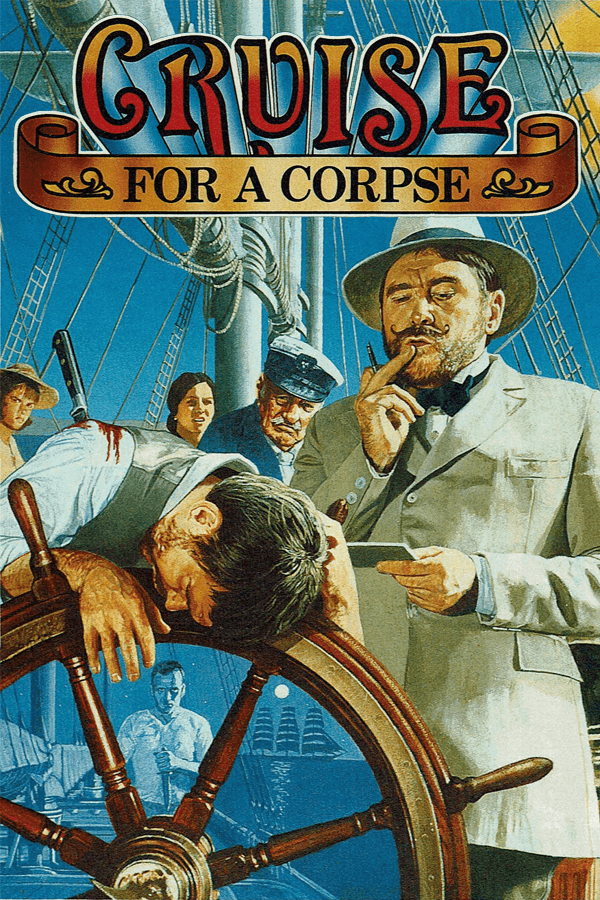

If you ever wanted to solve a 1920s ocean-liner murder where the entire ship shifts every ten minutes, Cruise for a Corpse delivers a unique detective mystery built on vector-animated suspects and constant backtracking.
A detective mystery trapped inside an advancing clock
Most point-and-click murder mysteries keep their world completely static while you wander from room to room, but this 1927 high-seas investigation runs on a strict internal clock. You play as French police inspector Raoul Dusentier, invited aboard the private sailing ship Karaboudjan III by wealthy businessman Niklos Karaboudjan, only for your host to turn up dead on the second day. Finding out who did it requires interviewing everyone on board, from pious priests to suspicious heirs, while searching every cabin for discarded notes and hidden keys.
Progress works differently here than in standard adventure games of the era. The in-game clock ticks forward by exactly ten minutes whenever you inspect a critical piece of evidence or unlock a vital line of dialogue with a suspect. As time moves from 8:00 AM onward, the passengers leave their rooms, walk to new decks, and open up fresh branches of questioning. If a suspect refuses to talk about a financial motive early in the morning, finding a ledger in the office later that afternoon suddenly makes them willing to confess their debts.
The system creates a distinct rhythm, but it also creates the game's most infamous friction point. Because character locations reset every time the clock jumps, you will constantly trek back and forth across the ship's decks just to check if Father Fabiani is still in the chapel or if the lawyer moved down to the dining room. When you hit a wall, you end up re-running every hallway to see if a previously locked door unlocked itself while you were away.
Polygons and paper wheels in the MS-DOS release
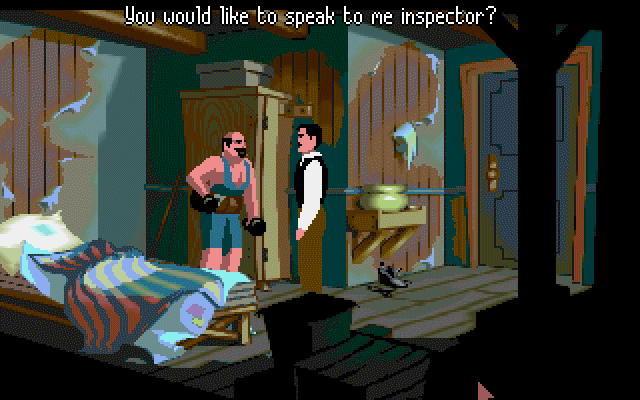
Delphine Software International launched this title in 1991 using an upgraded version of their proprietary Cinématique engine, known internally as Cinématique evo2. Created by a core team including Paul Cuisset, Philippe Chastel, and Denis Mercier, the engine swapped out conventional sprite animation for 2D vector polygons. Characters scale up and down smooth as silk as they move relative to the camera, giving the close-up dialogue screens a cinematic look that few other MS-DOS games managed back then.
Audio is another highlight if you had high-end hardware attached to your PC. Sound design was handled by Benoist Aron, with a dramatic musical score composed by Jean Baudlot that really shines when routed through Roland MT-32 hardware. Hearing the rich synthesizer instrumentation accompany a sudden suspect interrogation gives the ocean voyage a heavy, tense mood that basic PC speaker sound could never deliver.
The original physical box shipped with a notorious paper code wheel that players had to spin to answer copy protection prompts before starting the case. Contemporary outlets were quick to notice both the technical ambition and the rough edges. Period magazine The One awarded the Amiga version a 92 percent score, while Computer Gaming World praised its murder mystery recipe while heavily criticizing the EGA color palette and calling the code wheel protection outright atrocious.
The mechanical pain of pixel hunting
While the visual presentation was advanced, the puzzle design introduces mechanics that continue to frustrate players decades later. Crucial inventory items do not always exist in the environment until an exact dialogue trigger spawns them into reality. You might thoroughly search a desk drawer at 8:10 AM and find nothing, only to have a tiny key appear inside that exact same drawer at 8:40 AM simply because you asked a family member about a missing will.

This design choice turns systematic searching into mandatory pixel hunting across areas you already cleared. Modern retro reviews often highlight these structural flaws, with retrospective scores dropping as low as 5 out of 10 due to sloppy puzzle triggers and absurd late-story plot twists. The English localization also suffers from awkward phrasing carried over from the original French text, occasionally making dialogue clues harder to interpret than intended.
Despite those flaws, the game rewards dedicated sleuths through a structured set of investigative mechanics:
- Context-sensitive cursor menus that adapt to items, allowing you to examine, open, or collect objects with a left-click.
- A detailed ship map interface that permits fast travel to previously visited cabins and deck levels.
- Dialogue topic trees that expand based on items collected and physical evidence analyzed in your inventory.
- A dynamic suspect schedule where non-player characters relocate across the vessel whenever the 10-minute clock advances.
References, pop culture, and French comic nods
The development team left several clear nods to classic mystery fiction and Franco-Belgian comics throughout the vessel. The ship itself, the Karaboudjan III, takes its name directly from Captain Haddock's merchant vessel in the classic Tintin adventure The Crab with the Golden Claws. It is a playful touch from team members who grew up reading those classic European graphic novels.
Agatha Christie's influence is equally obvious across every deck. Aside from the classic closed-room premise of an isolated vessel full of secretive suspects, the game directly parodies the famous mystery author. If you spend time examining the book racks in the ship's office, you will find a prominent collection of detective novels written by a fictional author named "Tagatha Frisbee."
Why you should spend an evening on board
This mystery holds up as a solid piece of graphic adventure history for anyone who appreciates clever engine design and atmospheric detective stories. The vector character animation moves naturally, and tracking down clues across the ocean liner feels like proper detective work if you can tolerate the clock triggers. If you enjoy period whodunits like The Colonel's Bequest, the nautical setting and tense musical score make it worth playing.
You can play Cruise for a Corpse online free in your browser right now, with no code wheel or setup required. Running the original MS-DOS version directly on the web lets you test your detective skills against the Karaboudjan family secrets immediately. Jump straight to the ship's deck, start searching the cabins, and see if you can figure out who killed Niklos before the clock runs out.