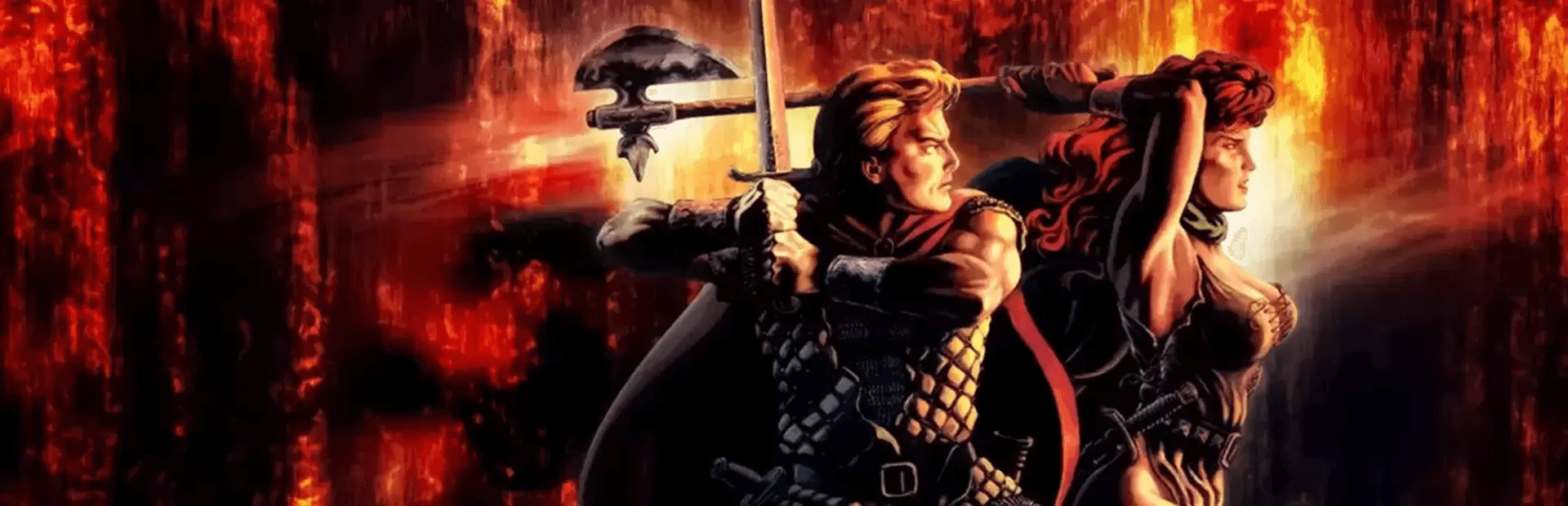
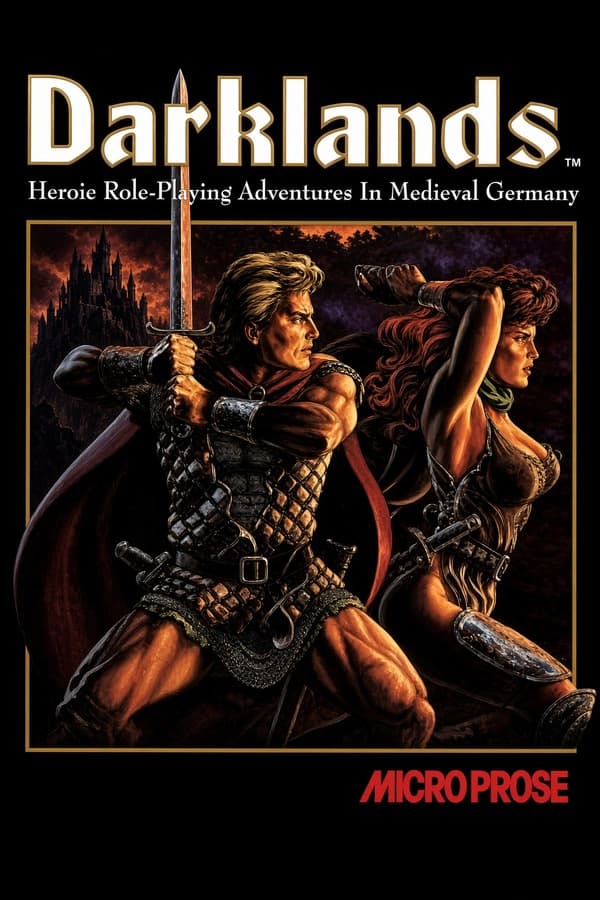

Instead of elves and fireball spells, Darklands throws you into a gritty 15th-century Holy Roman Empire where your party ages with every passing decade and victory depends on alchemy and Catholic saints.
You begin by forging four human adventurers through a career system that starts at ten years old. Every five-year career choice awards skill points, but pushes your characters closer to old age, weakening their physical stats.
There are no character classes or traditional leveling systems here. Skills grow purely by using them on the road. Equipment matters immensely against heavily armored enemies. Swords glance off plate mail, while heavy war hammers crush through armor plating.
Instead of standard magic, your party relies on period-accurate alchemy and religious devotion. Alchemists combine raw materials like Marsh Vapor and Manganese to craft Sunburst potions. Clerics spend Divine Favor to invoke Saint Dunstan for combat blessings and healing.
MPS Labs and MicroProse took a massive gamble on this concept when they published the title in 1992. Lead designer Arnold Hendrick, alongside Sandy Petersen and Douglas Kaufman, pushed the scope far beyond initial limits. Development costs surged to nearly one million dollars, straining company finances.
Early floppy disk copies suffered from severe technical bugs and desktop crashes. Sprites frequently glitched, turning characters into bright neon figures during battle. Players were unable to save inside dangerous locations, meaning one crash ruined hours of progress.
The technical problems sparked a famous split in the gaming press. Computer Gaming World writer Scorpia attacked the repetitive dungeon design and bug-ridden release, claiming it
"brings little or no satisfaction when 'finished'". Editor Johnny L. Wilson added a prominent note defending the deep sandbox design:
"I still like the game."
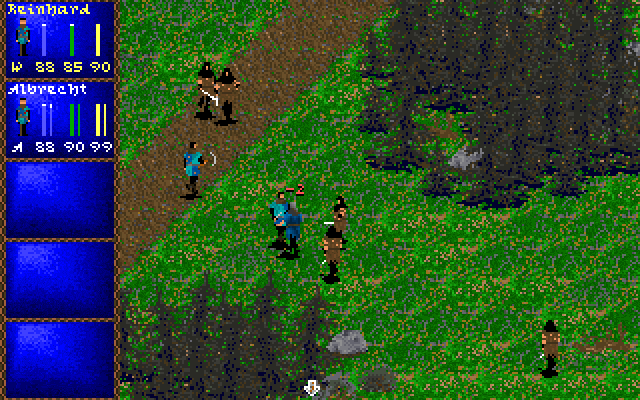
The main gameplay loop balances map exploration with tactical encounters. Traveling across an overworld map featuring over 90 real German cities brings up choose-your-own-adventure text screens with painted artwork. Real-time combat with pause handles tactical battles from an isometric view.
Your ultimate goal is building Fame and Virtue while tackling sandbox contracts across medieval Central Europe. You will encounter several distinct hazards during your travels:
The harsh design choice of blocking saves during multi-stage encounters creates immense tension. Micro-managing party stamina and alchemy reserves during a long raid forces disciplined planning. One mistake wiping out your whole squad without a recent save slot will hurt.
The heavy budget and poor early sales left MicroProse in financial trouble, contributing to its 1993 acquisition by Spectrum HoloByte. Despite the lack of sequels, this role-playing RPG left a lasting impression on major designers. Bethesda's Todd Howard cited it as an influence on The Elder Scrolls, while Josh Sawyer drew inspiration from it for Pentiment.
The punishing combat interface and repetitive castle layouts remain frustrating. Yet the life-path character builder and authentic historic atmosphere still offer something genuinely unique among retro computer games.
You can play Darklands online right now, free in your browser with nothing to install and no setup. Jump straight into medieval Germany, build your four-person party from childhood, and see if your alchemy recipe list holds up against your first group of Raubritter.
Instead of elves and fireball spells, Darklands throws you into a gritty 15th-century Holy Roman Empire where your party ages with every passing decade and victory depends on alchemy and Catholic saints.
You begin by forging four human adventurers through a career system that starts at ten years old. Every five-year career choice awards skill points, but pushes your characters closer to old age, weakening their physical stats.
There are no character classes or traditional leveling systems here. Skills grow purely by using them on the road. Equipment matters immensely against heavily armored enemies. Swords glance off plate mail, while heavy war hammers crush through armor plating.
Instead of standard magic, your party relies on period-accurate alchemy and religious devotion. Alchemists combine raw materials like Marsh Vapor and Manganese to craft Sunburst potions. Clerics spend Divine Favor to invoke Saint Dunstan for combat blessings and healing.

MPS Labs and MicroProse took a massive gamble on this concept when they published the title in 1992. Lead designer Arnold Hendrick, alongside Sandy Petersen and Douglas Kaufman, pushed the scope far beyond initial limits. Development costs surged to nearly one million dollars, straining company finances.
Early floppy disk copies suffered from severe technical bugs and desktop crashes. Sprites frequently glitched, turning characters into bright neon figures during battle. Players were unable to save inside dangerous locations, meaning one crash ruined hours of progress.
The technical problems sparked a famous split in the gaming press. Computer Gaming World writer Scorpia attacked the repetitive dungeon design and bug-ridden release, claiming it
"brings little or no satisfaction when 'finished'". Editor Johnny L. Wilson added a prominent note defending the deep sandbox design:
"I still like the game."
The main gameplay loop balances map exploration with tactical encounters. Traveling across an overworld map featuring over 90 real German cities brings up choose-your-own-adventure text screens with painted artwork. Real-time combat with pause handles tactical battles from an isometric view.
Your ultimate goal is building Fame and Virtue while tackling sandbox contracts across medieval Central Europe. You will encounter several distinct hazards during your travels:
The harsh design choice of blocking saves during multi-stage encounters creates immense tension. Micro-managing party stamina and alchemy reserves during a long raid forces disciplined planning. One mistake wiping out your whole squad without a recent save slot will hurt.

The heavy budget and poor early sales left MicroProse in financial trouble, contributing to its 1993 acquisition by Spectrum HoloByte. Despite the lack of sequels, this role-playing RPG left a lasting impression on major designers. Bethesda's Todd Howard cited it as an influence on The Elder Scrolls, while Josh Sawyer drew inspiration from it for Pentiment.
The punishing combat interface and repetitive castle layouts remain frustrating. Yet the life-path character builder and authentic historic atmosphere still offer something genuinely unique among retro computer games.
You can play Darklands online right now, free in your browser with nothing to install and no setup. Jump straight into medieval Germany, build your four-person party from childhood, and see if your alchemy recipe list holds up against your first group of Raubritter.
How Darklands is played — the keys the game listens to, grouped by what they do.
Highlighted keys are mapped — hover or tap one to see what it does.
Setup and configuration instructions are located in the separate Installation & Supplement booklet.
The on-screen keyboard and gamepad mapping the browser player uses on a phone, a tablet or a controller, as opposed to the real keys above. $PRO members make their own in the player and share them here; anyone can pick one to play with.
Cheat codes, console commands and memory pokes for Darklands — each one verified and attributed.
Sign in to submitHow Darklands is played — the keys the game listens to, grouped by what they do.
Highlighted keys are mapped — hover or tap one to see what it does.
Setup and configuration instructions are located in the separate Installation & Supplement booklet.
The on-screen keyboard and gamepad mapping the browser player uses on a phone, a tablet or a controller, as opposed to the real keys above. $PRO members make their own in the player and share them here; anyone can pick one to play with.
Cheat codes, console commands and memory pokes for Darklands — each one verified and attributed.
Sign in to submit