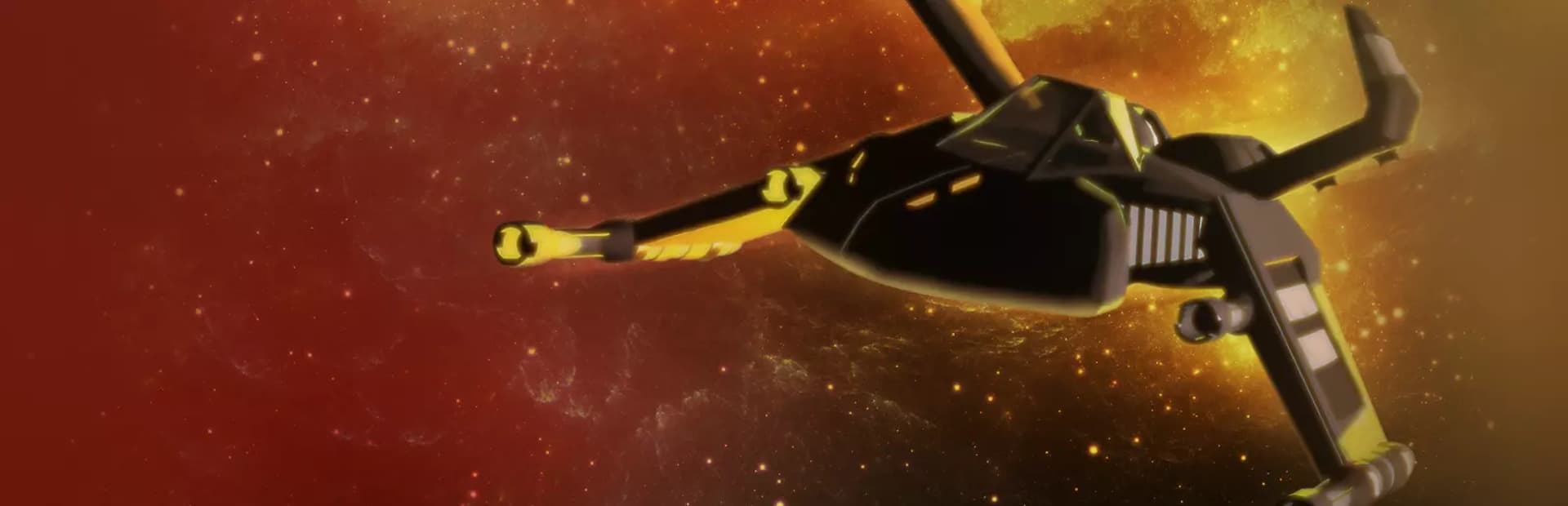
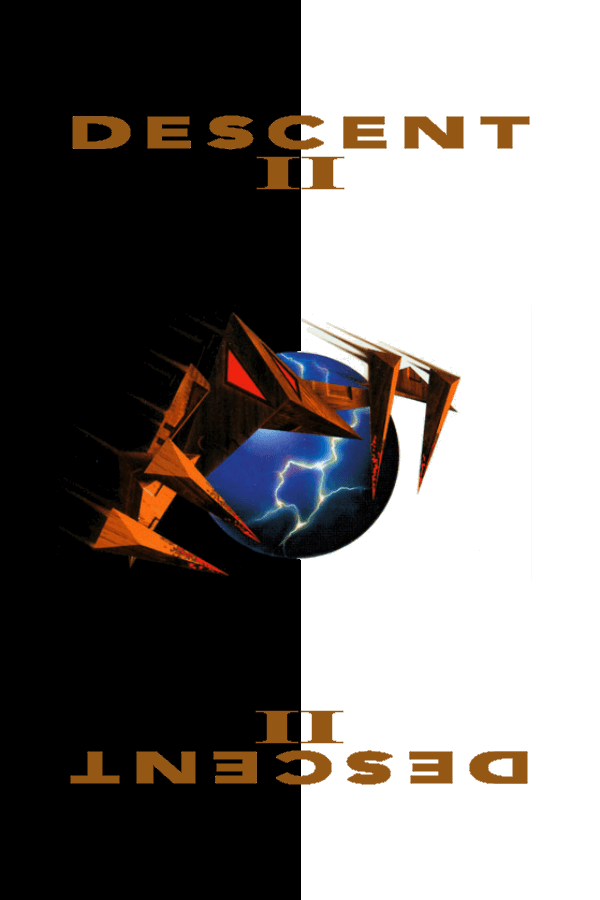

When you drop into the pitch-black subterranean shaft of Descent II, the first thing that hits you is not the enemy fire, but the sudden realization that up and down no longer exist.
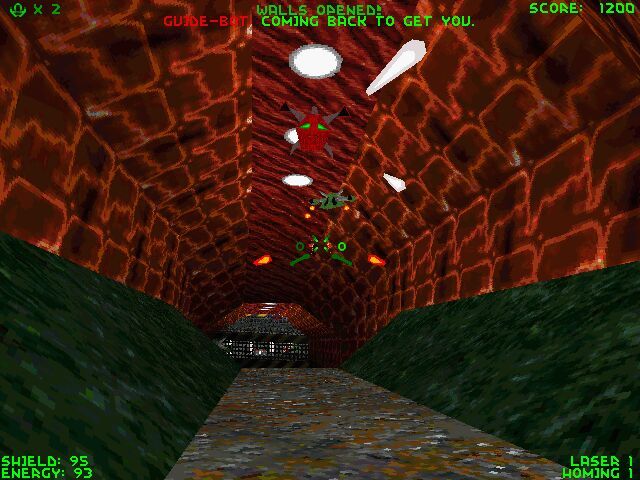
Parallax Software took the dizzying 360-degree engine of their original 3D shooter and amplified everything that made it famous. You play as the Material Defender, a corporate contractor paid to fly an agile ship through thirty labyrinthine extrasolar mines across six distinct worlds, including liquid-drenched caverns, searing lava pits, and frozen ice caverns. In 1996, while other shooters locked your feet to a flat floor, this 1996 release forced you to barrel-roll through narrow vent tunnels while keeping track of pitch, yaw, and roll on every single axis.
The core thrill comes from how fluidly you move once muscle memory takes over. Pitching up while sliding sideways lets you orbit around target turrets while keeping your sights glued to their critical joints. SVGA graphics options pushing up to 640x480 resolution made those tight metallic corridors look exceptionally crisp for an MS-DOS game of its time, though the unrelenting twists and turns inside dark, twisting mazes left plenty of players battling genuine motion sickness.
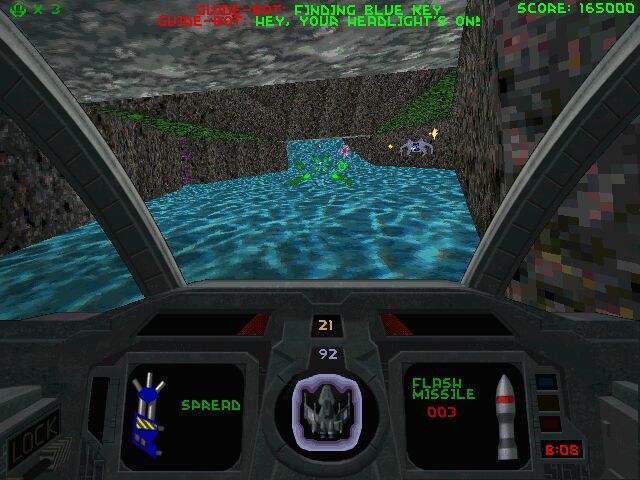
Surviving thirty subterranean levels demands far more than basic trigger discipline. Developers Parallax Software expanded the original arsenal with ten brand-new weapons, adding high-velocity kinetic tools like the Gauss Cannon alongside screen-clearing options like the Helix Cannon and devastating homing projectiles. You also get critical tactical gadgets like afterburners for a instant burst of speed and an energy-to-shield converter that lets you trade spare engine power for survival when your hull is smoking.
To help you navigate these sprawling three-dimensional mazes, the game introduces the Guide-Bot. This utility drone scouts ahead to find blue, yellow, or red keycards, locates hidden power-ups, or leads you straight to the mine reactor. It is an indispensable partner, though entering the secret cheat code GOWINGNUT turns your helpful scout into a snappy, aggressive hothead. Entering old cheat codes from the first game like GABBAGABBAHEY will immediately backfire, stripping your ship down to 1% shields and energy as punishment for lazy typing.
The thirty new enemy types are noticeably smarter and far more hostile than their predecessors. None inspires outright panic quite like the notorious Thief-bot. This fast, slippery mechanical parasite sneaks up on you from behind in dark shafts, steals your prized heavy weapons and power-ups right out of your inventory, and zooms off into the maze forcing you to hunt it down across twisted tunnels just to recover your gear.
Publisher Interplay Productions shipped the game on CD-ROM with a double-barreled audio design. If you had a Sound Blaster or Roland SC-55 card, the game drove your FM or MIDI setup hard with crisp synth tracks. But if you popped the game CD into a standard audio player, you could listen to an industrial metal soundtrack featuring contributions from Ogre of Skinny Puppy, Mark Walk, Type O Negative, and internal composer Dan Wentz. Later digital re-releases omitted several licensed Redbook tracks like the Type O Negative submission due to expired music rights, leaving modern downloads without the full audio mix from the physical disc.
Building this sequel meant pushing the original software-rendered tech far beyond its original scope. Key systems designed by co-directors Mike Kulas and Matt Toschlog along with programmers John Slagel, Jason Leighton, and Che-Yuan Wang transformed what started as a proposed expansion pack into a massive standalone product. Together with its predecessor, the franchise crossed 1.1 million total units sold by 1998.
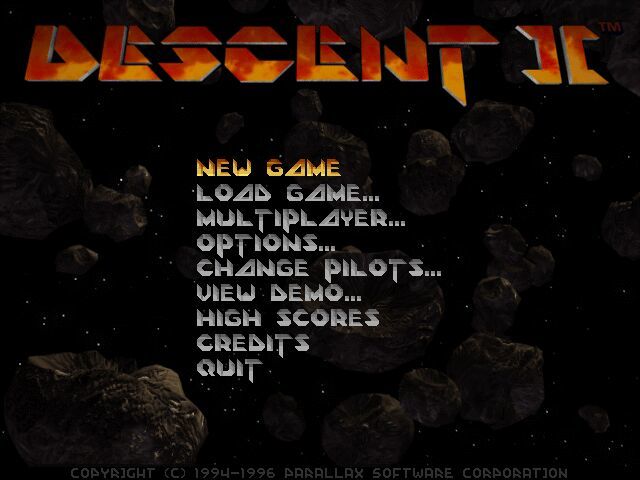
Shortly after completing work on this title, the core development team split into two separate paths. One group formed Outrage Entertainment to create Descent 3, while the other founded Volition, who went on to create the Freespace series. That split makes this second installment the definitive high point for Parallax Software's original design vision.
While modern shooters prioritize linear set pieces and chest-high cover, this game demands total spatial awareness, quick reflexes, and raw flight skill. The steep difficulty curve and sprawling level designs will punish sloppy flying, but few combat mechanics feel as rewarding as executing a drift through a narrow ventilation shaft while dropping homing rockets onto an unsuspecting reactor guard. If you want to fire up a classic action game, you can jump straight into the cockpit without fussing with old boot disks.
You can play Descent II online for free in your browser right now with no setup needed. Fire up your thrusters, deploy the Guide-Bot, and keep your eyes on the rear-view camera because the Thief-bot is already lurking somewhere behind you in the dark.
When you drop into the pitch-black subterranean shaft of Descent II, the first thing that hits you is not the enemy fire, but the sudden realization that up and down no longer exist.
Parallax Software took the dizzying 360-degree engine of their original 3D shooter and amplified everything that made it famous. You play as the Material Defender, a corporate contractor paid to fly an agile ship through thirty labyrinthine extrasolar mines across six distinct worlds, including liquid-drenched caverns, searing lava pits, and frozen ice caverns. In 1996, while other shooters locked your feet to a flat floor, this 1996 release forced you to barrel-roll through narrow vent tunnels while keeping track of pitch, yaw, and roll on every single axis.
The core thrill comes from how fluidly you move once muscle memory takes over. Pitching up while sliding sideways lets you orbit around target turrets while keeping your sights glued to their critical joints. SVGA graphics options pushing up to 640x480 resolution made those tight metallic corridors look exceptionally crisp for an MS-DOS game of its time, though the unrelenting twists and turns inside dark, twisting mazes left plenty of players battling genuine motion sickness.
Surviving thirty subterranean levels demands far more than basic trigger discipline. Developers Parallax Software expanded the original arsenal with ten brand-new weapons, adding high-velocity kinetic tools like the Gauss Cannon alongside screen-clearing options like the Helix Cannon and devastating homing projectiles. You also get critical tactical gadgets like afterburners for a instant burst of speed and an energy-to-shield converter that lets you trade spare engine power for survival when your hull is smoking.
To help you navigate these sprawling three-dimensional mazes, the game introduces the Guide-Bot. This utility drone scouts ahead to find blue, yellow, or red keycards, locates hidden power-ups, or leads you straight to the mine reactor. It is an indispensable partner, though entering the secret cheat code GOWINGNUT turns your helpful scout into a snappy, aggressive hothead. Entering old cheat codes from the first game like GABBAGABBAHEY will immediately backfire, stripping your ship down to 1% shields and energy as punishment for lazy typing.
The thirty new enemy types are noticeably smarter and far more hostile than their predecessors. None inspires outright panic quite like the notorious Thief-bot. This fast, slippery mechanical parasite sneaks up on you from behind in dark shafts, steals your prized heavy weapons and power-ups right out of your inventory, and zooms off into the maze forcing you to hunt it down across twisted tunnels just to recover your gear.
Publisher Interplay Productions shipped the game on CD-ROM with a double-barreled audio design. If you had a Sound Blaster or Roland SC-55 card, the game drove your FM or MIDI setup hard with crisp synth tracks. But if you popped the game CD into a standard audio player, you could listen to an industrial metal soundtrack featuring contributions from Ogre of Skinny Puppy, Mark Walk, Type O Negative, and internal composer Dan Wentz. Later digital re-releases omitted several licensed Redbook tracks like the Type O Negative submission due to expired music rights, leaving modern downloads without the full audio mix from the physical disc.
Building this sequel meant pushing the original software-rendered tech far beyond its original scope. Key systems designed by co-directors Mike Kulas and Matt Toschlog along with programmers John Slagel, Jason Leighton, and Che-Yuan Wang transformed what started as a proposed expansion pack into a massive standalone product. Together with its predecessor, the franchise crossed 1.1 million total units sold by 1998.
Shortly after completing work on this title, the core development team split into two separate paths. One group formed Outrage Entertainment to create Descent 3, while the other founded Volition, who went on to create the Freespace series. That split makes this second installment the definitive high point for Parallax Software's original design vision.
While modern shooters prioritize linear set pieces and chest-high cover, this game demands total spatial awareness, quick reflexes, and raw flight skill. The steep difficulty curve and sprawling level designs will punish sloppy flying, but few combat mechanics feel as rewarding as executing a drift through a narrow ventilation shaft while dropping homing rockets onto an unsuspecting reactor guard. If you want to fire up a classic action game, you can jump straight into the cockpit without fussing with old boot disks.
You can play Descent II online for free in your browser right now with no setup needed. Fire up your thrusters, deploy the Guide-Bot, and keep your eyes on the rear-view camera because the Thief-bot is already lurking somewhere behind you in the dark.
How Descent II is played — the keys the game listens to, grouped by what they do.
Highlighted keys are mapped — hover or tap one to see what it does.
Custom key bindings can be set in the options/controls menu.
The on-screen keyboard and gamepad mapping the browser player uses on a phone, a tablet or a controller, as opposed to the real keys above. $PRO members make their own in the player and share them here; anyone can pick one to play with.
Cheat codes, console commands and memory pokes for Descent II — each one verified and attributed.
Sign in to submitaka Descent 2 · Descent II: Destination Quartzon · Descent II: The Infinite Abyss · Descent Maximum
How Descent II is played — the keys the game listens to, grouped by what they do.
Highlighted keys are mapped — hover or tap one to see what it does.
Custom key bindings can be set in the options/controls menu.
The on-screen keyboard and gamepad mapping the browser player uses on a phone, a tablet or a controller, as opposed to the real keys above. $PRO members make their own in the player and share them here; anyone can pick one to play with.
Cheat codes, console commands and memory pokes for Descent II — each one verified and attributed.
Sign in to submit