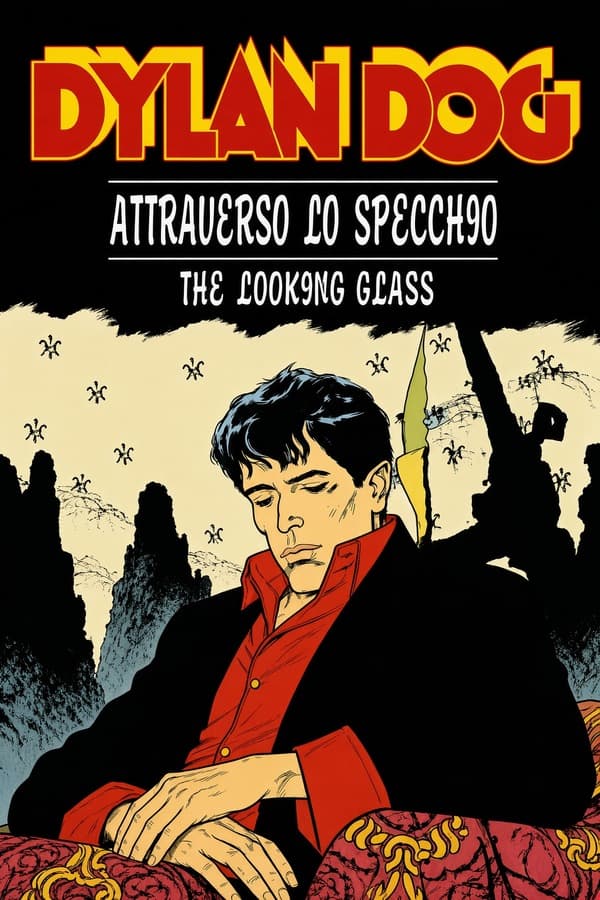
Dylan Dog: Through the Looking Glass
aka Dylan Dog: Attraverso lo Specchio
Rate this game
- Played
- Often
Dylan Dog: Through the Looking Glass trades the usual point-and-click verb commands for a ticking clock and Lovecraftian dread, pitting London's investigator of nightmares against a brutal murder and a deadline that resets your day if you miss a single clue.
Lovecraftian horror meets London detective work in Dylan Dog: Through the Looking Glass
Most players in 1993 expected point-and-click games to follow the LucasArts template: take every item, talk to every person, and build a massive inventory while wandering freely. Simulmondo s.r.l. had different ideas when they adapted Tiziano Sclavi's comic character for MS-DOS. The game casts you as Dylan Dog, starting out at your Craven Road apartment before pulling you into the gruesome murder of anthropologist Geoffrey Foulkes and an ancient Cthulhu mythos conspiracy.
The first-person perspective forces you to look directly at the scene, clicking through rooms rather than walking an avatar around them. When Sarah Fawkes hires you to investigate her uncle's death, you are immediately forced to make decisions about where to go. Unprecedented volcanic activity is shaking up the scientific community, ancient cults are moving in the shadows, and every trip across London costs precious time. If you spend your afternoon wandering the cemetery instead of checking key leads, the day simply ends and you are left stranded.
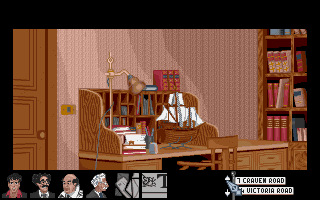
No verb lists, but a harsh author who resets your progress
Instead of listing commands like "Pick Up" or "Talk To", the mouse interface presents contextual icons. You click directly on objects or people to interact, which keeps the screen clear but places absolute weight on your deductive logic. You collect physical clues, newspapers, and strange relics into an inventory that you must actively consult to piece together what happened to Foulkes. Lord Wells offers advice and hands over a key amulet, while Inspector Bloch pops up to track your official progress.
The design gets harsh when you fail to hit necessary milestones. The game tracks your calendar, starting on dates like June 16th, and limits how many locations you can visit before night falls. If you fail to find a crucial piece of evidence, a meta-character representing the "author" intervenes. Rather than giving you a generic game over screen, the author resets your timeline back to the morning, forcing you to play through the day again with better prior knowledge.
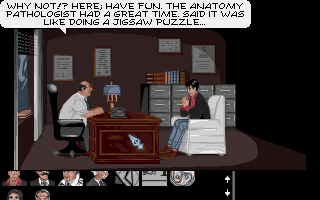
How Simulmondo built its comic adaptation
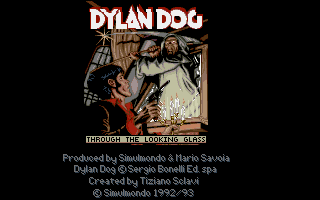
As Simulmondo's second full retail release for the comic hero after Gli Uccisori, this game was designed to feel like a visual novel come to life. The development team included coders Mario Savoia and Marco Favaretto, artist Anthony Aicardi, and audio designer Massimo Perini, working off a storyboard by Gian Battista Aicardi. Comic creator Tiziano Sclavi was directly involved with the story, ensuring the mix of detective work and Lovecraftian dread matched the Italian comic books.
In Italy, the big box hardware release for the Commodore Amiga came packed with collectible extras: a limited-edition Dylan Dog pin badge and an exclusive printed short story by Sclavi setting up the murder plot. Italian retail boxes even sported a promotional sticker featuring football star Antonio Cabrini, who acted as Simulmondo's celebrity brand ambassador at the time. When the title made its way to MS-DOS computers abroad, the atmospheric soundtrack and detailed pixel art drew praise, though international players noticed the English localization contained some awkward phrasing.
The design choices that still test your patience today
The linear constraint hidden inside a non-linear choice structure is the single biggest hurdle for modern players. You feel like you have total freedom to visit Victoria Road or the cemetery whenever you like, but missing an item like a specific note early in the day invalidates the entire run. Because the game does not explicitly warn you that you missed a trigger until the author sends you back to the start of the day, you will likely retrace your steps multiple times just to figure out which interaction you skipped.
That rigid trial-and-error structure puts this title squarely in line with early 90s European adventure games, where mood often trumped puzzle fairness. Still, the dark story and the direct involvement of Sclavi give it a tone that stands apart from standard PC horror titles of 1993. If you enjoy deductive games where time management actually matters and wrong choices have immediate temporal consequences, the mystery holds up surprisingly well.
Play Dylan Dog: Through the Looking Glass online in your browser
If you want to experience this Italian comic mystery without tracking down retro PC hardware or setting up custom emulators, you can play Dylan Dog: Through the Looking Glass free in your browser right here. Running the game directly lets you experience the eerie audio stings and atmospheric graphic frames without dealing with slow disk load times. Jump straight into Dylan's shoes, keep an eye on your pocket watch, and try to solve Foulkes's murder before the author sends you back to breakfast.
How Dylan Dog: Through the Looking Glass is played — the keys the game listens to, grouped by what they do.
- Action
- Interface
- Move mouse — Move cursor
- Right click — Select
- Left click — Confirm
Highlighted keys are mapped — hover or tap one to see what it does.
The game relies entirely on mouse interactions for selecting, confirming, examining, and using items, with no dedicated keyboard key bindings defined in the official manual.
Players' controls
Touch and gamepad controls
The on-screen keyboard and gamepad mapping the browser player uses on a phone, a tablet or a controller, as opposed to the real keys above. $PRO members make their own in the player and share them here; anyone can pick one to play with.
Make your own touch controlsPRO
- 1Open the editorSign in below, then pick what to make. The game starts with the editor open over it.
- 2Place your keysAdd keys and drag them where your thumbs rest, or map a controller's buttons. Test plays the game with them; Save keeps them, and you play with them from then on.
- 3Share themShare them right after saving in the game, or name and share them here. Players vote, and the best become this game's controls for everyone.
Go PROSee how it worksSign in+20 XP for sharing · +50 XP if yours become the game's own
- The game's own controlsKeyboardGamepadWhat every player starts with.In use
3 screenshots
From the archive
No gameplay video yet
No gameplay video for Dylan Dog: Through the Looking Glass yet. Sign in to add one.
No reviews yet
Tell the community what you think of Dylan Dog: Through the Looking Glass. Reviews are public and tied to your username.
No archived manuals for Dylan Dog: Through the Looking Glass yet
No manuals archived for this title yet. Sign in to upload the first scan.
Cheat codes, console commands and memory pokes for Dylan Dog: Through the Looking Glass — each one verified and attributed.
Sign in to submitNo cheats yet for this title
Know a working cheat, poke or trainer? Add it with the button above. Moderators check every entry before it goes live.
No archived soundtrack for Dylan Dog: Through the Looking Glass yet
No soundtrack archived for this title yet. Sign in to upload the first rip.
No save states for Dylan Dog: Through the Looking Glass yet
No save states for this title yet. Sign in to share one.
Discussions
Sign in to post- Threads0
- Total posts0
- Online now6
Community · Dylan Dog: Through the Looking Glass
Who's contributing, and what's new
- Reviews0
- Threads0
- Uploadsapproved0
- Contributors0
Recent activity
Nothing here yet
Reviews, discussion threads and approved uploads appear here as members add them.