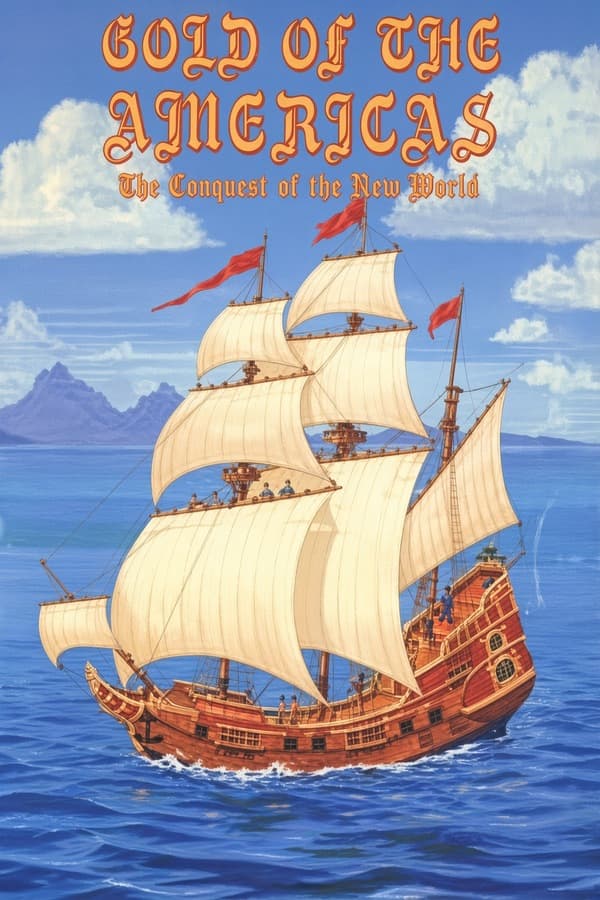
Strategic Studies Group built Gold of the Americas: The Conquest of the New World around a strict turn limit, forcing four European powers to fight over 35 regions in a race where permanent armies do not exist.
The short shelf life of your military in Gold of the Americas: The Conquest of the New World
Most strategy games of the late eighties encouraged you to build a massive stack of units and roll over the map, but designers Stephen Hart and Ian Trout took a different route. In this game, your Armies and Warships only survive for a single 10-year turn before vanishing from the board. Every single round asks you to re-purchase your military force from scratch, preventing anyone from establishing a permanent garrison or hoarding an unbeatable armada.
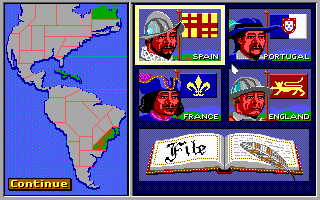
You choose between Spain, Portugal, England, or France, competing across 31 land zones and 4 sea regions over a fixed span of 30 turns. Instead of driving units square by square across a grid, you assign Armies, Colonists, Trading Ships, Privateers, Slaves, and Explorers straight into specific areas. The strategic loop relies on incomplete information: you deploy assets into unknown territories, hoping your expedition finds gold or fertile land rather than hostile natives or a rival fleet.
Choosing your nation sets your early trajectory. Spain starts with distinct economic advantages that dominate the opening decades, while England and France receive stronger bonuses in the mid to late game. If you play as Spain, your job is to grab land quickly and fill the Royal Treasury before the later-arriving powers catch up.
Managing taxation and the threat of breakaway colonies
The economy pushes you into a dangerous balancing act between the Old World and your local holdings. Money earned from trade and native management must be taxed and sent back to the King to keep your home support intact, which in turn yields fresh resources. However, you can also skim off profits into a Secret Fund, hiding wealth from the crown to finance your own off-the-books expansion.
The real twist, noted by early reviewers like Dave Morris in Games International, lies in how the match finishes. Over-taxing your territories or allowing them to grow too wealthy without heavy control triggers colonial rebellions. The computer-controlled Independent nations that emerge from these revolts collect victory points fast, and they frequently steal the final win out from under every Old World nation on the board.
- Exploration units uncover rich resource sites but risk total loss in unmapped lands.
- Colonists settle regions to build up long-term point generation across the 300-year timeline.
- Privateers disrupt enemy trade lanes and funnel extra cash into your Secret Fund.
- Trading Ships carry regional wealth home to satisfy the King's tax demands.
Interface stumbles in this 1989 MS-DOS strategy release
The core mechanics still make sense, but the user interface drags the pacing down for this 1989 release from Strategic Studies Group. Trying to hit specific land icons with early mouse controls can be frustratingly imprecise, leading to misclicked assignments when you are trying to manage multiple sea zones at once. The taxation menus also drop you straight into text-heavy accounting without much feedback on how a rate adjustment will affect colony morale next turn.
Magazine critics at the time split on this trade-off. Computer Gaming World awarded it high marks for accessibility and replay value, while Amiga Computing gave it 67%, noting that the abstracted presentation lacked the visual flair of competing titles. It sits squarely in the tradition of turn-based strategy games from that era, trading direct combat tactics for higher-level economic management.
How to play Gold of the Americas: The Conquest of the New World online today
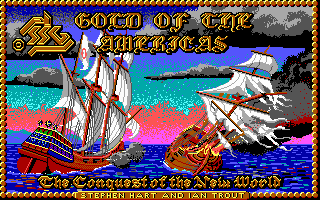
If you want to try this classic design without digging out old floppy disks, you can play Gold of the Americas: The Conquest of the New World free in your browser right now. It runs smoothly in modern web displays without requiring extra emulation tools or setup files.
When you start your first match, pick Spain for an easier run through the first ten turns, and keep a close eye on your colony discontent levels. If you let your overseas territories grow too large without keeping them happy, the breakaway Independent forces will sweep the final scores before turn 30 wraps up.