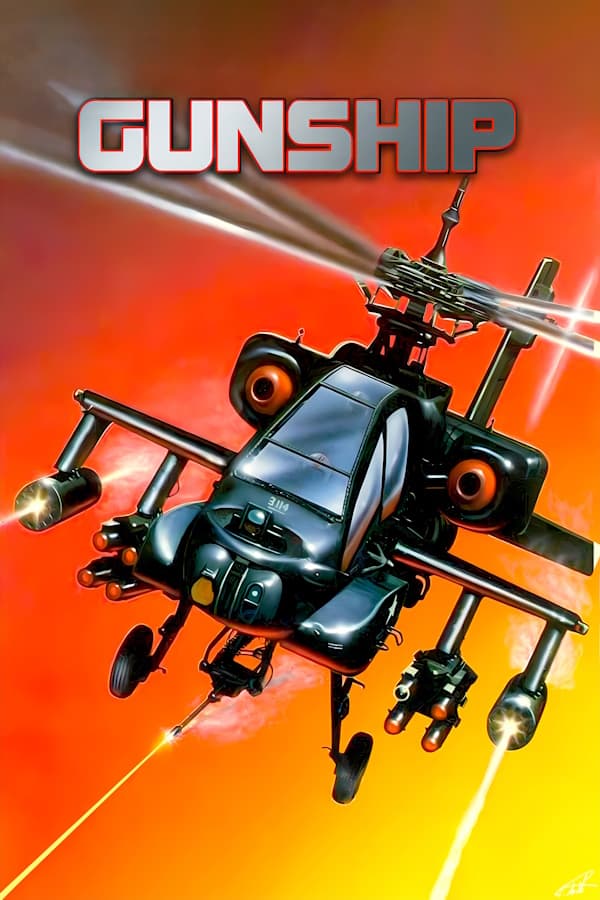

MicroProse brought real military aviation to home hardware with Gunship, dropping players into the cockpit of an AH-64A Apache attack helicopter. Success required balancing missile payloads, tracking radar threats, and surviving brutal anti-aircraft fire across dangerous low-altitude combat zones.
Gunship began as an urban chase before turning into a tactical flight model
The original plan for the project looked nothing like the military flight trainer that arrived on store shelves. Programmers Andy Hollis and Sid Meier, working with Gregg Tavares, set out to build an arcade action game inspired by the helicopter movie Blue Thunder. That initial concept focused on flying through dense city landscapes. Drawing detailed 3D skyscrapers in real time proved far too heavy for target PCs of the mid-1980s.
Faced with severe hardware limits, the team shifted direction to simulate the newly deployed AH-64A Apache. They adapted 3D terrain routines previously written for their earlier hit F-15 Strike Eagle to render rolling rural landscapes instead of city blocks. The major redesign delayed release into 1986, prompting computer magazines to label the quiet project as vaporware. When MicroProse Software, Inc. finally shipped the finished title, it shattered expectations and earned over ten million dollars for the company that year.
Low-altitude tactical flight demands real cockpit management
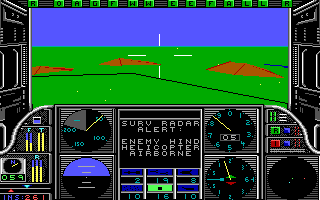
Sitting in the pilot seat forces you to manage hardware, weight, and weapons before even touching the collective control. Every mission deployment starts with loadout selection. Packing maximum laser-guided AGM-114 Hellfire missiles lets you knock out enemy heavy armor at long range, but the added weight degrades your climb rate. Swapping hardpoints for unguided FFAR rocket pods gives you area fire against soft ground units, while heat-seeking AIM-9 Sidewinders provide protection against hostile patrol choppers.
Flying low behind hills is mandatory for survival. The first-person cockpit display forces you to watch your airspeed, radar warning receiver, and weapon feeds simultaneously. Targeting soft targets like infantry or radar bunkers uses a 30mm chain gun tied directly to your helmet gunsight. When an enemy tracking system locks onto your airframe, surviving means popping chaff, dropping flares, or switching on your active jammer before taking a hit.
The multi-stage campaign spans five distinct global operational theaters:
- USA: Training grounds for mastering basic flight maneuvers and instrument landings.
- Southeast Asia: Jungle interdiction flights supporting frontline ground troops.
- Central America: Strikes against entrenched enemy headquarters and supply lines.
- Middle East: Open desert navigation with long line-of-sight missile engagements.
- Western Europe: Full-scale tactical war against Soviet armor and Warsaw Pact air defenses.
The DOS version of Gunship punished mistakes with lethal anti-aircraft fire
Playing the DOS version of Gunship demanded serious preparation. MicroProse packed a physical cardboard overlay in the box that fit over your PC keyboard. Without that reference card overlaying the function keys, managing weapon cycling, radar modes, and flight trim during a hot landing zone drop was nearly impossible.
The learning curve was intentionally steep. Contemporary reviews noted that the internal PC speaker audio was modest and beepish, though players running Tandy systems enjoyed three-voice audio support that added weight to rotor chop and engine pitch. The aggressive enemy AI set it apart. At high difficulty levels, hostile anti-aircraft batteries react almost instantly to an exposed airframe, punishing reckless pilots who fly above the treeline.
Mastering the Apache cockpit still feels earned today
While later titles like Gunship 2000 expanded on fleet tactics, this original release holds up because its core flight loop is unforgiving and methodical. It does not treat combat like a mindless corridor shooter. Victory comes down to low-altitude navigation, watching fuel consumption, and knowing exactly when to disengage from a superior ground force.
If you want to test your tactical skills, you can play Gunship online right now inside your web browser. Load up a mission in the Western Europe theater, stay under fifty feet to mask your radar signature, and line up a Hellfire strike on an armored column before their air defense radar locks onto your rotor mast.