
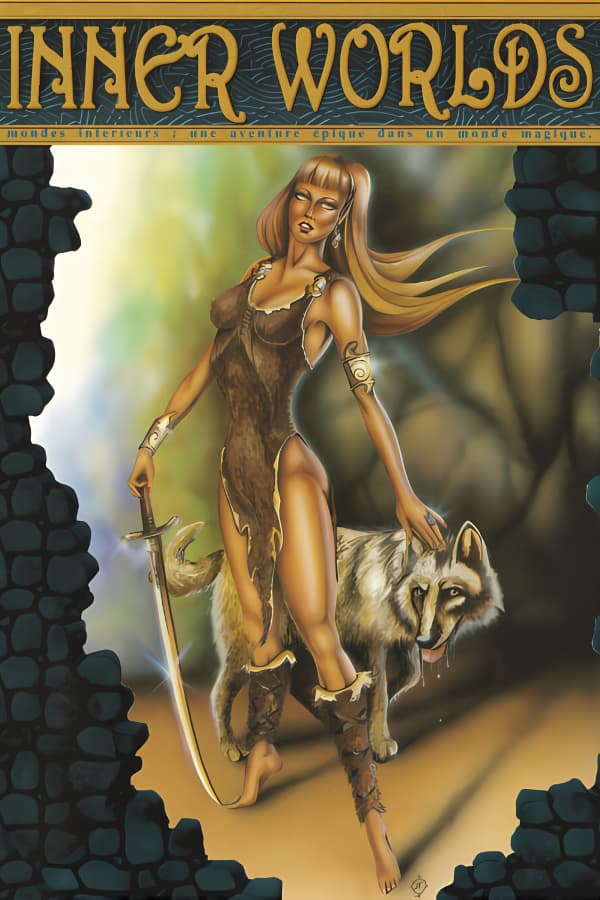

In Inner Worlds, you control Nikita, a warrior who can shift into a wolf to tear through fantasy monsters and crawl through narrow passages that human knees were never meant to navigate.
Most 1990s side-scrollers gave you a single sword swing and expected you to jump across platforms until the exit door appeared. Sleepless Software took a different route with this 1996 action game by building every level around shape-shifting. As a human, Nikita wields weapons like swords, bows, and heavy hammers that can throw bolts of lightning when enchanted with scrolls. Once you accumulate enough mana or drink a transformation potion, she turns into a wolf with a rapid frenzy attack and a much smaller physical frame.
That shape change is not a cosmetic gimmick. In wolf form, you drop down into tight tunnels, leap across gaps with different physics, and shred low-lying enemies that human melee strikes usually miss. The catch is that managing your mana pool becomes a constant survival puzzle. Wolf form drains your magic reserves, meaning you cannot stay in beast mode forever.
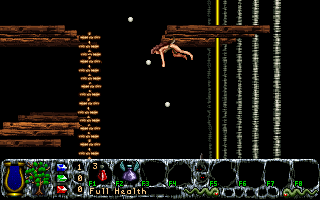
Getting hit produces distinct audio feedback. Human Nikita groans or yelps when injured, while the wolf form growls. A lethal drop always triggers her human death scream regardless of your active shape.
The story behind how Sleepless Software created the game is just as unusual as its mechanics. The project started through a recruitment post on the Usenet newsgroup comp.os.linux, gathering a scattered team of roughly two dozen developers across nine countries. They spent three years building the code in C++ using GCC on Linux desktop machines before compiling the final binary for MS-DOS.
That open-source foundation yielded smooth multi-plane parallax scrolling. The engine creates pseudo-3D visual depth across Castle Drofanayrb and the Blue Forest that few shareware titles achieved. Sound design was handled with equal independence. The team held an open music contest to assemble the soundtrack, awarding cash prizes to track authors who submitted Protracker MOD files.
Playing the game with a Gravis Ultrasound or a standard Sound Blaster card exposes a dark ambient soundtrack that matches the gloomy stone corridors and spider-infested caverns. Secret locations hide behind background doorways and breakable walls, rewarding curious players with amulets, diamond shards, and levitation potions. Discovering any hidden area triggers a low audio tone so you know you found something special.
The campaign spans three complete episodes, starting with the original shareware release set in Castle Drofanayrb where Nikita seeks out the Gralob. Episode 2 moves toward volcanic caverns, while Episode 3 pushes into the inner lair of The Claws. Each episode packs roughly nine levels, placing a giant boss monster every three stages. Enemies escalate from giant spiders and bats to grotesque beasts that stretch their limbs across the screen, forcing you to switch between ranged spells and wolf rushes.
Where the game hits a severe flaw is its final confrontation. Players who reach the end of the third episode frequently hit a wall against the final boss. Unloading every enchanted weapon, scroll, and stored spell in your inventory seems to show no visible effect on the boss. Because damage feedback on bosses feels unclear, it creates a frustrating roadblock for anyone who spent hours mastering the platforming. That spike, combined with a late release date when DOS platformers were losing shelf space to 3D accelerators, kept the commercial release from finding a large audience at retail.
Despite its commercial stumble, this title features some of the most rewarding level layouts of its time. The enchanted weapon system, combined with spatial puzzles that demand levitation potions and secret doorway exploration, gives the campaign far more tactical depth than standard platformers. If you missed this late-era 1996 release, playing this Inner Worlds MS-DOS game shows how much mileage a creative indie studio could squeeze out of 2D hardware.
You can play Inner Worlds online free in your browser right now. Modern players often try to play through as a pure human warrior, but the trick to surviving the deeper levels is conserving your mana so you can turn into a wolf the second a tight tunnel or heavy ambush appears. Fire it up, keep an ear out for the secret tone behind background doorways, and see if you can clear the levels that stumped action fans decades ago.
In Inner Worlds, you control Nikita, a warrior who can shift into a wolf to tear through fantasy monsters and crawl through narrow passages that human knees were never meant to navigate.
Most 1990s side-scrollers gave you a single sword swing and expected you to jump across platforms until the exit door appeared. Sleepless Software took a different route with this 1996 action game by building every level around shape-shifting. As a human, Nikita wields weapons like swords, bows, and heavy hammers that can throw bolts of lightning when enchanted with scrolls. Once you accumulate enough mana or drink a transformation potion, she turns into a wolf with a rapid frenzy attack and a much smaller physical frame.
That shape change is not a cosmetic gimmick. In wolf form, you drop down into tight tunnels, leap across gaps with different physics, and shred low-lying enemies that human melee strikes usually miss. The catch is that managing your mana pool becomes a constant survival puzzle. Wolf form drains your magic reserves, meaning you cannot stay in beast mode forever.

Getting hit produces distinct audio feedback. Human Nikita groans or yelps when injured, while the wolf form growls. A lethal drop always triggers her human death scream regardless of your active shape.
The story behind how Sleepless Software created the game is just as unusual as its mechanics. The project started through a recruitment post on the Usenet newsgroup comp.os.linux, gathering a scattered team of roughly two dozen developers across nine countries. They spent three years building the code in C++ using GCC on Linux desktop machines before compiling the final binary for MS-DOS.
That open-source foundation yielded smooth multi-plane parallax scrolling. The engine creates pseudo-3D visual depth across Castle Drofanayrb and the Blue Forest that few shareware titles achieved. Sound design was handled with equal independence. The team held an open music contest to assemble the soundtrack, awarding cash prizes to track authors who submitted Protracker MOD files.

Playing the game with a Gravis Ultrasound or a standard Sound Blaster card exposes a dark ambient soundtrack that matches the gloomy stone corridors and spider-infested caverns. Secret locations hide behind background doorways and breakable walls, rewarding curious players with amulets, diamond shards, and levitation potions. Discovering any hidden area triggers a low audio tone so you know you found something special.
The campaign spans three complete episodes, starting with the original shareware release set in Castle Drofanayrb where Nikita seeks out the Gralob. Episode 2 moves toward volcanic caverns, while Episode 3 pushes into the inner lair of The Claws. Each episode packs roughly nine levels, placing a giant boss monster every three stages. Enemies escalate from giant spiders and bats to grotesque beasts that stretch their limbs across the screen, forcing you to switch between ranged spells and wolf rushes.
Where the game hits a severe flaw is its final confrontation. Players who reach the end of the third episode frequently hit a wall against the final boss. Unloading every enchanted weapon, scroll, and stored spell in your inventory seems to show no visible effect on the boss. Because damage feedback on bosses feels unclear, it creates a frustrating roadblock for anyone who spent hours mastering the platforming. That spike, combined with a late release date when DOS platformers were losing shelf space to 3D accelerators, kept the commercial release from finding a large audience at retail.
Despite its commercial stumble, this title features some of the most rewarding level layouts of its time. The enchanted weapon system, combined with spatial puzzles that demand levitation potions and secret doorway exploration, gives the campaign far more tactical depth than standard platformers. If you missed this late-era 1996 release, playing this Inner Worlds MS-DOS game shows how much mileage a creative indie studio could squeeze out of 2D hardware.
You can play Inner Worlds online free in your browser right now. Modern players often try to play through as a pure human warrior, but the trick to surviving the deeper levels is conserving your mana so you can turn into a wolf the second a tight tunnel or heavy ambush appears. Fire it up, keep an ear out for the secret tone behind background doorways, and see if you can clear the levels that stumped action fans decades ago.
How Inner Worlds is played — the keys the game listens to, grouped by what they do.
Highlighted keys are mapped — hover or tap one to see what it does.
The on-screen keyboard and gamepad mapping the browser player uses on a phone, a tablet or a controller, as opposed to the real keys above. $PRO members make their own in the player and share them here; anyone can pick one to play with.
Cheat codes, console commands and memory pokes for Inner Worlds — each one verified and attributed.
Sign in to submitHow Inner Worlds is played — the keys the game listens to, grouped by what they do.
Highlighted keys are mapped — hover or tap one to see what it does.
The on-screen keyboard and gamepad mapping the browser player uses on a phone, a tablet or a controller, as opposed to the real keys above. $PRO members make their own in the player and share them here; anyone can pick one to play with.
Cheat codes, console commands and memory pokes for Inner Worlds — each one verified and attributed.
Sign in to submit