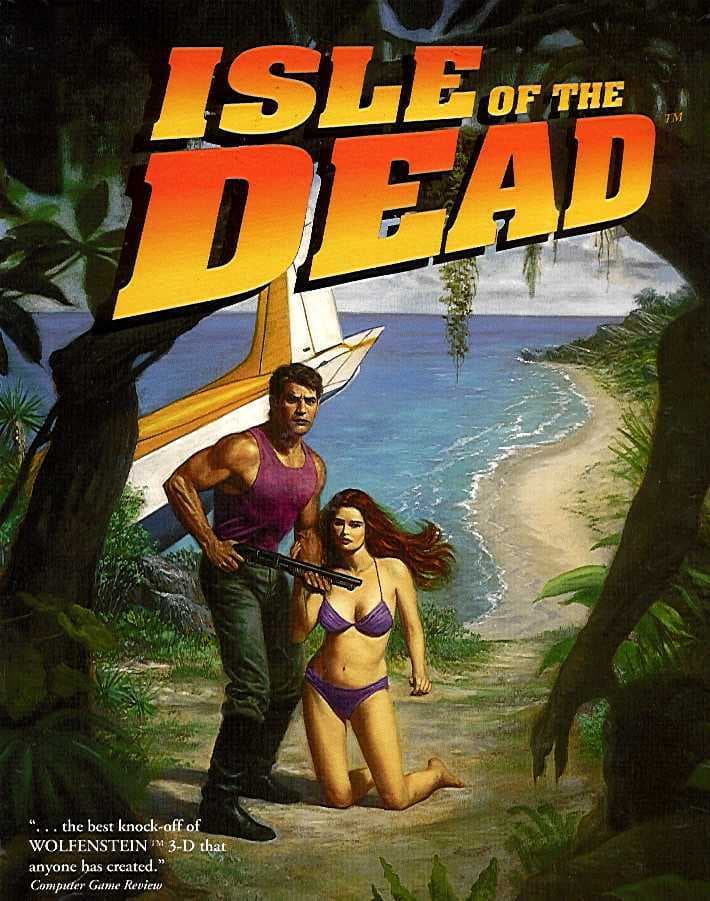
Isle of the Dead
Isle of the Dead drops you on a beach beside a burning plane crash with a machete, surrounded by flesh-eating zombies and jungle paths that refuse to tell you where to go.
Most games that combine first-person shooting with inventory puzzles leave one side of the equation feeling like an afterthought. Programmer Bryan Kelsch disliked titles that gave players no real narrative reason for their actions, so Rainmaker Software expanded what was supposed to be a straightforward hack-and-slash into a horror comic adventure. The result, released as an MS-DOS action game in 1993, is one of the strangest design experiments of its year. It tries to glue the grid-based 3D view of Wolfenstein 3D to a 2D point-and-click interface, and the two halves fight each other every step of the way.
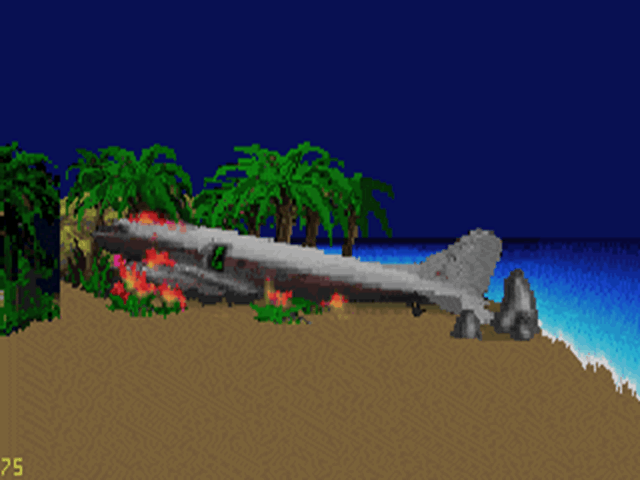
Surviving the early minutes of Isle of the Dead
You play as Jake Dunbar, the lone survivor of a air crash stranded on a tropical island in Oceania. Your immediate goal is to stay alive, find supplies, rescue a damsel in distress, and eventually put an end to the mad scientist running the place. When you first stand up on the sand, you have no firearms. You scavenge the burning plane wreckage for a basic machete, grab a few coconuts to restore your health, and start hacking at the local wildlife.
The enemy roster leans heavily into pulp horror staples. You will fight vicious wolves, bats, and several varieties of flesh-eating zombies, including fat, child, female, dude, and headless versions. The combat in the 3D mode feels brutal, largely because the engine lacks strafing entirely. To see if a dense forest tile conceals an exit or a side path, you cannot just side-step; you have to stop, turn ninety degrees, look, and turn back. That single missing movement key turns basic map navigation into a tedious chore, especially when a zombie is walking straight toward you.
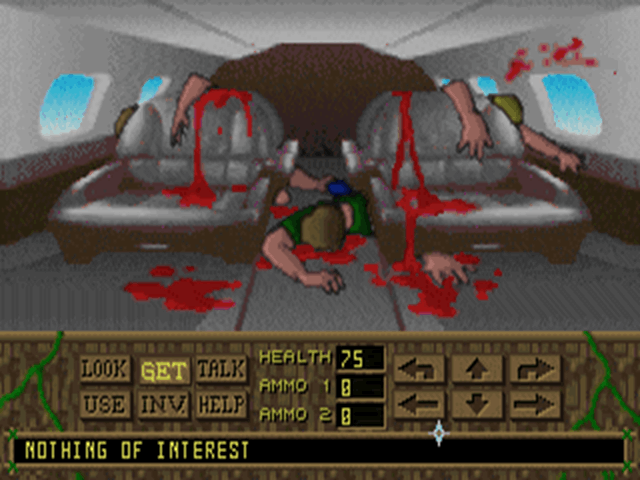
The cruel puzzle design that breaks your entire playthrough
Whenever you reach an interactive scene, a building interior, or a non-player character, the game switches to a full 2D point-and-click screen. Here you examine objects, read books, manage your inventory, and solve traditional adventure puzzles. It sounds like a great idea on paper, but the execution contains a trap that ruined countless playthroughs back when people bought this in a big cardboard box complete with its physical minicomic.
Early on, you acquire a flare gun along with emergency supplies. The game lets you fire off flare rounds whenever you like. What the game never tells you is that you absolutely must save flare ammo for a mandatory puzzle at the end of the game. If you fire those flares early to kill a tough zombie or test out your hardware, you lock your save file into an unwinnable state. You can play for hours afterward without knowing you are already doomed, only to hit a wall that forces a complete restart from the main menu.
- First-person exploration across a tile-based jungle grid with zero strafing support.
- Transition screens that swap the 3D perspective for 2D inventory puzzles and search mechanics.
- Deadly, untelegraphed progression traps where using key items like the flare gun early soft-locks your game.
How Rainmaker Software built a 386-era horror experiment
Designed by A. Sean Glaspell alongside W. Scott Simmons, with code by Bruce J. Mack and Bryan Kelsch, art by Myk Friedman, and music by Scott Loehr, the game targeted standard 386-class PCs like a 386SX running at 33 MHz. Rainmaker Software even had an Atari Jaguar CD version in development at one point, though it was cancelled before seeing light of day. Merit Software distributed the DOS release, but critics were unsparing. Computer Gaming World eventually placed it on a list of the worst video games of all time, pointing at its blurry graphics, unhelpful map screen, and clumsy pacing.
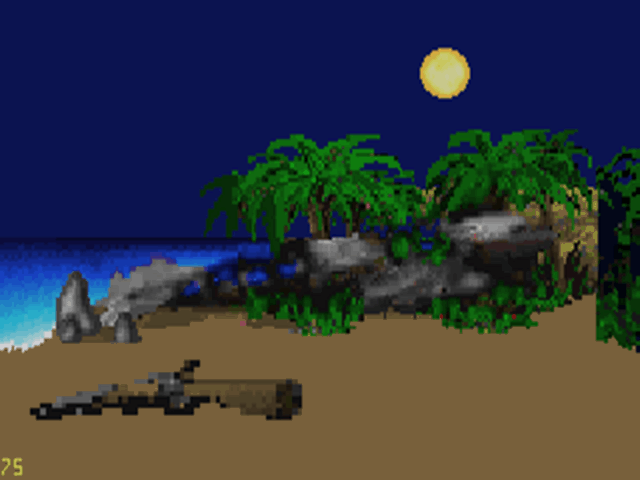
The complaints held weight then and they hold weight now. The graphics in the 3D engine blur together into a green and brown smudge, making forest paths look identical. The long stretch at the beginning before you get a real firearm leaves you relying on melee hits against hitboxes that feel unpredictable. Yet behind the rough spots, its B-movie trashiness carries it through. Few developers were mixing genres so recklessly back then, and this one committed fully to its pulpy theme.
Play Isle of the Dead online right now
You can play Isle of the Dead online right here in your browser, running the original MS-DOS game with no setup or installation needed. If you want to sample a odd piece of early 1990s experimental game design, it is worth spending an evening with it. Just remember the one golden rule every original player learned the hard way: hold onto your flare gun ammo, or you will end up stranded on the island forever.