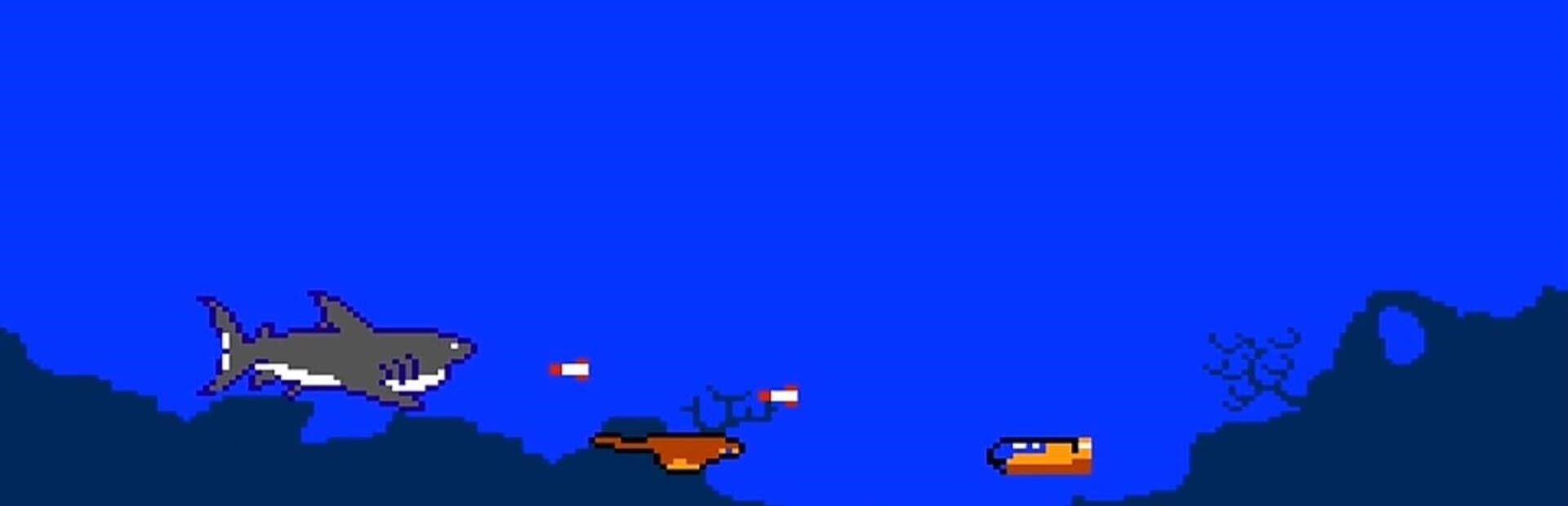
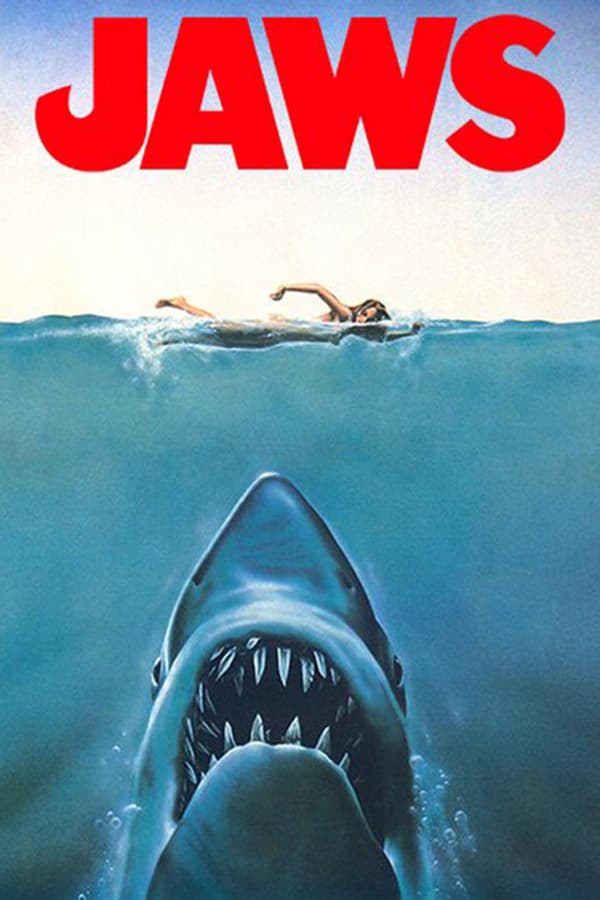

You dock at Bar Harbor with eight thousand dollars, a barebones fishing vessel, and a mayor ready to pay hard cash if you can clear the coast of a giant, man-eating shark in Jaws.
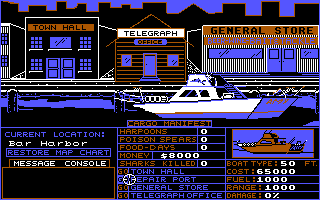
The core loop of this 1989 release from Starsoft Development Laboratories, Inc. hits you right away: you are broke, your ship carries almost no survival gear, and open ocean turns brutal fast. Instead of throwing you straight into an arcade boss fight, the game forces you to play the long game. You start on the East Coast of North America with a modest sum, checking in with local port authorities and taking contracts to clear out marine threats. You manage basic logistics first, stocking up on fuel, food, and basic weapons before leaving the safety of the harbor to hunt.
Every trip out onto the water is a balance between expenditure and reward. If you burn through all your fuel chasing minor targets, you end up stranded without enough capital to buy harpoons for the main event. Upgrades at the general store are essential to surviving the trek across both the Atlantic and Pacific coasts, down to the waters off Mexico. You harvest whatever smaller sharks you kill along the way, lugging their remains back to port to sell for cold, hard cash so you can eventually afford the heavier gear required to tackle your true target.
When your boat collides with a swarm on the map, the perspective shifts to a side-view tactical action screen. Here, the rhythm changes instantly from slow maritime navigation to quick target shooting. You pick off aggressive sea life using a ship-mounted harpoon gun or a rifle, carefully lining up shots before the creatures capsize your vessel or tear through your hull. The movement feels heavy, forcing you to anticipate momentum rather than twitch-aim.
If firing from the deck fails to clear the water, you have to strap on diving gear and jump directly into the sea. Underneath the waves, the danger spikes dramatically. Swimming alongside aggressive ocean predators in a side-scrolling space gives you better angles to land critical shots, but it leaves you entirely exposed. A single miscalculated dive means losing your diver, wasting expensive equipment, and returning to port with empty holds.
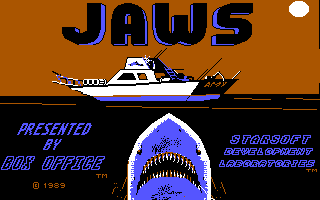
If you pick up this action game expecting flashy late-DOS presentation, the tech will shock you. Published by Box Office, Inc. in 1989, it relies entirely on four-color CGA graphics and raw PC speaker bleeps to render the open ocean. Watching a massive oceanic predator rendered in cyan and magenta pixel blocks takes some adjustment, but the high-contrast palette makes tracking targets underwater surprisingly clear during fast combat.
The audio relies on primitive internal speaker chirps to signal incoming attacks and successful harpoon hits. While the sound hardware support is sparse compared to the music-heavy Commodore 64 or Apple II ports of the same year, the stark quiet of the PC speaker actually heightens the tension when you are low on ammo in deep water. To help players learn the ropes without losing their hard-earned progress, the developers included a dedicated practice mode, allowing you to fine-tune your hunting skills across multiple difficulty tiers before starting a real campaign.
This adaptation prioritized economic management over pure arcade violence. The constant tension between maintaining your fuel reserves and buying better harpoons gives the campaign a distinct tempo. However, four-color CGA graphics and blunt PC speaker sound leave the presentation bare, and grinding minor shark swarms to afford top-tier gear can drag during long sessions.
If you want to experience how home computers handled movie licenses at the end of the eighties, you can play Jaws online right now. It runs free in your browser with no setup required. Modern players often expect a simple button-masher, but taking a few minutes to master the port shopping loop and practice mode before diving into deep ocean encounters makes all the difference for a successful run.
You dock at Bar Harbor with eight thousand dollars, a barebones fishing vessel, and a mayor ready to pay hard cash if you can clear the coast of a giant, man-eating shark in Jaws.
The core loop of this 1989 release from Starsoft Development Laboratories, Inc. hits you right away: you are broke, your ship carries almost no survival gear, and open ocean turns brutal fast. Instead of throwing you straight into an arcade boss fight, the game forces you to play the long game. You start on the East Coast of North America with a modest sum, checking in with local port authorities and taking contracts to clear out marine threats. You manage basic logistics first, stocking up on fuel, food, and basic weapons before leaving the safety of the harbor to hunt.
Every trip out onto the water is a balance between expenditure and reward. If you burn through all your fuel chasing minor targets, you end up stranded without enough capital to buy harpoons for the main event. Upgrades at the general store are essential to surviving the trek across both the Atlantic and Pacific coasts, down to the waters off Mexico. You harvest whatever smaller sharks you kill along the way, lugging their remains back to port to sell for cold, hard cash so you can eventually afford the heavier gear required to tackle your true target.

When your boat collides with a swarm on the map, the perspective shifts to a side-view tactical action screen. Here, the rhythm changes instantly from slow maritime navigation to quick target shooting. You pick off aggressive sea life using a ship-mounted harpoon gun or a rifle, carefully lining up shots before the creatures capsize your vessel or tear through your hull. The movement feels heavy, forcing you to anticipate momentum rather than twitch-aim.
If firing from the deck fails to clear the water, you have to strap on diving gear and jump directly into the sea. Underneath the waves, the danger spikes dramatically. Swimming alongside aggressive ocean predators in a side-scrolling space gives you better angles to land critical shots, but it leaves you entirely exposed. A single miscalculated dive means losing your diver, wasting expensive equipment, and returning to port with empty holds.

If you pick up this action game expecting flashy late-DOS presentation, the tech will shock you. Published by Box Office, Inc. in 1989, it relies entirely on four-color CGA graphics and raw PC speaker bleeps to render the open ocean. Watching a massive oceanic predator rendered in cyan and magenta pixel blocks takes some adjustment, but the high-contrast palette makes tracking targets underwater surprisingly clear during fast combat.
The audio relies on primitive internal speaker chirps to signal incoming attacks and successful harpoon hits. While the sound hardware support is sparse compared to the music-heavy Commodore 64 or Apple II ports of the same year, the stark quiet of the PC speaker actually heightens the tension when you are low on ammo in deep water. To help players learn the ropes without losing their hard-earned progress, the developers included a dedicated practice mode, allowing you to fine-tune your hunting skills across multiple difficulty tiers before starting a real campaign.
This adaptation prioritized economic management over pure arcade violence. The constant tension between maintaining your fuel reserves and buying better harpoons gives the campaign a distinct tempo. However, four-color CGA graphics and blunt PC speaker sound leave the presentation bare, and grinding minor shark swarms to afford top-tier gear can drag during long sessions.
If you want to experience how home computers handled movie licenses at the end of the eighties, you can play Jaws online right now. It runs free in your browser with no setup required. Modern players often expect a simple button-masher, but taking a few minutes to master the port shopping loop and practice mode before diving into deep ocean encounters makes all the difference for a successful run.
How Jaws is played — the keys the game listens to, grouped by what they do.
Highlighted keys are mapped — hover or tap one to see what it does.
Under water, the keyboard must be used even if a joystick is connected. Up and Down arrows move the diver, while ENTER fires arrows.
The on-screen keyboard and gamepad mapping the browser player uses on a phone, a tablet or a controller, as opposed to the real keys above. $PRO members make their own in the player and share them here; anyone can pick one to play with.
Cheat codes, console commands and memory pokes for Jaws — each one verified and attributed.
Sign in to submitHow Jaws is played — the keys the game listens to, grouped by what they do.
Highlighted keys are mapped — hover or tap one to see what it does.
Under water, the keyboard must be used even if a joystick is connected. Up and Down arrows move the diver, while ENTER fires arrows.
The on-screen keyboard and gamepad mapping the browser player uses on a phone, a tablet or a controller, as opposed to the real keys above. $PRO members make their own in the player and share them here; anyone can pick one to play with.
Cheat codes, console commands and memory pokes for Jaws — each one verified and attributed.
Sign in to submit