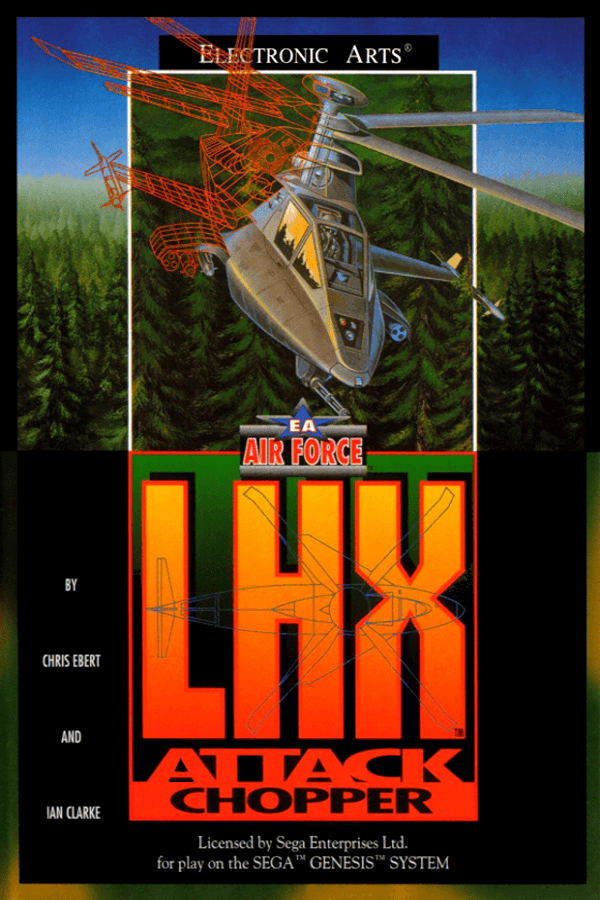
LHX: Attack Chopper
Before combat flight simulators got bogged down in three-hundred-page manuals, LHX: Attack Chopper delivered high-speed polygon combat and desert camel strafing straight to home PCs.
The polygon revolution that dropped players straight into the cockpit
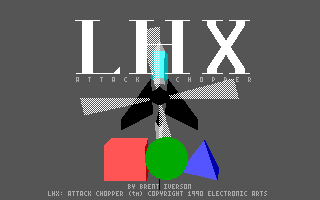
In 1990, simulating modern air combat on an IBM-compatible PC meant choosing between visual speed and realistic physics. Designer Brent Iverson, a U.S. Army veteran who later programmed Chuck Yeager's Air Combat, solved this by leaning hard into fast action without throwing out flight physics entirely. Developed and published by Electronic Arts, Inc., the 1990 release of LHX: Attack Chopper gave PC pilots a fluid 3D battlefield where rival flight sims usually ran like slideshows.
Booting up the LHX: Attack Chopper MS-DOS game puts you in the boots of a pilot in the U.S. Army Air Cavalry. You are given immediate access to three different war theaters across Libya, Southeast Asia (Vietnam), and Central Europe (East Germany). Instead of forcing you through a rigid campaign, the briefing room lets you select missions in whichever order you prefer across five distinct complexity levels. Whether you want a quick strike on a Libyan radar site or a long escort run through European valleys, you pick your venue, pick your craft, and load your ordnance.
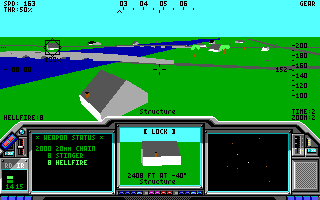
The visual presentation was a massive step forward for early VGA displays, pushing flat-shaded 3D polygon graphics at a 320x200 resolution. While the ground terrain is largely abstract color blocks, the sense of motion and spatial awareness in the cockpit was genuine. You could hear engine hums and weapon fire across a range of setup choices, with dedicated command-line flags like adlibsound or tandysound enabling full support for AdLib, Sound Blaster, and Tandy audio hardware alongside the trusty internal PC speaker.
Four rotary wings, five skill levels, and one ridiculously clunky tiltrotor
The hardware selection in LHX: Attack Chopper is one of its strongest selling points, giving you four distinct airframes that each handle with their own weight and tactical role:
- AH-64A Apache: The heavy-hitting gunship built to take down heavy armor and air defense installations.
- UH-60 Blackhawk: A sturdy tactical transport capable of handling combat search-and-rescue and cargo drops.
- LHX: The stealthy experimental prototype (based on the program that led to the RAH-66 Comanche) offering high speed and advanced missile systems.
- MV-22 Osprey: A tiltrotor aircraft designed for fast transit between landing zones and target areas.
Flying the Osprey is easily the most eccentric experience in the game. You can convert between vertical helicopter flight and horizontal airplane flight on the fly. Converting to airplane mode lets you cover huge distances in record time, but the flight physics turn treacherous in a hurry. The controls in airplane mode are notoriously clunky, and if you tilt your vector too aggressively during a low-altitude run, you will slam headfirst into the desert floor before you can level the wings.
Mission design reaches far beyond simple search-and-destroy sweeps. You will find yourself escorting allied B-2 bombers through heavily defended airspace, flying rescue runs to pick up downed crews in a Blackhawk, and dropping cargo into hot landing zones surrounded by anti-aircraft artillery. Ground forces rely on authentic Soviet-made hardware, featuring mobile SAM sites, armored personnel carriers, and patrol boats that do not hesitate to track your altitude.
Tactical exploits, lethal cameras, and dead pilots who stay dead
While the overall package was praised by contemporary outlets, like The Games Machine awarding the DOS version a 90% rating in June 1990, it gained a reputation for punishing difficulty. Other outlets were far harsher on its shortcomings, with Computer Gaming World giving it 2.5 out of 5 stars in 1991. The primary source of player heartbreak was the career system. If your helicopter is blown out of the sky and your pilot dies in action, the game permanently wipes your pilot profile from the disk.
To survive the harsh air defense networks in Libya and Germany, players quickly discovered a classic game exploit involving radar lock mechanics. Enemy anti-aircraft missile installations have an arbitrary minimum lock-on range programmed into their logic. If you trim your flight vector down to an ultra-low altitude between 100 and 200 feet, you skim right beneath their missile tracking systems. You can hover right past deadly SAM batteries while they helplessly stare at you, completely unable to launch.
Another hazard comes from the camera controls. The game lets you switch from the primary first-person cockpit view to various third-person external perspectives to watch your aircraft fly over the terrain. Doing this in active combat is effectively a death sentence. While you are admiring your vector from an outside angle, your radar and threat warnings are hidden, leaving your helicopter completely open to free shots from enemy fighters and ground artillery.
There is also room for dark humor amid the military tension. While skimming low over desert theater maps, you will occasionally spot tiny 3D camels rendered right on the terrain grid. The developers rendered them as hit-testable objects, meaning you can lock onto them or fire your chin cannon to vaporize them mid-mission.
Why this early 3D combat sim is still worth taking for a spin
Revisiting this military release today highlights how well focused simulation games were before hyper-realistic avionics took over the genre. In 1994, PC Gamer US ranked it the 29th best computer game ever created, pointing out that what it lacked in graphic polish was easily made up for by rapid pacing and smooth control response. It strikes a balance between target tracking and arcade execution that few titles from the early nineties managed to nail.
The flat-shaded polygons hold together because the framerate stays smooth during heavy dogfights. Managing countermeasure flares while dodging incoming missiles near mountain ridges stays tense, even if the enemy ground vehicles look like simple geometric blocks. It is a sharp piece of early programming from Electronic Arts, Inc., proving how smart game logic could squeeze fast 3D out of limited PC hardware.
If you want to jump into the cockpit yourself, you can play LHX: Attack Chopper online without hunting down ancient boot disks. You can launch LHX: Attack Chopper free in your browser directly on this page with full audio support and responsive flight controls ready to go. Once you take off, try switching the Osprey into airplane mode at fifty feet or skimming the sand dunes to test the SAM lock exploit for yourself.