
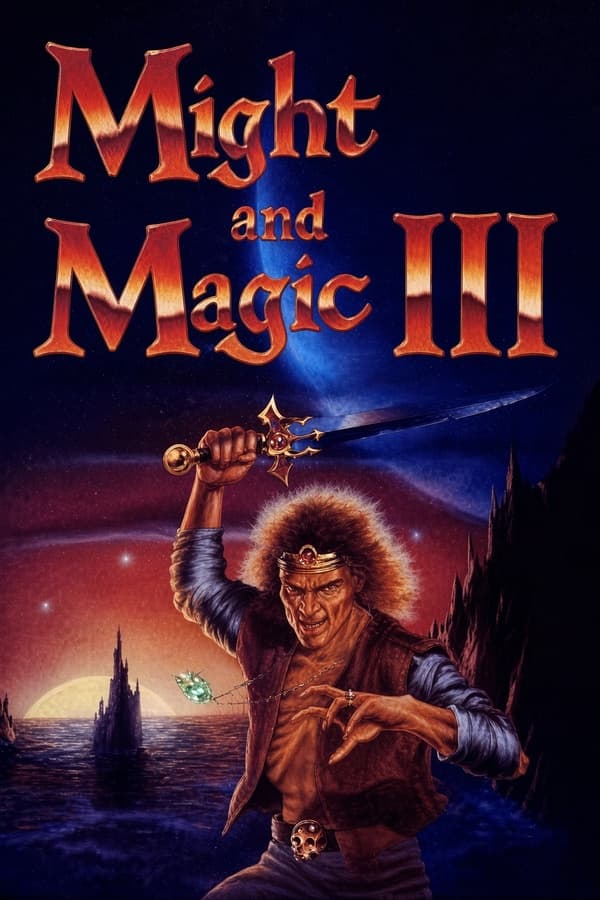
Might and Magic III: Isles of Terra
aka Might and Magic III : Isles of Terra · 魔法門 III · マイトアンドマジック3 · Might and Magic III : Die Inseln von Terra · Les Îles de Terra
Rate this game
- Played
- All the time
Stepping out of the gates of Fountain Head in Might and Magic III: Isles of Terra usually ends in a swift party wipe, but managing to survive your first venture into the wilderness marks the moment this vast open world takes hold of you.
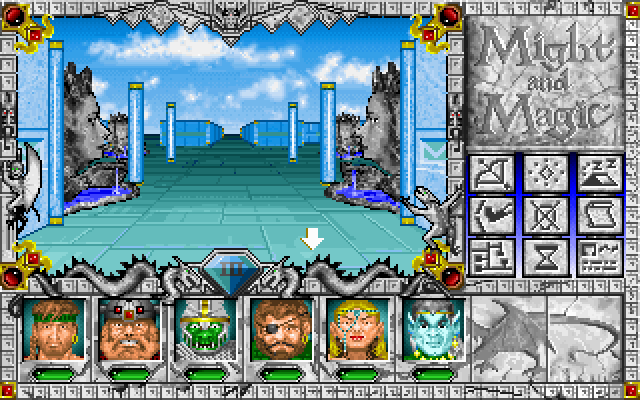
The role-playing space in 1991 was still largely defined by strict grid-based stepping and tile sets, yet Jon Van Caneghem and his team at New World Computing, Inc. completely overhauled their engine for this third entry. They dumped the wireframe art of early dungeon crawlers, embracing 256-color VGA graphics with expressive monster designs that did not rely on cheap palette swaps. Beyond the visuals, it introduced native mouse interaction, letting players click directly on the viewscreen, select spells from clear menus, and interact with the environment without typing out text commands.
Building a party to survive the sudden jumps in difficulty
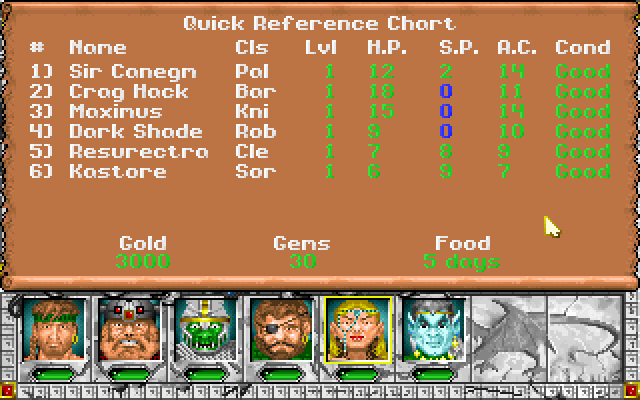
Before you ever explore a dark moldy dungeon or scale a frozen peak on Terra, you have to build a balanced squad. You assemble a party of six custom adventurers, with the option to hire up to two additional mercenaries in towns to shore up your front lines or spellcasting capabilities. The party starts in the town of Fountain Head, spending their initial minutes taking on local pests like rat swarms and rogue orcs while hunting down equipment and learning basic spells.
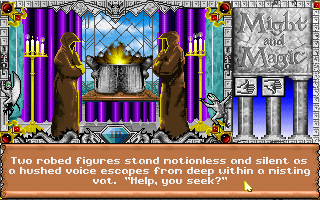
The transition from safety to the open wilderness hits hard. The immediate area outside the city gates features a massive spike in difficulty, where wandering monsters can flatten an under-leveled party in a single turn. Because the world is wide open and lacks rigid quest tracking, you can easily wander directly into a late-game dungeon long before your characters have the gear or hit points to endure it.
Progression demands careful management of your resources and heavy visits to local training centers to turn accumulated experience into raw stats. You will spend hours balancing your front-line fighters' gear while trying to keep your casters stocked with spell points. The turn-based pacing gives you time to plan each step, but a single wrong turn into an high-level zone usually means loading your last save.
Where magic falls short in Might and Magic III: Isles of Terra
While the open-ended exploration rewards patient mappers, the core underlying mechanics show clear signs of friction. Combat relies heavily on physical attacks, while offensive magic often feels underwhelming compared to the utility spells required to survive the environment. A handful of essential spells carry the entire system, leaving a vast chunk of the spellbook feeling largely situational or useless during major encounters.
The narrative throws a wild twist at traditional high fantasy by mixing magic with classic sci-fi elements. You spend the campaign tracking the wizard Corak across the islands to put a stop to the villain Sheltem, leading to an endgame that shifts dramatically toward forgotten tech. You end up exploring the crashed spaceship Shikbath Zera to chase Sheltem out into the stars, a leap that sets up the events of Clouds of Xeen.
Sound support for the 1991 MS-DOS release was surprisingly broad, taking full advantage of the high-end audio hardware of the time. The soundtrack by Todd Hendrix, George Sanger, Greg Alper, Howard Fredrics, and Paul Lehrman sounded distinct depending on your setup, scaling from basic Tandy 3-Voice up to rich arrangements on the Roland MT-32 or LAPC-I, alongside digitized sound effects through the Sound Blaster.
The ultimate reward for beating this classic RPG
When players finally beat the game, New World Computing added an extra reward that got talked about for years. Upon viewing the final endgame screen, the game displayed your overall score alongside specific instructions to write it down and mail it directly to their offices. Players who sent in their score were rewarded with a physical parchment certificate signed by creator Jon Van Caneghem, formally inducting them into "The Hall of Legends."
That kind of touch highlighted the personal design ethos behind the game, making the brutal early wipes feel like a rite of passage.
- Turn-based grid exploration featuring 256-color VGA art and digitized speech.
- Open-ended world structure with high early difficulty right outside starting safe zones.
- Party system combining six custom characters with two optional mercenary hires.
- Sci-fi endgame twist centered around ancient spacefarers and crashed technology.
Play Might and Magic III: Isles of Terra online right now
If you want to experience this landmark chapter in PC gaming, you can dive straight into the adventure without hassle. Modern players often expect modern quest markers, so going in blind means you will need to take notes or keep a map handy just like players did thirty years ago.
You can play Might and Magic III: Isles of Terra free in your browser right here. The MS-DOS game runs directly in your window with no setup required, letting you create your party and test your luck past the gates of Fountain Head in just one click.
How Might and Magic III: Isles of Terra is played — the keys the game listens to, grouped by what they do.
- Movement
- Action
- Interface
Highlighted keys are mapped — hover or tap one to see what it does.
Configuration options can be changed using INSTALL.EXE. Setup notes indicate some context-sensitive controls exist during hand-to-hand combat (such as R to run or B to block).
Players' controls
Touch and gamepad controls
The on-screen keyboard and gamepad mapping the browser player uses on a phone, a tablet or a controller, as opposed to the real keys above. $PRO members make their own in the player and share them here; anyone can pick one to play with.
Make your own touch controlsPRO
- 1Open the editorSign in below, then pick what to make. The game starts with the editor open over it.
- 2Place your keysAdd keys and drag them where your thumbs rest, or map a controller's buttons. Test plays the game with them; Save keeps them, and you play with them from then on.
- 3Share themShare them right after saving in the game, or name and share them here. Players vote, and the best become this game's controls for everyone.
Go PROSee how it worksSign in+20 XP for sharing · +50 XP if yours become the game's own
- The game's own controlsKeyboardGamepadWhat every player starts with.In use
6 screenshots
From the archive
No gameplay video yet
No gameplay video for Might and Magic III: Isles of Terra yet. Sign in to add one.
No reviews yet
Tell the community what you think of Might and Magic III: Isles of Terra. Reviews are public and tied to your username.
No archived manuals for Might and Magic III: Isles of Terra yet
No manuals archived for this title yet. Sign in to upload the first scan.
Cheat codes, console commands and memory pokes for Might and Magic III: Isles of Terra — each one verified and attributed.
Sign in to submitNo cheats yet for this title
Know a working cheat, poke or trainer? Add it with the button above. Moderators check every entry before it goes live.
No archived soundtrack for Might and Magic III: Isles of Terra yet
No soundtrack archived for this title yet. Sign in to upload the first rip.
No save states for Might and Magic III: Isles of Terra yet
No save states for this title yet. Sign in to share one.
Discussions
Sign in to post- Threads0
- Total posts0
- Online now6
Community · Might and Magic III: Isles of Terra
Who's contributing, and what's new
- Reviews0
- Threads0
- Uploadsapproved0
- Contributors0
Recent activity