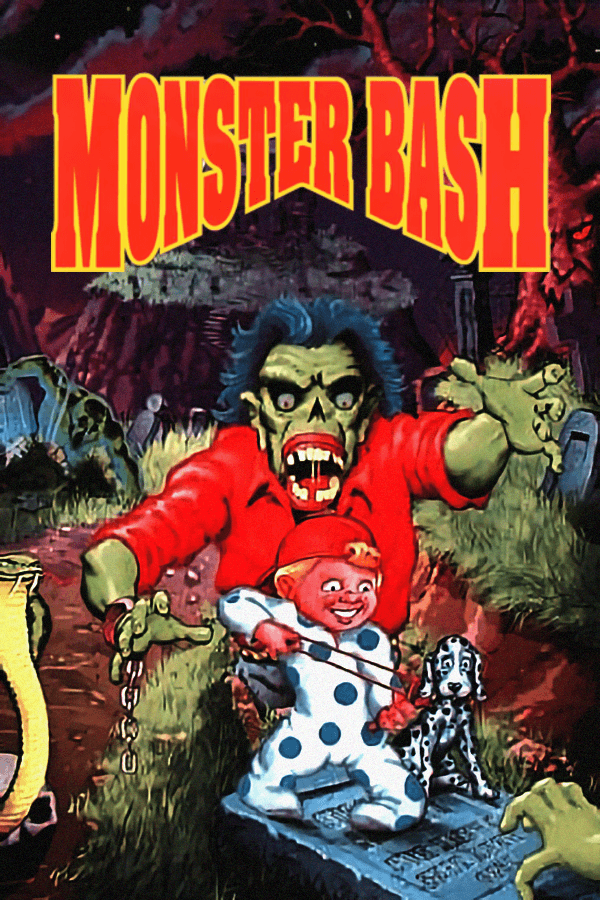
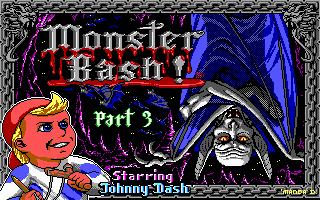
In Monster Bash, ten-year-old Johnny Dash steps into his closet in polka-dot pajamas to rescue his stolen dog Tex from an army of monsters. Equipped with an infinite supply of slingshot rocks, he shoots locks off cages across three gruesome, trap-filled episodes.
Slingshots, severed hands, and shareware bloody surprises in Monster Bash
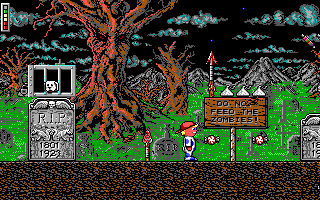
The first thing you notice when playing this 1993 platformer is the sharp contrast between its main character and its visual gore. Johnny Dash wears a backward baseball cap and sleepwear. Yet when his slingshot rocks hit zombies and severed hands, red blood splatters across the screen. Skulls rest on wooden spikes, and internal organs hang from hooks along mansion walls.
Developer and publisher Apogee Software, Ltd. released Episode 1 as a free shareware download. Players who wanted Episodes 2 and 3 had to order them directly by mail. Programmer Frank Maddin built the action using the F.A.S.T. Game System engine under the working title Graveyard.
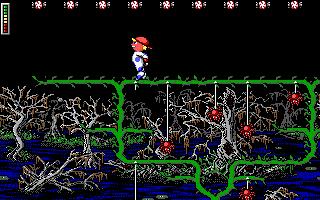
The graphics rely on 16-color EGA visuals designed by artists Amanda Dee, Jeff Dickens, Greg Burrow, and Jeff Dee. The team packed over eight megabytes of art data into the project. The result is a dark arcade world filled with haunted houses, crypts, and candle-lit corridors.
Rescuing caged animals in a world of vicious level design
Unlike standard platform games where you simply run to the right, your goal here is strict. Count Chuck has locked hundreds of pets in iron cages to build a dark army. You cannot unlock the exit door until you locate every cage in the level and shatter its padlock with your slingshot.
The levels introduce specific environmental puzzles to slow your progress:
- In Level 4, you must crawl quietly past a massive sleeping dragon without waking him up.
- In Level 5, you fetch a water bottle at a waterfall to grow giant climbing vines from a tiny sprig.
- In Level 7, you shoot haunted stove knobs to put out flames so you can climb the stove pipes safely.
- In Level 3-2, the game suddenly throws blue Xenomorph creatures into the horror mix.
Enemies range from flying tiger fighter planes and bug witch-doctors to skeletons and witches. At the end of each episode, a major encounter waits for you, including a pitchfork boss at the end of Episode 2.
Why the difficulty walls almost break the fun
In issue #200 of Dragon magazine, reviewer Sandy Petersen gave the full trilogy 3 out of 5 stars. He commended the creative monster design and pure jump-and-shoot pacing. However, he also pointed out awkward creature placements and confusing jump angles that frustrate players.
Those complaints hold up today. The level layouts frequently place hazards in spots where damage is entirely unavoidable. Some platforming stretches force Johnny to take a hit on bed of spikes just to reach the next ledge. With twitchy movement controls on modern keyboards, precise landing takes continuous practice.
Sound configuration poses another hurdle for classic hardware enthusiasts. Composer Rob Wallace wrote catchy FM synthesizer tracks for AdLib sound cards. However, hearing full Sound Blaster digital effects alongside the music requires properly configured EMS memory. Without that memory allocation in place, audio playback stutters or drops out entirely.
The small details that give Count Chuck his personality
Despite its punishing layout design, the game packs plenty of humor into its secrets. If you pick the Easy difficulty setting from the main menu, Johnny flexes his non-existent biceps in a brief animation. It is a tiny detail that sets a lighthearted tone before the horror begins.
Your main weapon fires in eight directions, which lets you clear enemies above or below while climbing ladders. Scattered power-ups temporarily expand your slingshot into a spread shot or triple projectile. You can also grab candy for score points, hearts to restore your health bar, and small Johnny-shaped voodoo dolls for extra lives.
Certain stages swap standard jumping for aerial movement. Finding a magical broomstick lets Johnny fly through narrow subterranean caverns, dodging flying eyeballs while picking off caged animals from above.
Fire up this classic right in your browser
If you enjoy side-scrolling action games from Apogee, this trilogy offers plenty of sharp arcade shooting. The jump physics feel stiff and the spike placement can be cheap. Still, the clever level gimmicks and wild enemy variety keep the momentum going.
You can play this Monster Bash MS-DOS game free in your browser right now with no setup required. Start Episode 1 to try out the multi-directional slingshot, test your reflexes on the sleeping dragon level, and see how many caged pets you can rescue in your first run.