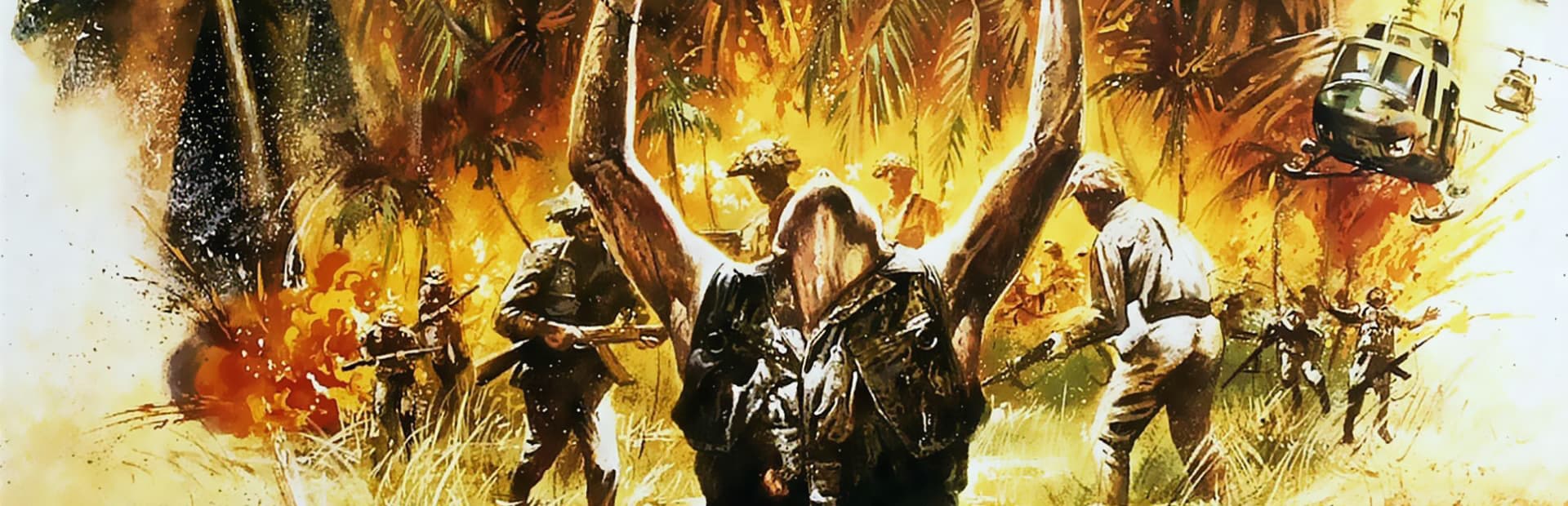


Platoon
Rate this game
- Played
- A lot
Ocean Software made a habit of turning hit movies into multi-stage releases, but Platoon forced players to survive four entirely different game styles across five disposable soldiers just to reach the credits.
Five hit points stand between your squad and total annihilation
Most movie tie-ins from the late eighties stuck to a single template. They gave you a character sprite, three lives, and a flat strip of terrain to run across until the timer expired. Ocean Software took a different route when designing their movie adaptation, handing development of the PC port to Choice Software in Northern Ireland.
Published in North America by Data East Corporation in 1988, the game splits its narrative across four distinct gameplay modes. You manage a squad of five American soldiers walking through the Vietnamese jungle. They do not fight side by side. Instead, you control one soldier at a time, taking three hits per man before he dies and the game hands you the next trooper in line.
That shared health pool creates a tense dynamic. A single stray bullet or misjudged leap does not cost you a full life immediately. It simply chips away at your squad's total strength. Once all five men fall, your campaign ends on the spot.
The side-scrolling jungle in Platoon turns navigation into a nightmare
The opening stage establishes the cruel learning curve right away. You walk through a multi-tiered 2D forest filled with high branches, hidden paths, and landmines buried in the dirt. Viet Cong soldiers jump out of the brush, snipers shoot down from trees, and tripwires sit waiting for anyone rushing through the brush.
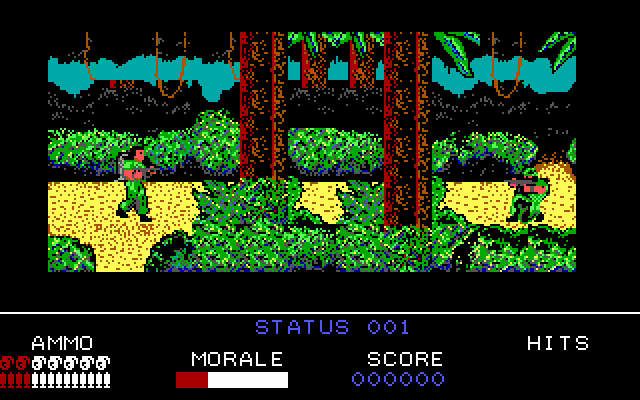
Your main task here is finding explosives to destroy a enemy bridge before locating a village hidden in the foliage. Rushing forward will get your squad killed within twenty yards. Enemy respawn locations feel deliberately mean, often placing a shooter right behind you the moment you drop down a ledge.
Inside the village, you must search buildings to gather three specific items: a torch, a map, and the location of a hidden trap-door. Without these, you cannot progress down into the underground network. Players who skipped searching the huts usually ended up pacing back and forth across the map until an airstrike wiped out their remaining men.
First-person tunnels and bunker defense change all the rules
Stepping through the trap-door drops you straight into a 3D grid tunnel maze viewed from a first-person perspective. The game completely discards the side-scrolling mechanics. You move through damp corridors step by step, using the torch you recovered above ground to light the darkness.
This underground level splits its controls across three distinct modes. Walking through corridors uses standard movement keys. The moment an enemy soldier turns a corner, the display switches to a targeting crosshair so you can aim and shoot. Entering a side chamber switches the view again, letting you search rooms for flares and a compass.
Surviving the maze brings you up into a night-time bunker defense stage. The screen stays pitch black until you throw one of your limited flares into the tree line. The light briefly reveals advancing infantry that you must shoot before they fire back. It feels claustrophobic, demanding strict timing and precise ammo management.
Sergeant Barnes waits at the end of a strict two-minute timer
The final section drops you back into the jungle for a desperate escape. An incoming airstrike gives you exactly two minutes to navigate north toward safety using the compass gathered underground. Every wrong turn wastes precious seconds while snipers slow down your movement.
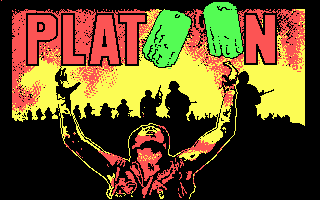
Clearing the path brings you face to face with Sergeant Barnes, who waits inside a heavily defended foxhole. Standard rifle fire will not scratch him. To beat the final encounter, you have to dodge his counter-attacks while landing five direct grenade hits on his position.
The PC version carried a conversion of David Whittaker's musical score, though PC speaker bleeps replaced the SID tunes found on six-button computer ports. The default MS-DOS keyboard controls felt notoriously awkward during fast target switching. Computing magazines frequently published hex pokes and cheat codes just so players could see past the initial jungle section.
How to play Platoon online without losing your sanity
This release earned massive sales numbers on launch day, but modern players often struggle with its brutal layout. The constant shift between platforming, first-person navigation, and crosshair shooting gives it plenty of historical personality. However, the unforgiving collision detection and strict time limits will test anyone trying a blind run today.
If you want to try your hand at eighties film adaptations, Ocean Software Ltd. built some of the most ambitious titles of that decade. You can test your tactical survival skills and play Platoon free in your browser right now. You can jump straight into the action games section to experience the original shift from jungle platformer to tunnel crawler with zero installation needed.
Players' controls
Touch and gamepad controls
The on-screen keyboard and gamepad mapping the browser player uses on a phone, a tablet or a controller, as opposed to the real keys above. $PRO members make their own in the player and share them here; anyone can pick one to play with.
Make your own touch controlsPRO
- 1Open the editorSign in below, then pick what to make. The game starts with the editor open over it.
- 2Place your keysAdd keys and drag them where your thumbs rest, or map a controller's buttons. Test plays the game with them; Save keeps them, and you play with them from then on.
- 3Share themShare them right after saving in the game, or name and share them here. Players vote, and the best become this game's controls for everyone.
Go PROSee how it worksSign in+20 XP for sharing · +50 XP if yours become the game's own
- The game's own controlsNone yet: played with a real keyboard only.In use
2 screenshots
From the archive
No reviews yet
Tell the community what you think of Platoon. Reviews are public and tied to your username.
No archived manuals for Platoon yet
No manuals archived for this title yet. Sign in to upload the first scan.
Cheat codes, console commands and memory pokes for Platoon — each one verified and attributed.
Sign in to submitNo cheats yet for this title
Know a working cheat, poke or trainer? Add it with the button above. Moderators check every entry before it goes live.
No archived soundtrack for Platoon yet
No soundtrack archived for this title yet. Sign in to upload the first rip.
No save states for Platoon yet
No save states for this title yet. Sign in to share one.
Discussions
Sign in to post- Threads0
- Total posts0
- Online now6
Community · Platoon
Who's contributing, and what's new
- Reviews0
- Threads0
- Uploadsapproved0
- Contributors0
Recent activity
Nothing here yet
Reviews, discussion threads and approved uploads appear here as members add them.