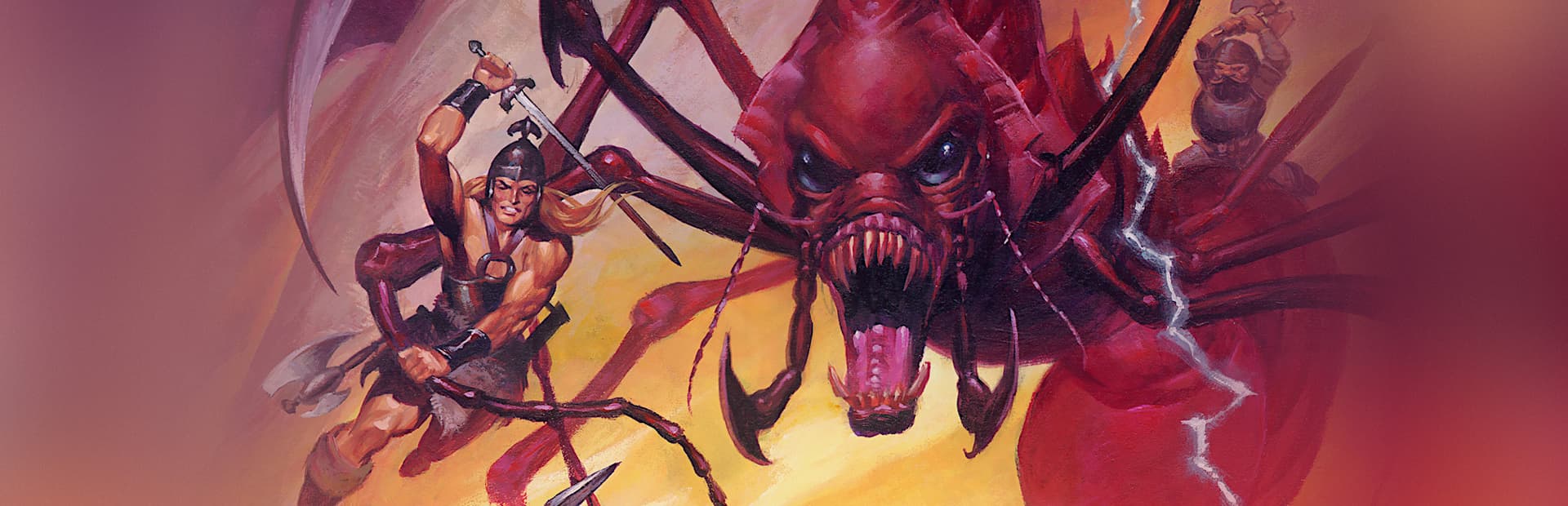
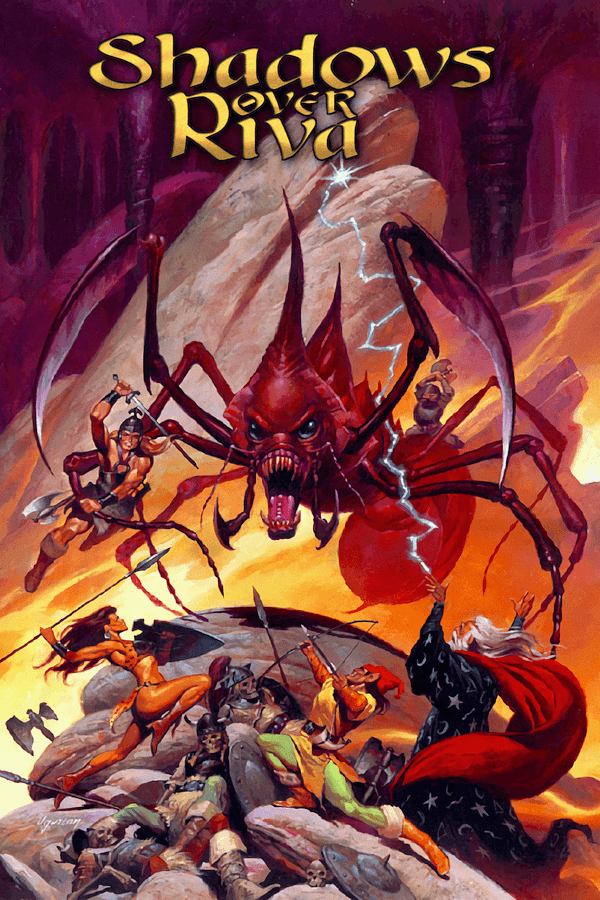

If you ever wanted an RPG where your high-level hero gets wasted on local ale and walks headfirst into a brick wall, Realms of Arkania III: Shadows over Riva delivers that exact brand of uncompromising tabletop realism.
Most party-based computer role-playing games from the mid-1990s nudged you across expansive world maps to fight wilderness encounters, but designer Guido Henkel and the team at Attic Entertainment Software made a sharp turn for this final entry in the trilogy. Instead of hiking through forests, your party of six created or imported heroes steps directly into the harbour town of Riva, a city under siege by Orcish hordes. Rather than clearing external camps, your real job is solving a political mystery, interrogating suspicious city leaders, unmasking traitors, and digging into local corruption to find out who is directing the threat.
Confining the entire adventure to Riva, its surrounding slum districts, a nearby dwarven mine, murky sewers, and murky underwater passages fundamentally changes how the story moves. The narrative keeps a steady, urgent tempo because every clue leads directly to another neighborhood rather than three game days of random overland travel. You spend your time talking with locals, chasing leads down tight alleys, and managing a party that must eat, sleep, and stay sober enough to follow directions.
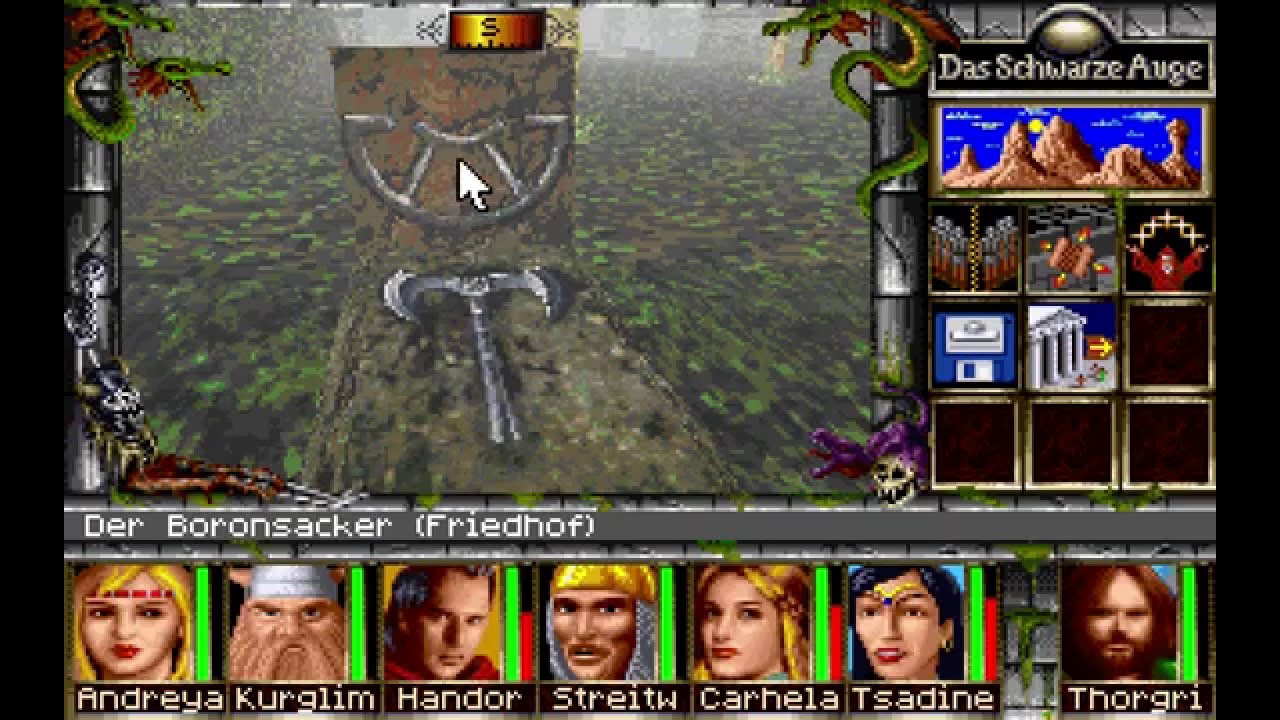
Technologically, this 1996 release represented a major visual step forward for the series. Published in Germany by TopWare Interactive on CD-ROM, the game abandoned choppy step-by-step movement in favor of a smooth-scrolling, 3D first-person engine rendered in crisp SVGA graphics. Walking through the city streets feels fluid and dense, backed by pre-rendered cinematic cutscenes and a musical score composed by Henkel himself that sounds rich on a Sound Blaster card.
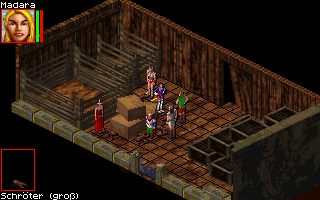
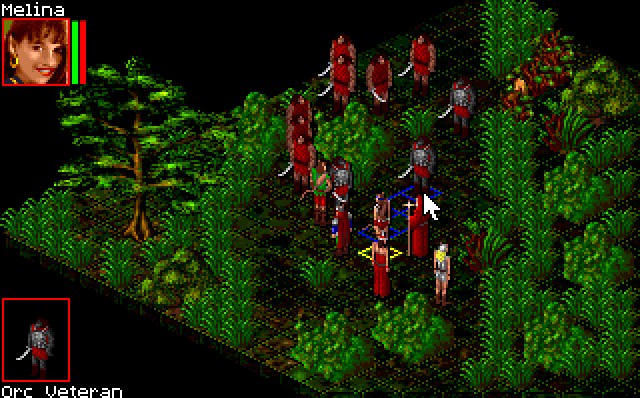
When trouble starts, however, the view shifts from first-person exploration to a 2D isometric grid for turn-based combat. While this tactical setup offers deep turn-based decision making where positioning, spellcasting, and weapon range matter, fighting in tight quarters can feel cramped. Encounters inside narrow sewer pipes or small rooms often drop your six party members into claustrophobic bottlenecks where melee fighters block your own spellcasters, turning routine skirmishes into tedious grid jams.
Underneath the 3D town graphics lies the ultra-detailed Dark Eye pen-and-paper ruleset. Character management in this role-playing game is notoriously granular: every hero carries a massive list of attributes, positive skills, negative traits like superstition or claustrophobia, and specific skill checks for nearly every action in the fantasy world.
This stat density provides unmatched depth, but it forces you into heavy administrative work. You have to monitor individual inventory weights, track body temperature, cure diseases, and handle party mechanics like splitting up members to perform separate tasks. If a character drinks too much tavern beer, they will literally stagger around and bump into solid walls, forcing you to wait out their hangover before tackling a delicate burglary or high-stakes interrogation.
The single most memorable, and divisive, segment in the entire game arrives near the climax. After hours spent collecting fine armor, magical swords, and tailored spell inventories, the narrative forces your party through a magical shrink trap. You are reduced to insect scale and stripped of all your carefully accumulated equipment, dumped unceremoniously inside a massive ant nest to confront a giant magical ant queen.
For modern players and retro veterans alike, this sudden difficulty spike is an outrageous gear-check shock. You must scavenge for pine needles to use as makeshift rapiers, strap on insect carapaces as primitive body armor, and poke giant worker ants with plant spines. It is an utterly wild puzzle design choice that completely upends standard power progression, forcing lateral thinking and extreme caution just when you thought your high-level squad was unstoppable.
This final chapter of the Arkania trilogy is a hard-edged German RPG. It balances dense detective work with uncompromising survival mechanics, rewarding players who enjoy managing every detail of their party while penalizing anyone who ignores basic logistics. If you can tolerate the cramped isometric combat screens and the overwhelming list of stats on every character sheet, the deep urban setting and unique investigative story line offer something vastly different from standard mid-90s dungeon crawlers.
You can experience this classic MS-DOS game directly without tinkering with old config files or hunting down original CD-ROMs. You can play Realms of Arkania III: Shadows over Riva online, free in your browser right now with no setup required. Jump into Riva's crime-ridden harbor streets, keep your warriors away from the tavern taps, and remember to pack spare needles before you step into the ant hill.
If you ever wanted an RPG where your high-level hero gets wasted on local ale and walks headfirst into a brick wall, Realms of Arkania III: Shadows over Riva delivers that exact brand of uncompromising tabletop realism.
Most party-based computer role-playing games from the mid-1990s nudged you across expansive world maps to fight wilderness encounters, but designer Guido Henkel and the team at Attic Entertainment Software made a sharp turn for this final entry in the trilogy. Instead of hiking through forests, your party of six created or imported heroes steps directly into the harbour town of Riva, a city under siege by Orcish hordes. Rather than clearing external camps, your real job is solving a political mystery, interrogating suspicious city leaders, unmasking traitors, and digging into local corruption to find out who is directing the threat.
Confining the entire adventure to Riva, its surrounding slum districts, a nearby dwarven mine, murky sewers, and murky underwater passages fundamentally changes how the story moves. The narrative keeps a steady, urgent tempo because every clue leads directly to another neighborhood rather than three game days of random overland travel. You spend your time talking with locals, chasing leads down tight alleys, and managing a party that must eat, sleep, and stay sober enough to follow directions.
Technologically, this 1996 release represented a major visual step forward for the series. Published in Germany by TopWare Interactive on CD-ROM, the game abandoned choppy step-by-step movement in favor of a smooth-scrolling, 3D first-person engine rendered in crisp SVGA graphics. Walking through the city streets feels fluid and dense, backed by pre-rendered cinematic cutscenes and a musical score composed by Henkel himself that sounds rich on a Sound Blaster card.
When trouble starts, however, the view shifts from first-person exploration to a 2D isometric grid for turn-based combat. While this tactical setup offers deep turn-based decision making where positioning, spellcasting, and weapon range matter, fighting in tight quarters can feel cramped. Encounters inside narrow sewer pipes or small rooms often drop your six party members into claustrophobic bottlenecks where melee fighters block your own spellcasters, turning routine skirmishes into tedious grid jams.
Underneath the 3D town graphics lies the ultra-detailed Dark Eye pen-and-paper ruleset. Character management in this role-playing game is notoriously granular: every hero carries a massive list of attributes, positive skills, negative traits like superstition or claustrophobia, and specific skill checks for nearly every action in the fantasy world.
This stat density provides unmatched depth, but it forces you into heavy administrative work. You have to monitor individual inventory weights, track body temperature, cure diseases, and handle party mechanics like splitting up members to perform separate tasks. If a character drinks too much tavern beer, they will literally stagger around and bump into solid walls, forcing you to wait out their hangover before tackling a delicate burglary or high-stakes interrogation.
The single most memorable, and divisive, segment in the entire game arrives near the climax. After hours spent collecting fine armor, magical swords, and tailored spell inventories, the narrative forces your party through a magical shrink trap. You are reduced to insect scale and stripped of all your carefully accumulated equipment, dumped unceremoniously inside a massive ant nest to confront a giant magical ant queen.
For modern players and retro veterans alike, this sudden difficulty spike is an outrageous gear-check shock. You must scavenge for pine needles to use as makeshift rapiers, strap on insect carapaces as primitive body armor, and poke giant worker ants with plant spines. It is an utterly wild puzzle design choice that completely upends standard power progression, forcing lateral thinking and extreme caution just when you thought your high-level squad was unstoppable.
This final chapter of the Arkania trilogy is a hard-edged German RPG. It balances dense detective work with uncompromising survival mechanics, rewarding players who enjoy managing every detail of their party while penalizing anyone who ignores basic logistics. If you can tolerate the cramped isometric combat screens and the overwhelming list of stats on every character sheet, the deep urban setting and unique investigative story line offer something vastly different from standard mid-90s dungeon crawlers.
You can experience this classic MS-DOS game directly without tinkering with old config files or hunting down original CD-ROMs. You can play Realms of Arkania III: Shadows over Riva online, free in your browser right now with no setup required. Jump into Riva's crime-ridden harbor streets, keep your warriors away from the tavern taps, and remember to pack spare needles before you step into the ant hill.
aka Das Schwarze Auge: Schatten über Riva · The Dark Eye: Shadow above Riva
How Realms of Arkania III: Shadows over Riva is played — the keys the game listens to, grouped by what they do.
Highlighted keys are mapped — hover or tap one to see what it does.
The on-screen keyboard and gamepad mapping the browser player uses on a phone, a tablet or a controller, as opposed to the real keys above. $PRO members make their own in the player and share them here; anyone can pick one to play with.
Cheat codes, console commands and memory pokes for Realms of Arkania III: Shadows over Riva — each one verified and attributed.
Sign in to submitHow Realms of Arkania III: Shadows over Riva is played — the keys the game listens to, grouped by what they do.
Highlighted keys are mapped — hover or tap one to see what it does.
The on-screen keyboard and gamepad mapping the browser player uses on a phone, a tablet or a controller, as opposed to the real keys above. $PRO members make their own in the player and share them here; anyone can pick one to play with.
Cheat codes, console commands and memory pokes for Realms of Arkania III: Shadows over Riva — each one verified and attributed.
Sign in to submit