Red Alert: a Johnny Walker Production
aka Johnnie Walker's Red Alert
Rate this game
- Played
- A lot
If you bought a bottle of Scotch in Australia in 1996, you might have found a floppy disk containing Red Alert: a Johnny Walker Production taped to the packaging.
Bottles, barcodes, and a computer system about to blow in Red Alert: a Johnny Walker Production
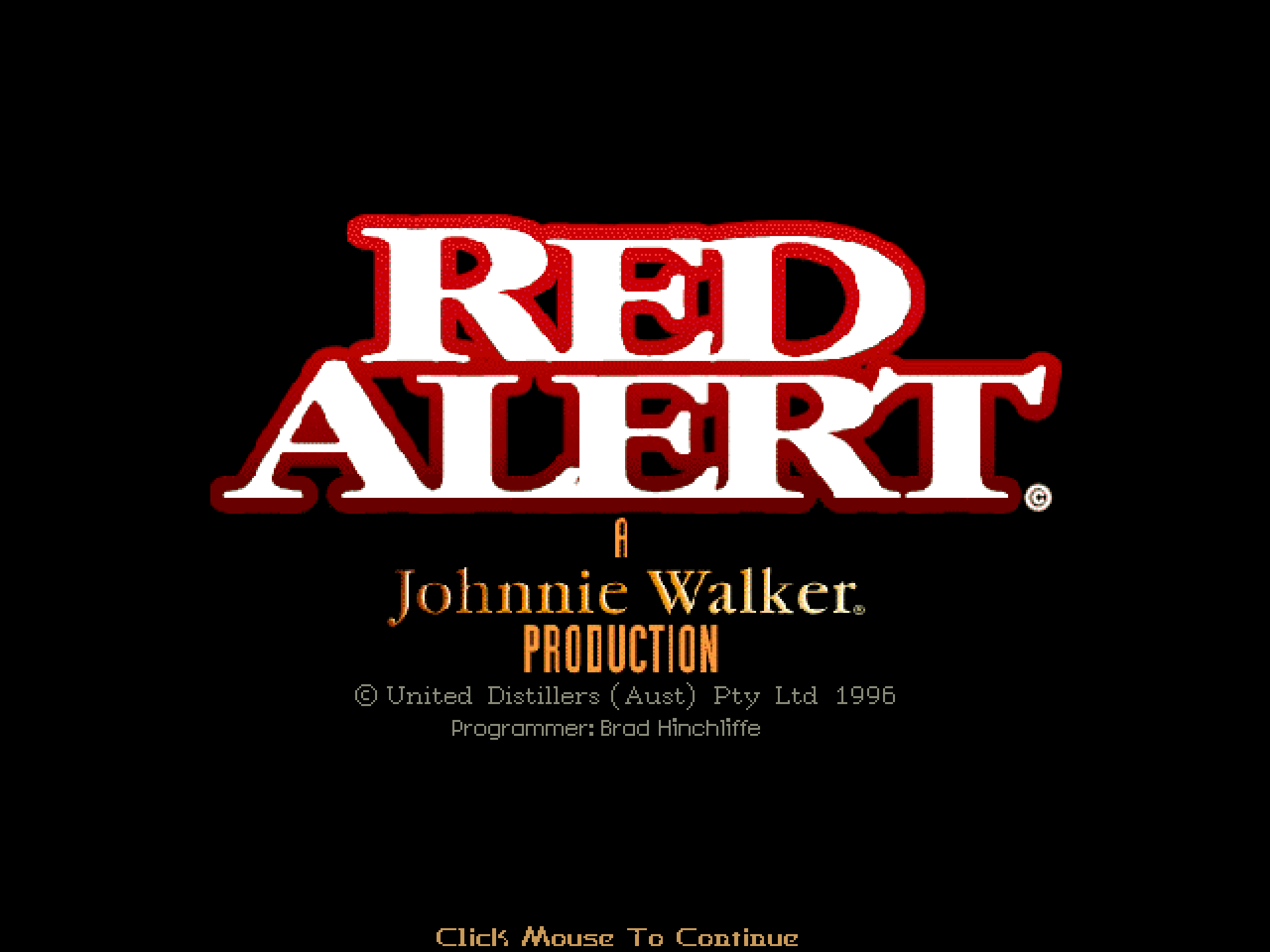
Before you even set foot on the bridge of your starship, the software demands proof that you bought the bottle. The title screen acts as a physical copy protection checkpoint, prompting you to type in the exact digits from the cardboard packaging. That code, 5000267014203, was the gatekeeper standing between a thirsty PC owner and a digital puzzle box designed to promote liquor.
Once you enter the code, the setup hits you immediately. You play as a crew member on a merchant vessel carrying a valuable consignment of Johnnie Walker Red Label Scotch whisky through deep space. Something has gone catastrophically wrong with the main vessel control systems, locking down the ship and arming an onboard nuclear warhead. You have a hard 90-minute timer on screen to navigate terminal menus, restore system functions, and stop the device before it vaporizes your cargo.
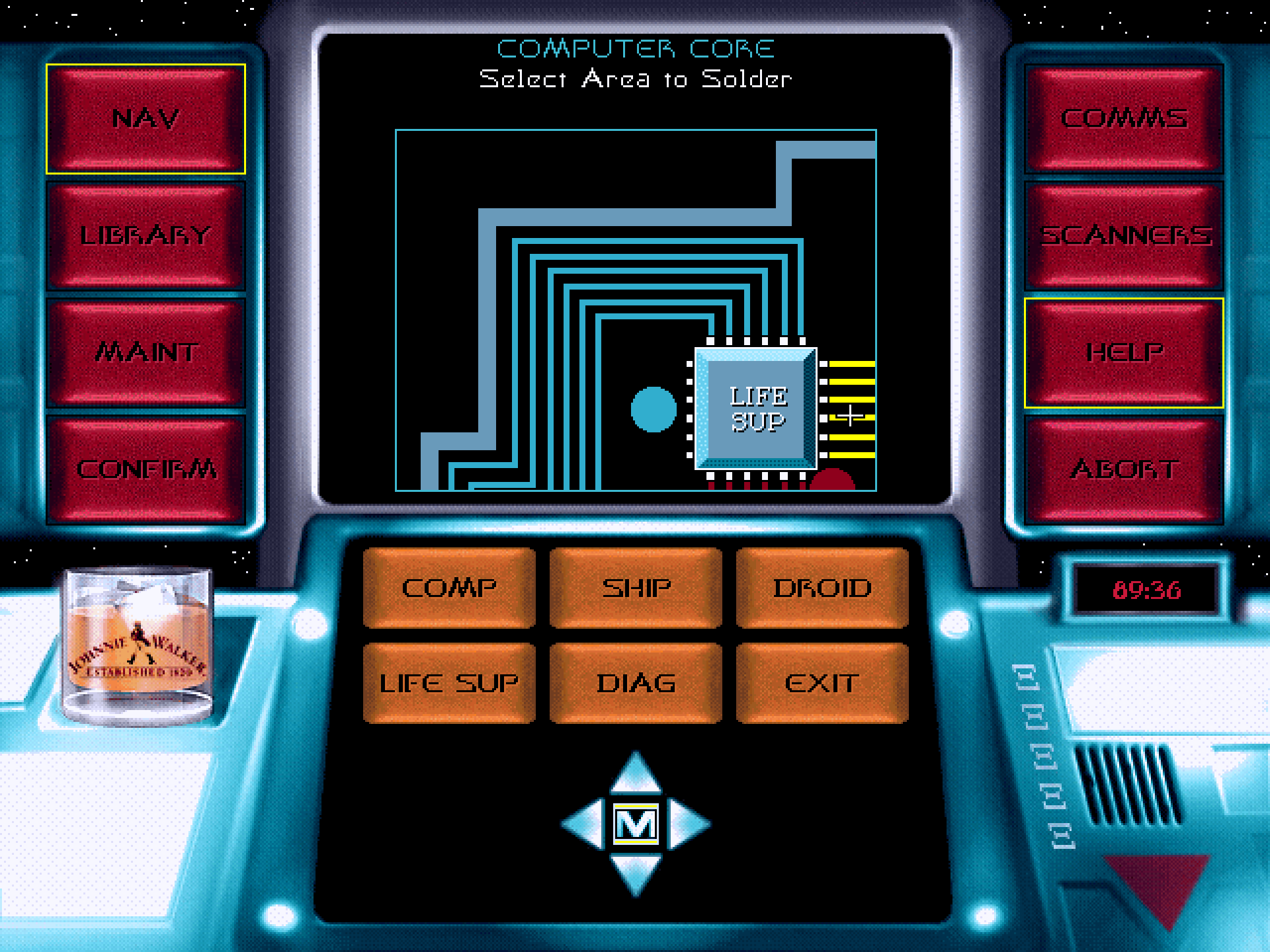
The entire game operates through menu-driven interfaces, simulated terminals, and text-based choices. Developer Brad Hinchliffe relied entirely on atmospheric puzzle logic rather than arcade action. It functions as a classic adventure game wrapped inside a corporate promotional campaign, forcing players to methodically work through network subdirectories and logic puzzles under time pressure.
Why Red Alert: a Johnny Walker Production pushed players toward a real ten thousand dollar cash prize
Promotional floppy disks were usually throwaway novelties in the mid-1990s, but publisher United Distillers Pty Ltd added real stakes to this release. Players who managed to disarm the warhead within the time limit received a entry code to submit for a real-world contest. The reward for keeping your cool and saving the cargo was a shot at winning $10,000 in cash.
Because the incentive was so high, the puzzle logic had to avoid being trivially simple. You cannot simply smash through buttons; you have to decipher logic sequences, read status reports, and reactivate locked computer nodes in a specific sequence. Finding the correct order for system overrides requires reading every diagnostic prompt carefully, because a single bad command wastes precious minutes on the clock.
The presentation reflects its obscure origins. As a 1996 MS-DOS title distributed on magnetic disk, visual flourishes take a back seat to raw functional graphics and stark text displays. The starkness actually works in its favor, giving the ship's failing mainframe an unfeeling, cold interface that makes the ticking timer feel far more immediate.
The rough edges that make promotional software so easy to lose
Let us be completely honest about how this plays today. The production values are crude, the interface can feel stiff, and the overall pacing relies heavily on trial and error. Promotional software rarely received the polish of full commercial box releases, and this game shows its rough edges whenever you try to navigate deep menu trees quickly.
That exact unpolished nature is why so few physical copies survived the decade. Most people threw the disk away once the bottle was empty or after entering the contest code once. While collectors saved popular commercial releases of the era, oddities like this were treated like temporary junk mail, making the software a genuine rarity today.
The interface design also assumes you are willing to spend time typing and clicking through sub-menus without modern hints or quality of life features. If you lose track of which terminal node you unlocked three screens back, you will end up looping through the same diagnostic screens while your 90 minutes tick away to zero.
How to experience Red Alert: a Johnny Walker Production free in your browser today
You do not need to hunt down an old Australian whisky gift box or configure a vintage computer tower to see how this unusual piece of history works. You can play Red Alert: a Johnny Walker Production free in your browser right now without downloading floppy images or editing system configuration files.
If you plan to run through this Red Alert: a Johnny Walker Production MS-DOS game online, keep a notepad handy on your desk before you boot it up. Many modern players fail their first run because they try to guess terminal access sequences instead of writing down the system codes found across diagnostic screens. Keep the barcode number 5000267014203 ready for the opening menu, watch the clock, and see if you have what it takes to save the ship and secure that whisky shipment.
Players' controls
Touch and gamepad controls
The on-screen keyboard and gamepad mapping the browser player uses on a phone, a tablet or a controller, as opposed to the real keys above. $PRO members make their own in the player and share them here; anyone can pick one to play with.
Make your own touch controlsPRO
- 1Open the editorSign in below, then pick what to make. The game starts with the editor open over it.
- 2Place your keysAdd keys and drag them where your thumbs rest, or map a controller's buttons. Test plays the game with them; Save keeps them, and you play with them from then on.
- 3Share themShare them right after saving in the game, or name and share them here. Players vote, and the best become this game's controls for everyone.
Go PROSee how it worksSign in+20 XP for sharing · +50 XP if yours become the game's own
- The game's own controlsNone yet: played with a real keyboard only.In use
2 screenshots
From the archive
No gameplay video yet
No gameplay video for Red Alert: a Johnny Walker Production yet. Sign in to add one.
No reviews yet
Tell the community what you think of Red Alert: a Johnny Walker Production. Reviews are public and tied to your username.
No archived manuals for Red Alert: a Johnny Walker Production yet
No manuals archived for this title yet. Sign in to upload the first scan.
Cheat codes, console commands and memory pokes for Red Alert: a Johnny Walker Production — each one verified and attributed.
Sign in to submitNo cheats yet for this title
Know a working cheat, poke or trainer? Add it with the button above. Moderators check every entry before it goes live.
No archived soundtrack for Red Alert: a Johnny Walker Production yet
No soundtrack archived for this title yet. Sign in to upload the first rip.
No save states for Red Alert: a Johnny Walker Production yet
No save states for this title yet. Sign in to share one.
Discussions
Sign in to post- Threads0
- Total posts0
- Online now6
Community · Red Alert: a Johnny Walker Production
Who's contributing, and what's new
- Reviews0
- Threads0
- Uploadsapproved0
- Contributors0
Recent activity
Nothing here yet
Reviews, discussion threads and approved uploads appear here as members add them.