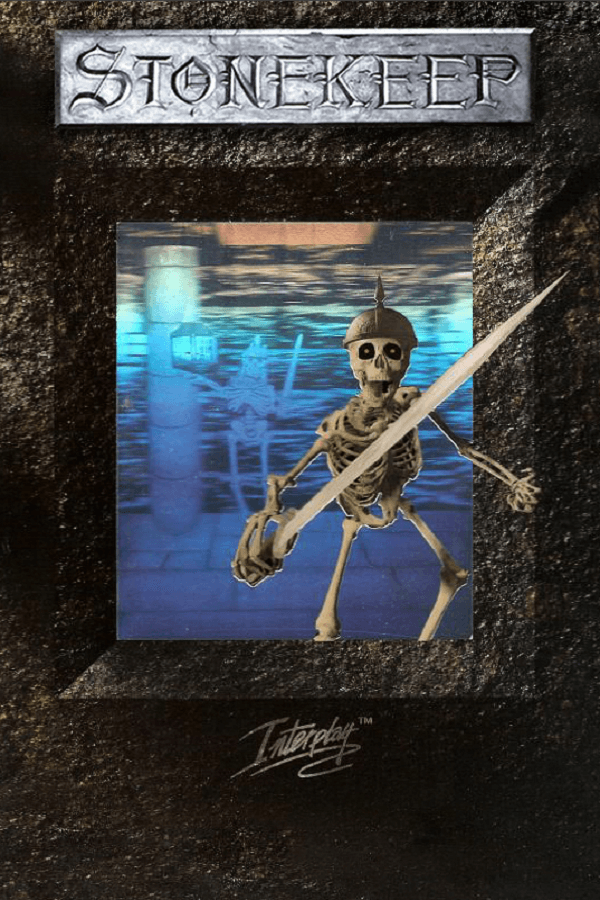

Trapped in the damp, grid-based labyrinths of Stonekeep, you swing broadswords with rapid mouse clicks while tossing magic runes onto staves to keep swarms of goblins from tearing you apart.
Interplay Productions spent half a decade building Stonekeep, blowing past an initial nine-month timetable to push out a massive CD-ROM exclusive that pushed 1995 MS-DOS hardware to its absolute limit. Director Michael Quarles and producer Brian Fargo aimed for an unfiltered first-person dungeon crawler, filling its subterranean corridors with pre-rendered 3D scenery, digitized sprite animations of actors in physical costumes, and dramatic full-motion video sequences. It even shipped in an oversized box containing a companion novella and an unexpected recipe for sweet muffins, framing an adventure that felt huge before you even fired it up.
When you actually got the game home, setting it up was a brutal reminder of mid-nineties PC gaming realities. The high resolution visuals and extensive full-cast voice acting meant you had to carve out heaps of conventional and extended memory through creative CONFIG.SYS configurations just to start the engine. On initial release, unpatched builds were notoriously unstable, crashing during high-stakes fights or locking up behind game-breaking bugs. Interplay eventually issued the v1.2 patch to tame the code, but those early performance hurdles earned the game an early slot in GameSpot's hall of shame for vaporware delays.
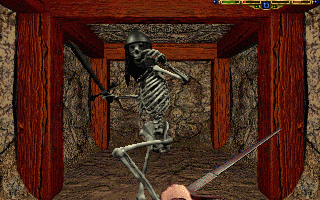
You play as Drake, surviving a childhood tragedy to return years later to the ruins of his former home. The moment you step into the dark corridors, the design philosophy becomes clear: no massive status bars or cluttered dashboards take up screen real estate. The view is completely open, placing you directly inside the stone corridors with step-by-step, grid-based movement where turning left or right snaps the camera by ninety degrees.
Navigating the underworld means keeping a sharp eye on every block of pre-rendered brickwork to survive the journey, which spans several distinct levels:
Survival requires managing medical plants to heal off damage, gathering heavy suits of plate armor, and scouring every dead end for locked chests. You do not have to wander alone, either. Up to three computer-controlled allies can join your expedition at a time, including stubborn dwarven fighters like Farli, Karzak, and Dombur, the elusive elf Enigma, and the chaotic goblin king Wahooka. While their pathfinding occasionally blocks narrow passages, their extra weapon swings are essential when you get cornered by undead skeletons or swarms of giant insects.
Unlike turn-based grid crawlers of the era, combat here happens live. Drake dual-wields weapons mapped directly to the right and left mouse buttons, letting you swing a sword in your main hand while raising a shield or throwing daggers with the other. The swing speed feels snappy, encouraging a quick dance where you step forward, strike, and step backward before an enemy sprite finishes its attack animation. The more you swing a specific weapon type, the higher Drake's proficiency with it grows, making early grinding with basic bows or shortswords pay off during late-game boss fights against the Ice Queen.

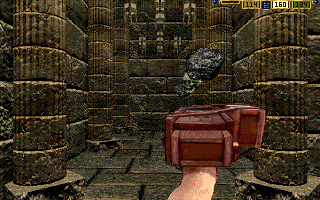
The spell system ditches standard magic point pools in favor of a clever, tactile crafting system based on wooden staves and carved runes. To cast a spell, you find geometric runes throughout the dungeon and physically scribe them onto magical staves you collect in your inventory. Combining a primary element rune like fire or ice with modifier runes changes the spell's projectile speed, area of effect, or defensive bonuses. Managing multiple staves for specialized situations adds a layer of planning that makes magic feel distinct from standard hack-and-slash fighting.
For players who love old-school map-making, puzzle-heavy dungeons, and immediate real-time combat, this 1995 release makes for a good weekend project. The digitized character sprites look plain cheesy under modern lighting, but the audio design and punchy sound effects deliver a genuine sense of tension as you venture deeper into the earth. The real weakness lies in the movement latency and sudden difficulty spikes, where stepping into an unseen pressure plate trap can wipe out twenty minutes of careful exploration if you forgot to save.
If you want to experience this chapter of Interplay history without dusting off old hardware, you can play Stonekeep online right inside your web browser. Jump into the Stonekeep MS-DOS game today, grab your starter dagger, and see how long you can survive the traps lurking behind the very first secret door.
Trapped in the damp, grid-based labyrinths of Stonekeep, you swing broadswords with rapid mouse clicks while tossing magic runes onto staves to keep swarms of goblins from tearing you apart.
Interplay Productions spent half a decade building Stonekeep, blowing past an initial nine-month timetable to push out a massive CD-ROM exclusive that pushed 1995 MS-DOS hardware to its absolute limit. Director Michael Quarles and producer Brian Fargo aimed for an unfiltered first-person dungeon crawler, filling its subterranean corridors with pre-rendered 3D scenery, digitized sprite animations of actors in physical costumes, and dramatic full-motion video sequences. It even shipped in an oversized box containing a companion novella and an unexpected recipe for sweet muffins, framing an adventure that felt huge before you even fired it up.
When you actually got the game home, setting it up was a brutal reminder of mid-nineties PC gaming realities. The high resolution visuals and extensive full-cast voice acting meant you had to carve out heaps of conventional and extended memory through creative CONFIG.SYS configurations just to start the engine. On initial release, unpatched builds were notoriously unstable, crashing during high-stakes fights or locking up behind game-breaking bugs. Interplay eventually issued the v1.2 patch to tame the code, but those early performance hurdles earned the game an early slot in GameSpot's hall of shame for vaporware delays.

You play as Drake, surviving a childhood tragedy to return years later to the ruins of his former home. The moment you step into the dark corridors, the design philosophy becomes clear: no massive status bars or cluttered dashboards take up screen real estate. The view is completely open, placing you directly inside the stone corridors with step-by-step, grid-based movement where turning left or right snaps the camera by ninety degrees.
Navigating the underworld means keeping a sharp eye on every block of pre-rendered brickwork to survive the journey, which spans several distinct levels:
Survival requires managing medical plants to heal off damage, gathering heavy suits of plate armor, and scouring every dead end for locked chests. You do not have to wander alone, either. Up to three computer-controlled allies can join your expedition at a time, including stubborn dwarven fighters like Farli, Karzak, and Dombur, the elusive elf Enigma, and the chaotic goblin king Wahooka. While their pathfinding occasionally blocks narrow passages, their extra weapon swings are essential when you get cornered by undead skeletons or swarms of giant insects.
Unlike turn-based grid crawlers of the era, combat here happens live. Drake dual-wields weapons mapped directly to the right and left mouse buttons, letting you swing a sword in your main hand while raising a shield or throwing daggers with the other. The swing speed feels snappy, encouraging a quick dance where you step forward, strike, and step backward before an enemy sprite finishes its attack animation. The more you swing a specific weapon type, the higher Drake's proficiency with it grows, making early grinding with basic bows or shortswords pay off during late-game boss fights against the Ice Queen.

The spell system ditches standard magic point pools in favor of a clever, tactile crafting system based on wooden staves and carved runes. To cast a spell, you find geometric runes throughout the dungeon and physically scribe them onto magical staves you collect in your inventory. Combining a primary element rune like fire or ice with modifier runes changes the spell's projectile speed, area of effect, or defensive bonuses. Managing multiple staves for specialized situations adds a layer of planning that makes magic feel distinct from standard hack-and-slash fighting.

For players who love old-school map-making, puzzle-heavy dungeons, and immediate real-time combat, this 1995 release makes for a good weekend project. The digitized character sprites look plain cheesy under modern lighting, but the audio design and punchy sound effects deliver a genuine sense of tension as you venture deeper into the earth. The real weakness lies in the movement latency and sudden difficulty spikes, where stepping into an unseen pressure plate trap can wipe out twenty minutes of careful exploration if you forgot to save.
If you want to experience this chapter of Interplay history without dusting off old hardware, you can play Stonekeep online right inside your web browser. Jump into the Stonekeep MS-DOS game today, grab your starter dagger, and see how long you can survive the traps lurking behind the very first secret door.
How Stonekeep is played — the keys the game listens to, grouped by what they do.
Highlighted keys are mapped — hover or tap one to see what it does.
Mouse buttons correspond to left and right hands for combat, interaction, and managing items.
The on-screen keyboard and gamepad mapping the browser player uses on a phone, a tablet or a controller, as opposed to the real keys above. $PRO members make their own in the player and share them here; anyone can pick one to play with.
Cheat codes, console commands and memory pokes for Stonekeep — each one verified and attributed.
Sign in to submitHow Stonekeep is played — the keys the game listens to, grouped by what they do.
Highlighted keys are mapped — hover or tap one to see what it does.
Mouse buttons correspond to left and right hands for combat, interaction, and managing items.
The on-screen keyboard and gamepad mapping the browser player uses on a phone, a tablet or a controller, as opposed to the real keys above. $PRO members make their own in the player and share them here; anyone can pick one to play with.
Cheat codes, console commands and memory pokes for Stonekeep — each one verified and attributed.
Sign in to submit