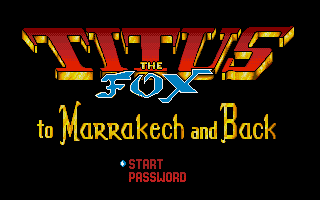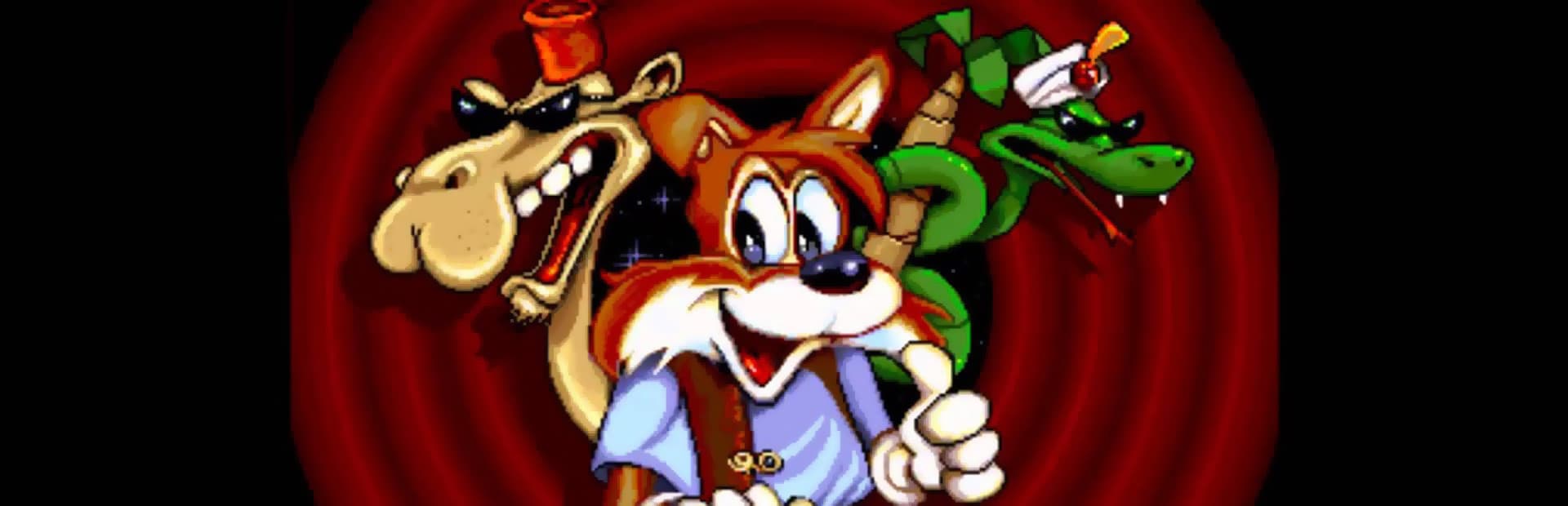

Titus the Fox: To Marrakech and Back asks you to dodge construction workers, throw garbage bins at giant bees, and navigate 15 sprawling levels using a movement system that keeps your vision blind to what is coming next.
Before the red fox mascot took over the starring role for international markets in 1992, this exact engine and level set belonged to a game built for the French market. Developed by Titus France SA and published by Titus Software Corporation, it was originally released in 1991 as Lagaf': Les Aventures de Moktar - Vol 1: La Zoubida, tied directly to a hit comedy song by French entertainer Lagaf'. When it came time to sell the title abroad, the team reskinned the main sprite, turned the hero into the company mascot, and framed the quest around saving his kidnapped fiancée Suzy from the harem of Shah Hassan.
Underneath the artwork swap, programmer Eric Zmiro wrote the core sprite routines in C, delivering a 2D side-view platformer that spans nearly 1,000 individual screens. You start your journey in Titus's home town and trek across the Sahara all the way to Marrakech. Along the way, the game throws an odd mix of enemies at you, ranging from local street tramps firing blow-gun darts to gorilla-like men, snakes, and angry dogs.
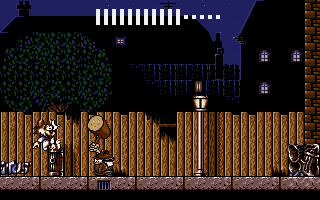
Combat in this game avoids standard stomping mechanics. Instead, Titus picks up objects scattered around the stages, including wooden crates, trash bins, heavy sacks, springs, and rubber balls. You toss these items directly into the path of oncoming hazards, or stack them on top of one another to climb up to high ledges and reach hidden rooms. You can even walk up behind certain patrolling enemies, lift them over your head, and throw them across the screen into their friends.
The mechanics sound versatile on paper, but the actual execution creates a severe mechanical hurdle. The camera scrolling is locked until Titus gets extremely close to the edge of the monitor screen, leaving virtually no lead time to react to what lies ahead. You end up running straight into hazards, dart-firing tramps, or sudden drops simply because the game refuses to shift the viewport until your sprite is practically touching the border.
That design choice turns simple action sections into trial-and-error memorisation. Complicating matters further, interactive puzzle objects look identical to the background art, forcing you to bump into every single stack of tiles to figure out what can be lifted and what is just scenery.
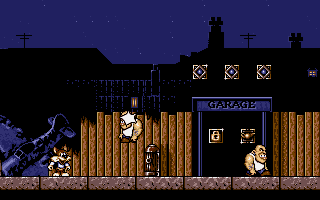
The original 1992 MS-DOS release offers plenty of charm in its presentation, featuring catchy synth audio across AdLib, Sound Blaster, and PC Speaker setups. Period magazines like ST Format praised the 16-bit computer releases for their sharp visuals, but players working through the DOS version quickly run into severe design friction. Chief among these issues is the lack of a visible life meter on screen, making it almost impossible to judge how much damage Titus has taken until you abruptly collapse.
The difficulty curve ramps up brutally after the early town stages. You will find yourself managing tight jumps over instant-death pits while riding alternate transport modes like skateboards and magic carpets. Because progress relies on an exact password system, typing in those long codes is the only way to avoid replaying large chunks of brutal platforming after losing your lives.

If you put it up against 1992 DOS platforming contemporaries like Commander Keen or Rayman a few years later, Titus the Fox hits a strange middle ground. The character sprite work by Francis Fournier and Stephan Beaufils remains detailed, and the object-throwing mechanic feels distinct from the usual hop-and-bop platformers of the era. However, the tight camera view, unhelpful background art readability, and absent health display turn late-game stages into a punishing test of patience.
The visual style and object-stacking puzzles still deliver genuine fun, but the severe screen-scrolling delay means only dedicated retro fans will want to clear all 15 stages without looking up passwords. It works best as an interesting snapshot of early 90s European PC game design, flawed in its camera implementation yet memorable for its oddball premise and expressive animation.
You can play Titus the Fox: To Marrakech and Back free in your browser right now, with nothing to install and no configuration screens to wrestle with. Jump in, get a feel for picking up your first crate, and see if you can manage the tricky camera scrolling long enough to make it out of the home town levels.
Titus the Fox: To Marrakech and Back asks you to dodge construction workers, throw garbage bins at giant bees, and navigate 15 sprawling levels using a movement system that keeps your vision blind to what is coming next.
Before the red fox mascot took over the starring role for international markets in 1992, this exact engine and level set belonged to a game built for the French market. Developed by Titus France SA and published by Titus Software Corporation, it was originally released in 1991 as Lagaf': Les Aventures de Moktar - Vol 1: La Zoubida, tied directly to a hit comedy song by French entertainer Lagaf'. When it came time to sell the title abroad, the team reskinned the main sprite, turned the hero into the company mascot, and framed the quest around saving his kidnapped fiancée Suzy from the harem of Shah Hassan.
Underneath the artwork swap, programmer Eric Zmiro wrote the core sprite routines in C, delivering a 2D side-view platformer that spans nearly 1,000 individual screens. You start your journey in Titus's home town and trek across the Sahara all the way to Marrakech. Along the way, the game throws an odd mix of enemies at you, ranging from local street tramps firing blow-gun darts to gorilla-like men, snakes, and angry dogs.

Combat in this game avoids standard stomping mechanics. Instead, Titus picks up objects scattered around the stages, including wooden crates, trash bins, heavy sacks, springs, and rubber balls. You toss these items directly into the path of oncoming hazards, or stack them on top of one another to climb up to high ledges and reach hidden rooms. You can even walk up behind certain patrolling enemies, lift them over your head, and throw them across the screen into their friends.
The mechanics sound versatile on paper, but the actual execution creates a severe mechanical hurdle. The camera scrolling is locked until Titus gets extremely close to the edge of the monitor screen, leaving virtually no lead time to react to what lies ahead. You end up running straight into hazards, dart-firing tramps, or sudden drops simply because the game refuses to shift the viewport until your sprite is practically touching the border.
That design choice turns simple action sections into trial-and-error memorisation. Complicating matters further, interactive puzzle objects look identical to the background art, forcing you to bump into every single stack of tiles to figure out what can be lifted and what is just scenery.

The original 1992 MS-DOS release offers plenty of charm in its presentation, featuring catchy synth audio across AdLib, Sound Blaster, and PC Speaker setups. Period magazines like ST Format praised the 16-bit computer releases for their sharp visuals, but players working through the DOS version quickly run into severe design friction. Chief among these issues is the lack of a visible life meter on screen, making it almost impossible to judge how much damage Titus has taken until you abruptly collapse.
The difficulty curve ramps up brutally after the early town stages. You will find yourself managing tight jumps over instant-death pits while riding alternate transport modes like skateboards and magic carpets. Because progress relies on an exact password system, typing in those long codes is the only way to avoid replaying large chunks of brutal platforming after losing your lives.

If you put it up against 1992 DOS platforming contemporaries like Commander Keen or Rayman a few years later, Titus the Fox hits a strange middle ground. The character sprite work by Francis Fournier and Stephan Beaufils remains detailed, and the object-throwing mechanic feels distinct from the usual hop-and-bop platformers of the era. However, the tight camera view, unhelpful background art readability, and absent health display turn late-game stages into a punishing test of patience.
The visual style and object-stacking puzzles still deliver genuine fun, but the severe screen-scrolling delay means only dedicated retro fans will want to clear all 15 stages without looking up passwords. It works best as an interesting snapshot of early 90s European PC game design, flawed in its camera implementation yet memorable for its oddball premise and expressive animation.
You can play Titus the Fox: To Marrakech and Back free in your browser right now, with nothing to install and no configuration screens to wrestle with. Jump in, get a feel for picking up your first crate, and see if you can manage the tricky camera scrolling long enough to make it out of the home town levels.
How Titus the Fox: To Marrakech and Back is played — the keys the game listens to, grouped by what they do.
Highlighted keys are mapped — hover or tap one to see what it does.
The on-screen keyboard and gamepad mapping the browser player uses on a phone, a tablet or a controller, as opposed to the real keys above. $PRO members make their own in the player and share them here; anyone can pick one to play with.
Cheat codes, console commands and memory pokes for Titus the Fox: To Marrakech and Back — each one verified and attributed.
Sign in to submitaka Lagaf: Les Aventures de Moktar - Vol 1: La Zoubida
How Titus the Fox: To Marrakech and Back is played — the keys the game listens to, grouped by what they do.
Highlighted keys are mapped — hover or tap one to see what it does.
The on-screen keyboard and gamepad mapping the browser player uses on a phone, a tablet or a controller, as opposed to the real keys above. $PRO members make their own in the player and share them here; anyone can pick one to play with.
Cheat codes, console commands and memory pokes for Titus the Fox: To Marrakech and Back — each one verified and attributed.
Sign in to submit