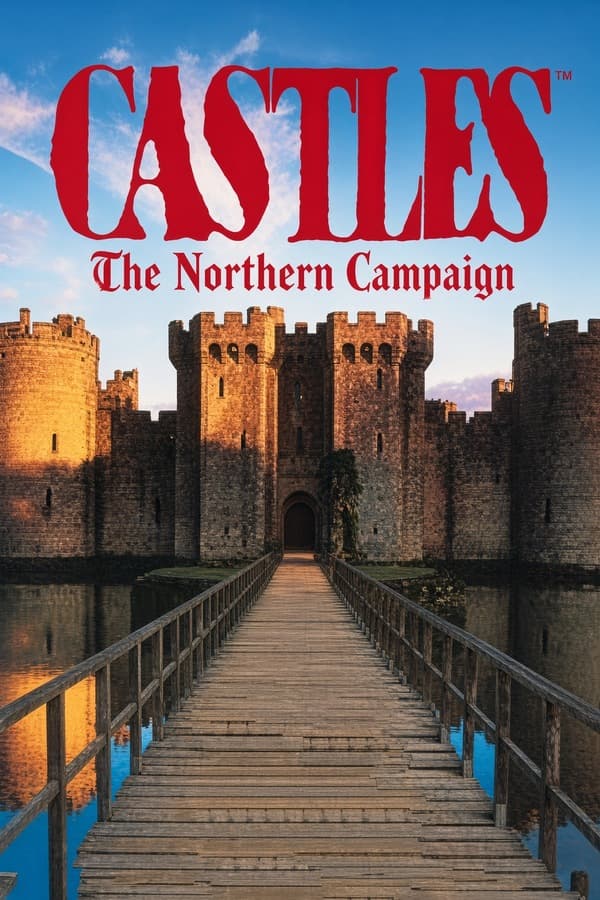
Castles
aka キヤッスルズ
Rate this game
- Played
- A lot
In Castles, you play as the 13th-century King of Albion, dividing your time between laying out stone fortifications in the Welsh Marches and resolving political squabbles before your treasury runs dry.
Designing walls and paying the workforce in Castles
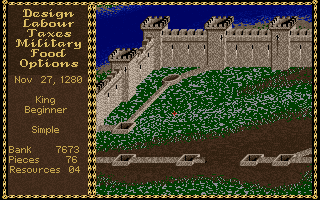
When you sit down with Castles, the immediate appeal lies in the grid where you sketch out your fortress. Designed by Scott Bennie and programmed by Byon Garrabrant, this strategy game puts you in charge of conqueror kings trying to secure subjugated lands. You lay out blueprints on a flat top-down map, deciding whether a curtain wall needs square or round towers, where to drop a gatehouse, and how thick to set the masonry. Every line drawn on the map costs hard currency and requires a steady supply of specialized labor.
The construction loop is where the simulation gets granular. You cannot simply drop down completed buildings with a click of a button. Instead, you manage five distinct worker classes:
- Masons to build the walls and tower foundations.
- Carpenters to frame structural supports and gatehouses.
- Smiths to forge iron fittings, door latches, and defensive grates.
- Quarrymen to mine raw stone from neighboring terrain.
- Laborers to clear land and handle heavy transport across the build site.
If you set wages too low, workers slow down or abandon the site entirely. Set them too high, and your bankroll empties before the first tower reaches wall height. You also balance defensive add-ons like moats, cauldrons of boiling oil, and narrow arrow slits. The game challenges you to complete up to eight fortresses across your kingdom, each campaign map presenting different territorial pressures and tighter budgets.
Courtly politics and real-time raids
Construction does not happen in a vacuum. Work is regularly paused by interactive court audiences. Representatives from three distinct factions - nobles, church authorities, and local peasants - stride into your hall to demand favors, present land disputes, or ask for tax relief. Siding with the clergy might keep the Pope happy, but taxing the peasantry to pay for church tithes risks inciting a rebellion that halts castle construction altogether.
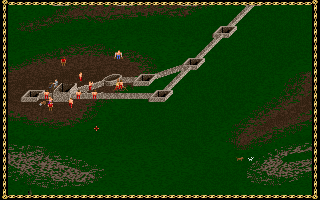
While you juggle political goodwill, local Celtic forces take notice of your half-built walls. Raids happen in real time, forcing you to shift instantly from architect to tactical general. Unfinished walls leave huge gaps in your line, forcing you to place archers and foot soldiers wherever cover exists. If attackers breach your perimeter before the gatehouse is finished, your workers panic and flee, setting your build schedule back by weeks.
For players who want something beyond medieval skirmishes, the game offers a dedicated Fantasy mode. This toggle swaps historical Welsh insurgents for mythical threats. Instead of simple foot soldiers, your archers will fire at fire-breathing dragons, wandering ogres, hostile wizards, and mysterious Sidhe invaders. It adds a wild shift in tone to a game that otherwise leans heavily into historical logistics.
Where the interface grates and enthusiasm fades
When Interplay Productions released the original 1991 Quicksilver Software release, reviewers were initially taken with its novel mix of design and kingdom management. Computer Gaming World gave it an enthusiastic review upon release, declaring that it begged for a sequel. Dragon Magazine and White Wolf Magazine both handed it four out of five stars, celebrating its clean point-and-click control scheme on home computers.
Yet the honeymoon period did not last for everyone. By 1933, when Computer Gaming World re-evaluated the market in a retrospective survey, their rating dropped to two out of five stars, noting that what started as a fascinating exercise quickly turned into tedious repetition. Reviewers at Neperos similarly pointed out that compared to heavyweights like SimCity, the structural management loop lacks the long-term depth needed to keep a campaign fresh after the third or fourth fortress.
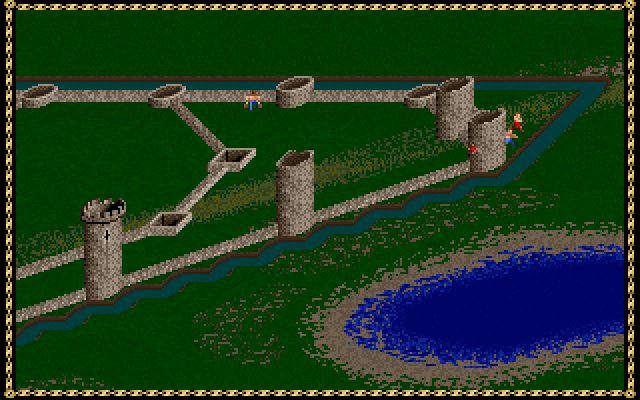
That repetition is compounded by interface flaws. The menu navigation suffers from classic early 1990s MS-DOS clunkiness. Submenus for adjusting wall height or assigning quarry crews take far too many clicks to modify. Modern players running digital re-releases often encounter severe stability bugs, reporting that the game engine frequently freezes halfway through complex builds. Porting duties for early 16-bit systems like the Amiga and Atari ST were handled by Silicon & Synapse, the studio that would later rebrand as Blizzard Entertainment. Even with over 400,000 copies sold, an expansion pack, and a 1992 sequel, the original release pairs sharp ideas with clumsy execution.
How to play the classic Castles MS-DOS game today
The core building loop holds up for anyone who loves medieval history or sandbox layout puzzles. Balancing stone thickness against your quarterly tax revenue provides a solid challenge, even if the user interface forces you to dig through nested menus for basic worker assignments. If you enjoy early historical strategy titles, taking on the role of Albion's master builder still offers a great afternoon of tactical planning.
You can play Castles online right now without messing around with system configs or mounting virtual drives. We have hosted the full version of this Castles MS-DOS game free in your browser, complete with top-down fortress layout tools and real-time siege combat. Jump straight into the crown's sandals, set your masons to work, and see if you can defend the Welsh border before your treasury runs dry.
How Castles is played — the keys the game listens to, grouped by what they do.
- Movement
- Action
- Interface
Highlighted keys are mapped — hover or tap one to see what it does.
Key bindings cannot be remapped in SETUP.EXE. Mouse is optional but recommended.
Players' controls
Touch and gamepad controls
The on-screen keyboard and gamepad mapping the browser player uses on a phone, a tablet or a controller, as opposed to the real keys above. $PRO members make their own in the player and share them here; anyone can pick one to play with.
Make your own touch controlsPRO
- 1Open the editorSign in below, then pick what to make. The game starts with the editor open over it.
- 2Place your keysAdd keys and drag them where your thumbs rest, or map a controller's buttons. Test plays the game with them; Save keeps them, and you play with them from then on.
- 3Share themShare them right after saving in the game, or name and share them here. Players vote, and the best become this game's controls for everyone.
Go PROSee how it worksSign in+20 XP for sharing · +50 XP if yours become the game's own
- The game's own controlsKeyboardGamepadWhat every player starts with.In use
4 screenshots
From the archive
No reviews yet
Tell the community what you think of Castles. Reviews are public and tied to your username.
No archived manuals for Castles yet
No manuals archived for this title yet. Sign in to upload the first scan.
Cheat codes, console commands and memory pokes for Castles — each one verified and attributed.
Sign in to submitNo cheats yet for this title
Know a working cheat, poke or trainer? Add it with the button above. Moderators check every entry before it goes live.
No archived soundtrack for Castles yet
No soundtrack archived for this title yet. Sign in to upload the first rip.
No save states for Castles yet
No save states for this title yet. Sign in to share one.
Discussions
Sign in to post- Threads0
- Total posts0
- Online now6
Community · Castles
Who's contributing, and what's new
- Reviews0
- Threads0
- Uploadsapproved0
- Contributors0
Recent activity