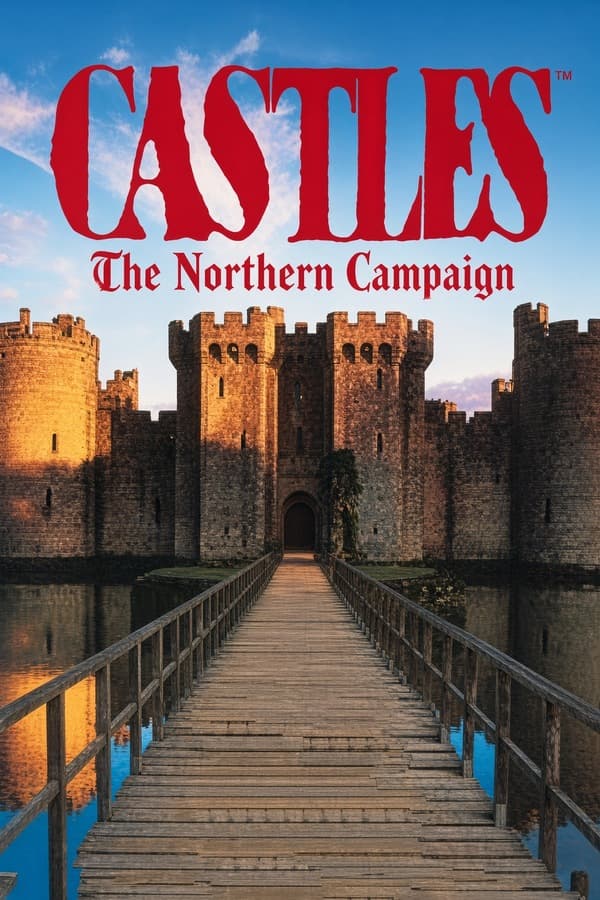
Castles: The Northern Campaign
aka Castles Campaign Disk No. 1 · Castles 1.1
Castles: The Northern Campaign pushes players out of unified Albion into freezing borderlands, where Pict rebels and Viking raiders turn wall design into a race against annihilation.
When building walls is no longer enough to keep out the north
The original release asked players to lay out stone foundations, hire masons, and defend against local skirmishes across Albion. Once those southern provinces settled down, developers at Quicksilver Software realized that standard fortresses were not enough to hold a kingdom together. Players needed a fresh threat that would punish predictable designs and force quick economic choices on the fly.
That response came in 1991 with an expansion disk published by Interplay Entertainment. You could not run the add-on by itself, as it required the base files from the original game to function. Moving the border conflict into northern territory meant dealing with harsh Pict uprisings, sudden raids, and a far more demanding economic environment.
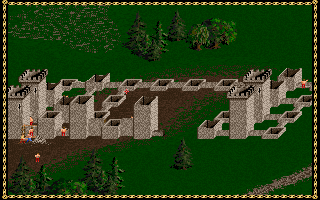
What Castles: The Northern Campaign adds to the board
Designer Scott Bennie took the helm for this release, working under executive producer Brian Fargo to expand how castles were built and maintained. The core loop of drawing wall blueprints from an isometric viewport remained intact, but the strategic layer around your fortress received substantial structural additions. Managing a kingdom now meant keeping an eye on market prices, recruit counts, and political dilemmas brought by court messengers.
The expanded trade mechanics introduced a full commodities market. Instead of relying solely on baseline tax collection and steady resource gathering, you could buy and sell goods to fund your architectural ambitions or hire emergency defense units. If a wall segment stalled for lack of budget, liquidating surplus goods in the market became the quick fix that kept masons working before the next wave arrived.
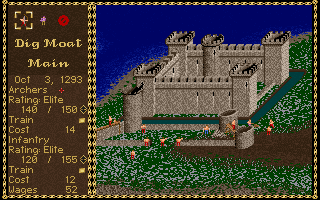
Balancing trade menus and Pict surprise attacks
Combat options saw a major bump in variety. Beyond the basic foot soldiers of the first game, defense forces gained specialized archers and troop training options, while enemy waves introduced brutal Viking units alongside the rebellious Picts. Watching an incoming army march toward your unfinished curtain wall while frantically training archers creates the primary tension of the campaign.
Success in this strategy tactics title relies on handling multiple pressure points simultaneously:
- Drafting structural blueprints with wide sightlines for archers while budgeting stone and wood expenditures.
- Watching commodity values to sell high when money runs short before winter payroll.
- Deciding on messenger events that pop up without warning, trading political favor for military gold.
- Deploying trained defenders to vulnerable wall angles before enemy ladder-men reach your battlements.
The strategic viewport gives you full visibility over the build site, but real-time construction pacing means a poor initial wall layout leaves zero room for error once siege engines show up. If you spend too much early capital on decorative towers, your line will fall before the archers take their positions.
Divided critics and four hundred thousand wall-builders
When magazines evaluated the add-on at release, reactions split sharply. Dragon Magazine awarded the package five out of five stars in 1992, writing that the base game combined with this expansion disk was definitely five-star entertainment. A year later, Computer Gaming World took a cooler stance in their 1933 survey, handing down a two out of five star rating. Modern retrospective aggregators tend to side with the earlier praise, viewing it as the definitive version of the original game engine.
Players clearly voted with their wallets regardless of mixed review scores. Together, the main release and this expansion sold over 400,000 copies, a massive figure for early nineties computer strategy games. Rich audio support helped close sales as well; full musical scores pumping through a Sound Blaster card gave the castle-building process a heavy medieval weight that standard PC speaker bleeps could never match.
How Castles: The Northern Campaign holds up today
If you enjoy medieval construction simulators that force you to think under constant real-time pressure, this add-on still hits the mark. The requirement to balance economic trading alongside tactical unit placement keeps you actively engaged between building phases. The main flaw lies in its raw difficulty spikes when sudden Viking raids catch an unfinished wall off guard, which will send unprepared players back to their earliest save file.
You can play Castles: The Northern Campaign online free in your browser right now. You can launch this classic MS-DOS game directly through the player window, with no setup needed. Jump straight into the northern wilderness, draft your stone perimeter, and see if your treasury holds out against the Pict rebel armies.