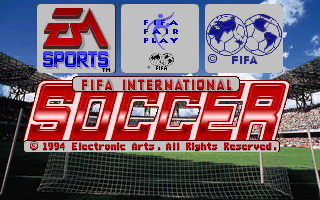
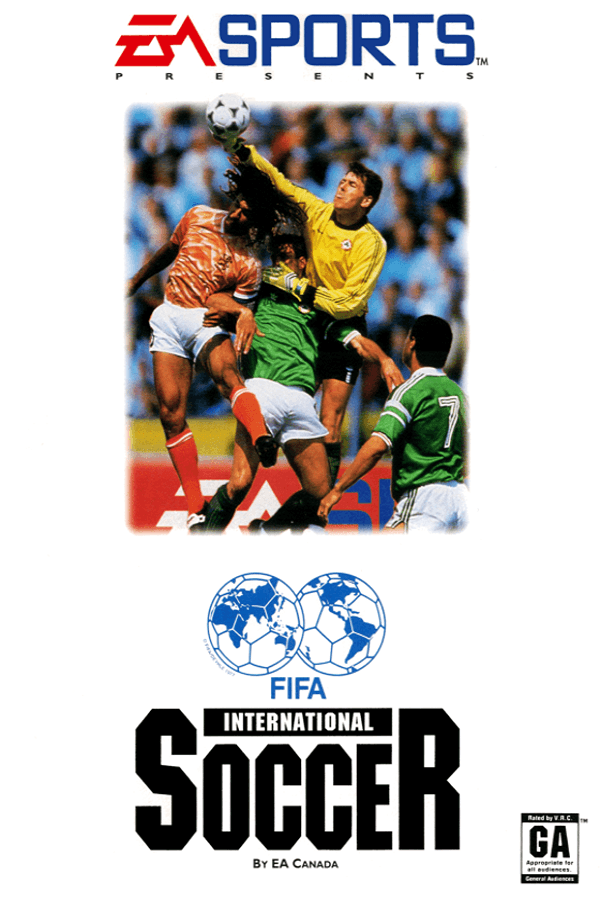

Long before ultimate teams and license megadeals dominated the pitch, FIFA International Soccer brought a quarter-view camera angle and sweeping crowd noise to DOS PCs.
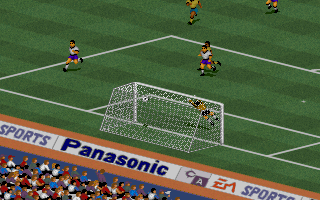
Most football games in 1994 forced you to look straight down from above. Creative Assembly took the Sega original and adapted it for home PCs, locking the camera into an isometric perspective. That angle gave players a wide field of view across the pitch, making long diagonal passes visually clear.
The presentation mimicked a television broadcast instead of an arcade cabinet. Synthetic host screens greeted you before kickoff, while energetic crowds reacted to every major tackle. It felt distinct from top-down competitors like Sensible Soccer that relied strictly on fast, bird's-eye action.
You can choose from 48 international squads across several match modes. Exhibition games let you jump in quickly, while Tournament mode simulates a full world championship bracket. If you prefer knockout rounds immediately, Playoff mode starts directly at the final sixteen stage.
Every team in the game uses completely fictional player names. Licensing real athletes was not standard practice yet, so squads are balanced purely through numerical skill stats rated out of ten. You judge a team by their collective ratings rather than looking for real-world superstars.
Before kickoff, you can adjust your squad formation and assign specific coverage zones to defenders, midfielders, and attackers. Five strategic behaviors guide your computer-controlled teammates, letting you decide whether your line presses aggressively or drops deep into defense.
Matches privilege quick runs along the wings, short sequence passes, and ambitious long shots from outside the penalty box. When set pieces occur, an adjustable target box appears on screen. You position the box manually, then decide whether to drive a grounded pass, lob a high ball, or shoot directly.
The DOS port relies heavily on audio to sell the atmosphere of a packed stadium. Composer Ray Deefholts handled the sound track, earning recognition for audio effects in gaming awards that year. Running on a Sound Blaster 16 card, the roar of the supporters added real tension to close matches.
However, the transition to PC hardware came with mechanical flaws. Magazine reviews in 1994 like Computer + Video Games praised the fluid animation, but players immediately noticed input response issues. Commands can feel slightly delayed, meaning pass requests do not always execute instantly.
Game speed also varied depending on your processor configuration. On certain machines, players sprinted faster than the camera could track. Mastering the control scheme meant anticipating player movement a split-second early to compensate for input lag.
FIFA International Soccer established a template that Electronic Arts expanded for decades. While modern titles focus on player licenses and complex physics, this original DOS release shifted the perspective to an isometric pitch and introduced dedicated set-piece mechanics. The fictional rosters might surprise modern fans, but the quick arcade flow still works.
The input lag is the one major issue that plainly shows its age today. Defending fast wing runs requires early inputs, and passing under heavy pressure can lead to frustrating turnovers. Mechanical quirks aside, you get a clear look at where the sports series started.
You can play FIFA International Soccer free in your browser right here. Try taking a long-range shot from outside the box or building up a classic set-piece routine without needing any setup.
Long before ultimate teams and license megadeals dominated the pitch, FIFA International Soccer brought a quarter-view camera angle and sweeping crowd noise to DOS PCs.
Most football games in 1994 forced you to look straight down from above. Creative Assembly took the Sega original and adapted it for home PCs, locking the camera into an isometric perspective. That angle gave players a wide field of view across the pitch, making long diagonal passes visually clear.
The presentation mimicked a television broadcast instead of an arcade cabinet. Synthetic host screens greeted you before kickoff, while energetic crowds reacted to every major tackle. It felt distinct from top-down competitors like Sensible Soccer that relied strictly on fast, bird's-eye action.
You can choose from 48 international squads across several match modes. Exhibition games let you jump in quickly, while Tournament mode simulates a full world championship bracket. If you prefer knockout rounds immediately, Playoff mode starts directly at the final sixteen stage.
Every team in the game uses completely fictional player names. Licensing real athletes was not standard practice yet, so squads are balanced purely through numerical skill stats rated out of ten. You judge a team by their collective ratings rather than looking for real-world superstars.
Before kickoff, you can adjust your squad formation and assign specific coverage zones to defenders, midfielders, and attackers. Five strategic behaviors guide your computer-controlled teammates, letting you decide whether your line presses aggressively or drops deep into defense.
Matches privilege quick runs along the wings, short sequence passes, and ambitious long shots from outside the penalty box. When set pieces occur, an adjustable target box appears on screen. You position the box manually, then decide whether to drive a grounded pass, lob a high ball, or shoot directly.
The DOS port relies heavily on audio to sell the atmosphere of a packed stadium. Composer Ray Deefholts handled the sound track, earning recognition for audio effects in gaming awards that year. Running on a Sound Blaster 16 card, the roar of the supporters added real tension to close matches.
However, the transition to PC hardware came with mechanical flaws. Magazine reviews in 1994 like Computer + Video Games praised the fluid animation, but players immediately noticed input response issues. Commands can feel slightly delayed, meaning pass requests do not always execute instantly.
Game speed also varied depending on your processor configuration. On certain machines, players sprinted faster than the camera could track. Mastering the control scheme meant anticipating player movement a split-second early to compensate for input lag.
FIFA International Soccer established a template that Electronic Arts expanded for decades. While modern titles focus on player licenses and complex physics, this original DOS release shifted the perspective to an isometric pitch and introduced dedicated set-piece mechanics. The fictional rosters might surprise modern fans, but the quick arcade flow still works.
The input lag is the one major issue that plainly shows its age today. Defending fast wing runs requires early inputs, and passing under heavy pressure can lead to frustrating turnovers. Mechanical quirks aside, you get a clear look at where the sports series started.
You can play FIFA International Soccer free in your browser right here. Try taking a long-range shot from outside the box or building up a classic set-piece routine without needing any setup.
How FIFA International Soccer is played — the keys the game listens to, grouped by what they do.
Highlighted keys are mapped — hover or tap one to see what it does.
There are three keyboard control modes in the game. System keys such as pause were not included in the source material.
The on-screen keyboard and gamepad mapping the browser player uses on a phone, a tablet or a controller, as opposed to the real keys above. $PRO members make their own in the player and share them here; anyone can pick one to play with.
Cheat codes, console commands and memory pokes for FIFA International Soccer — each one verified and attributed.
Sign in to submitaka EA Soccer · FIFA 94 · FIFA International Soccer Championship Edition · FIS
How FIFA International Soccer is played — the keys the game listens to, grouped by what they do.
Highlighted keys are mapped — hover or tap one to see what it does.
There are three keyboard control modes in the game. System keys such as pause were not included in the source material.
The on-screen keyboard and gamepad mapping the browser player uses on a phone, a tablet or a controller, as opposed to the real keys above. $PRO members make their own in the player and share them here; anyone can pick one to play with.
Cheat codes, console commands and memory pokes for FIFA International Soccer — each one verified and attributed.
Sign in to submit