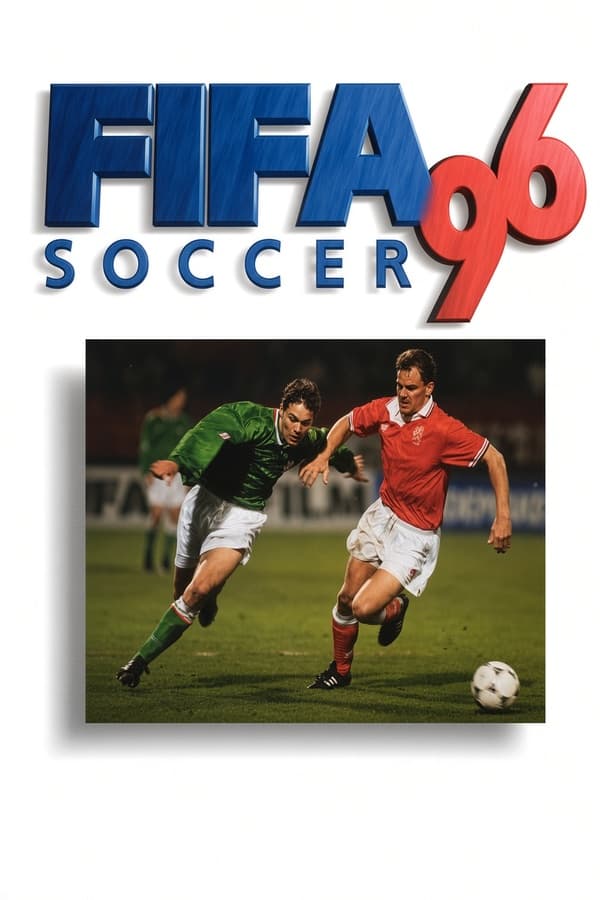

FIFA Soccer 96
aka FIFA 96: Virtual Soccer Stadium · FIFA 96
Streaming build
Checking storage…403 MB
Preload in background
JIT compiler
Rate this game
- Played
- A lot
When FIFA Soccer 96 arrived on MS-DOS, it transformed digital football by pairing actual player licenses with a hybrid 3D engine and live match commentary.
When 2D Sprites Met the Virtual Stadium in FIFA Soccer 96
The first few seconds of a match reveal exactly what Extended Play Productions tried to pull off. You hear the roar of the crowd, John Motson clearing his throat on commentary, and a camera that sweeps across a polygonal stadium before settling behind your midfielders. It felt light-years ahead of flat top-down pitches.
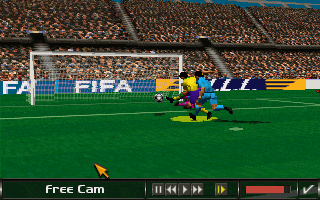
That visual leap came from EA's "Virtual Stadium" technology. The pitch and stands were rendered in full 3D, while the individual players were digitized 2D bitmap sprites. That combination gave you multiple pre-defined camera angles to choose from, ranging from high isometric perspectives to tight sideline angles that made passing feel punchy and direct.
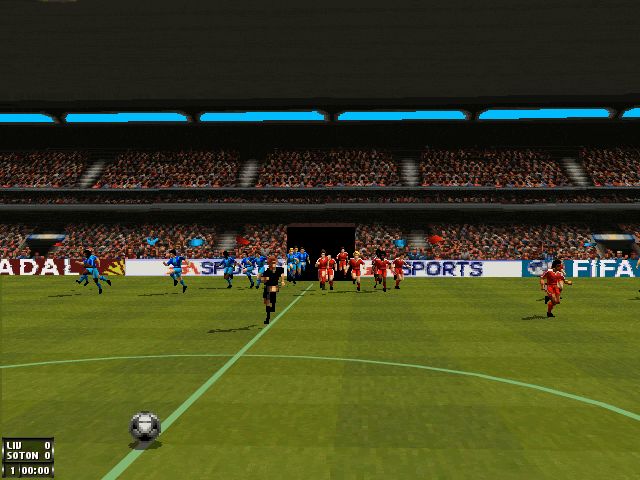
British gaming magazines at the time were sometimes brutal toward this middle-ground approach. Competitors like Actua Soccer had already gone fully 3D with polygonal players. Yet the MS-DOS version of FIFA Soccer 96 ran much smoother on average hardware because 2D sprites required far less math from your CPU.
In action, controlling your team is straightforward but responsive. You switch between players on the fly, timed tackles slide across the grass, and button taps trigger jumping headers or bicycle kicks. GameSpot noted at release that while a fast kick-and-run style works, you still have enough fine control to string together tactical, multi-pass goal plays.
Real Names, Deep Tactics, and Bizarre Goalkeepers
This entry marked a major turn toward real-world authenticity. For the first time in the series, real licensed player names and accurate squad positions replaced fictional names across 11 domestic leagues and 59 national teams.
You can manage custom line-ups, adjust formations, buy and sell players through transfers, or jump straight into custom international tournaments. Finding your favorite club in 1995 and taking them through a full season added serious replay value for soccer enthusiasts.
The on-field simulation mechanics push harder toward realism than earlier arcade entries in the franchise. The actual play mechanics strike a deliberate balance:
- Direct control over passing target, shot power, diving headers, and bicycle kicks
- Real-time managerial tactics and line-up adjustments mid-match
- Detailed player stats, rankings, and roster transfers across international leagues
- Multiple match modes including Friendlies, League Playoffs, and international World Cups
Despite the strategic options, the physical simulation has distinct quirks. Goalkeepers occasionally fail to react to slow shots, leading retro players to joke that keepers look like they suddenly remembered they left the oven on at home. Sometimes a routine clearance trickles into the net while your keeper stands motionless on the goal line.
Sound Cards, Secret Menus, and the PC Advantage
Sound design was a massive selling point on PC sound cards. Famous commentator John Motson provided real-time play-by-play commentary that reacted directly to pitch events. If your system had extra RAM installed, the game unlocked additional audio phrases, expanding his commentary pool and reducing repetition.
The DOS community quicky discovered hidden easter eggs buried inside the menus. Selecting a Friendly Match between Vancouver (USA) on the left and Canada (International) on the right, then pressing Ctrl+Alt+Insert unlocks a secret option screen. From there, you can alter ball sizes or press F1 during gameplay to adjust silly cheat settings.
Winning tournaments also rewards you with hidden cheat codes displayed during the end credits. Developer Extended Play Productions clearly loved hiding extra goodies inside the code for curious players to find.
Where EA Sports Succeeded and Where It Stumbled
As a simulation, the game introduced systems that defined soccer gaming for years. Published by EA Sports, it set the template for yearly sports updates with updated rosters and improved engine tech.
Not everything holds up perfectly under modern scrutiny. Long tournament runs expose the repetition in commentary lines when played on lower-memory configurations. The transition from pure arcade action to simulation mechanics also alienated fans who preferred fast, simple goal-scoring over tactical build-ups.
Yet for fans of sports games, the sheer scope of content was staggering. Balancing managerial tactical depth with snappy real-time controls ensured that every match had genuine stakes.
Take the Pitch Right in Your Browser
You can test your tactical skills right now without setting up old DOS boot disks or tweaking system memory files. Play FIFA Soccer 96 free in your browser right here, fully playable with zero installation required.
Fire up a friendly match, adjust your tactical layout, and see if you can slide-tackle your way to victory. The goalkeepers might surprise you with an unexpected blunder, but landing a perfect bicycle kick from the edge of the box feels just as satisfying today as it did back in 1995.
How FIFA Soccer 96 is played — the keys the game listens to, grouped by what they do.
- Interface
Highlighted keys are mapped — hover or tap one to see what it does.
Baseline default keyboard bindings for actions like Shoot, Pass, and Movement were missing from the source text. Keys can be redefined via the Key Redefine Option in the game setup menus.
Players' controls
Touch and gamepad controls
The on-screen keyboard and gamepad mapping the browser player uses on a phone, a tablet or a controller, as opposed to the real keys above. $PRO members make their own in the player and share them here; anyone can pick one to play with.
Make your own touch controlsPRO
- 1Open the editorSign in below, then pick what to make. The game starts with the editor open over it.
- 2Place your keysAdd keys and drag them where your thumbs rest, or map a controller's buttons. Test plays the game with them; Save keeps them, and you play with them from then on.
- 3Share themShare them right after saving in the game, or name and share them here. Players vote, and the best become this game's controls for everyone.
Go PROSee how it worksSign in+20 XP for sharing · +50 XP if yours become the game's own
- The game's own controlsNone yet: played with a real keyboard only.In use
3 screenshots
From the archive
No gameplay video yet
No gameplay video for FIFA Soccer 96 yet. Sign in to add one.
No reviews yet
Tell the community what you think of FIFA Soccer 96. Reviews are public and tied to your username.
No archived manuals for FIFA Soccer 96 yet
No manuals archived for this title yet. Sign in to upload the first scan.
Cheat codes, console commands and memory pokes for FIFA Soccer 96 — each one verified and attributed.
Sign in to submitNo cheats yet for this title
Know a working cheat, poke or trainer? Add it with the button above. Moderators check every entry before it goes live.
No archived soundtrack for FIFA Soccer 96 yet
No soundtrack archived for this title yet. Sign in to upload the first rip.
No save states for FIFA Soccer 96 yet
No save states for this title yet. Sign in to share one.
Discussions
Sign in to post- Threads0
- Total posts0
- Online now6
Community · FIFA Soccer 96
Who's contributing, and what's new
- Reviews0
- Threads0
- Uploadsapproved0
- Contributors0
Recent activity