
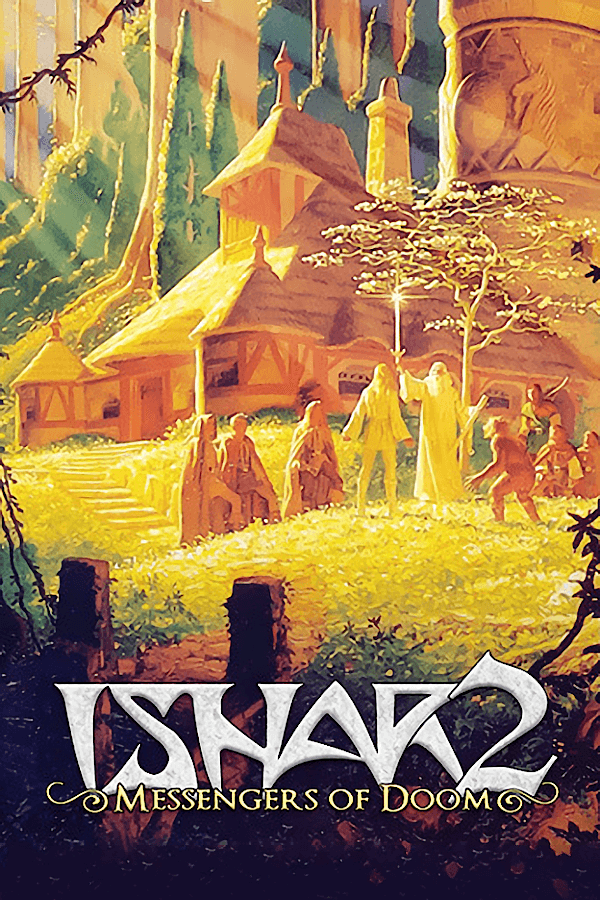

Ishar 2: Messengers of Doom hands you a party of five adventurers, sends you across seven distinct islands, and then forces you to figure out how to pay for medieval nightclub cover charges alongside standard dungeon rations.
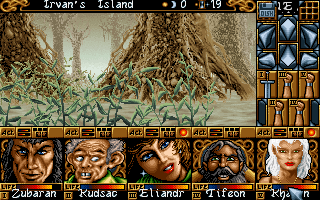
Silmarils traded tile-based steps for open landscapes in Ishar 2: Messengers of Doom
Most step-based dungeon crawlers locked your vision to rigid grid movement, but this 1993 title took a noticeably different approach to rendering outdoor terrain. Built by Silmarils on their in-house ALIS engine, the game uses full-screen interactive 2D screens for menus and portraits alongside custom real-time 3D rendering for landscapes. It creates genuine height variations across terrain, meaning when you trek up the mountain paths of Jon's island, you see the slopes roll downward toward steep ravines.
You begin your journey as Zubaran, the lord of Ishar, after a vision reveals that a chaotic monk named Shandar is spreading hallucinogens throughout the lands. Shandar's drug trade financed a massive evil fortress built to challenge the empire, and taking him down requires traveling across an archipelago of seven named islands. You move from the starting hub of Kendoria to the murky swamps of Irvan's island, the underground complexes of Akeer and Otbar, the mountain peaks of Jon's island, and the treetop wooden gangways hovering above Thorm's forest.
The step-by-step exploration feels expansive, but it relies heavily on specific logistics. Outdoor survival demands keeping up to ten food rations per character, while high-altitude mountain climbing forces you to buy warm clothes and heavy ropes so party members do not slip off narrow ledges to their deaths. It gives the world a tangible sense of physical risk, provided you remember to stock your inventory before leaving town.
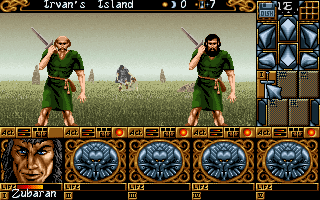
Managing a party in Ishar 2: Messengers of Doom means watching your alignment and your mouse cursor
Party management goes deeper than simply picking the highest stats. You can import your saved team from the first Ishar or assemble a fresh group of up to five companions from local taverns. Each character possesses distinct alignment traits, sympathies, and antipathies. If you attempt to recruit a noble paladin while leading a group of self-serving rogues, your current party members might outright refuse the join request or vote to execute the new recruit on the spot.
Where the system struggles is in its real-time combat execution. Silmarils opted for a mouse-only interface without dedicated hotkeys for quick attacks or spellcasting, turning intense fights into frantic clicking sessions across character portraits and icon rows. A few specific quirks can throw off a good run, such as the infamous potion-stacking bug where attempting to use stacked potions drops the entire pile into a cauldron at once instead of consuming a single dose. Spellcasters also suffer from sparse documentation, leaving players to figure out magic alignment restrictions through trial and error.
Still, the mechanics introduce creative options for its era, including these core systems:
- Day and night cycles: Town shops close their doors when the sun sets, forcing you to kill time until dawn or visit local medieval nightclubs in the city of Zach's island.
- Cauldron potion brewing: Combining ingredients gathered across swamp lands allows you to craft customized magic brews instead of relying entirely on standard spells.
- Combat pets: You can tame and deploy pet animals directly into battle alongside your frontline fighters to draw enemy aggression.
Critics split on whether scope surpassed gameplay structure
When the game hit store shelves, European gaming magazines had vastly different reactions to its brutal structure. Contemporary outlets like CU Amiga awarded it a stellar 93%, celebrating its visual presentation on Commodore hardware, while ST Format praised its atmospheric scale. French magazine Joystick handed down an 88%, appreciating the streamlined automap enhancements over the original game.
Other reviewers were far less forgiving of its structural stiffness. German publication Power Play rated it a harsh 54%, citing narrative weaknesses and tedious grinding, while PC Zone gave the MS-DOS role-playing game a mid-tier 50%. The underlying issue noted by lower scores was the game's strict linear progression. Missing a key item or misallocating funds early on could lock your progress hours later, forcing players to grind low-level enemies just to afford basic passage between islands.
Sound design varied widely depending on your rig setup. Amiga and Atari Falcon players got tracker audio, whereas PC gamers relied on standard Sound Blaster or AdLib cards. The FM synthesis churned out heavy synth tones that fit the fantasy atmosphere, even if atmospheric sound effects were comparatively sparse. If you are launching the PC MS-DOS version today on modern emulators, keep one operational quirk in mind: selecting your preferred language at the initial title screen requires pressing the numbers on your numeric keypad rather than the standard number row keys.
How to play Ishar 2: Messengers of Doom online today
Ishar 2: Messengers of Doom pushed open-world exploration and dynamic party dynamics long before those ideas hit mainstream RPGs. The visual detail is sharp, right down to the stained-glass windows depicting Shandar in the final boss dungeon. It demands patience, careful resource management, and a willingness to embrace old-school European game design quirks.
You can play Ishar 2: Messengers of Doom online right here in your browser, running fully configured with no extra setup required. Modern players often get caught off guard by how fast food rations rot or how easily cold weather kills a party on Jon's island, so buy winter clothes early, save your game often across multiple slots, and keep an eye on your gold before you head out to explore the archipelago.