
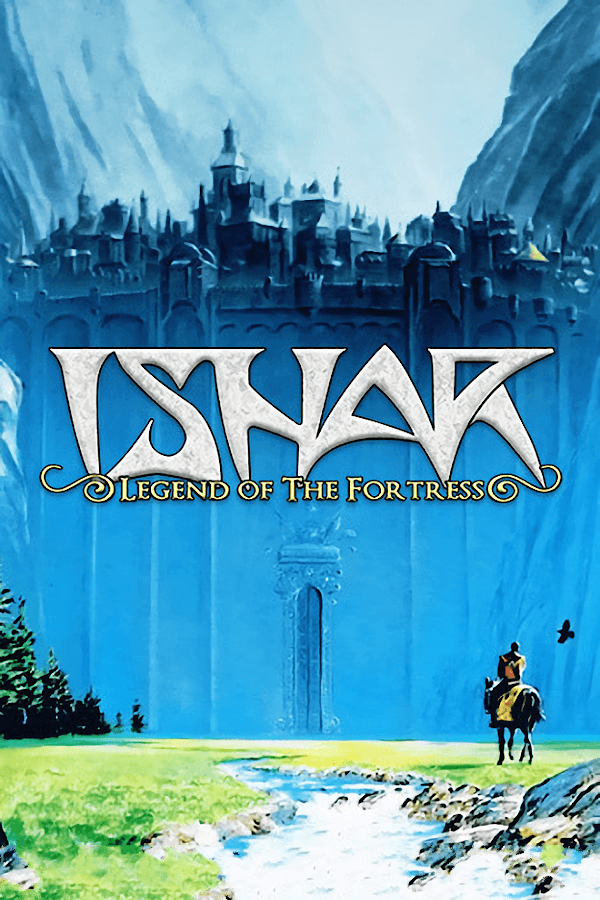

Starting as the warrior Aramir, you set out to recruit a party and overthrow the sorcerer Krogh inside the citadel of Ishar: Legend of the Fortress, provided your own companions do not vote to kick you out first.
When Silmarils shipped Ishar: Legend of the Fortress in 1992, the first thing anyone noticed was the screen. Unlike the gloomy, grid-bound stone corridors of Dungeon Master or Eye of the Beholder, this game pushed players out into open country across regions like Silmartil, Kandomir, and Urshurak. Hand-drawn outdoor scenery filled the top portion of the display with bold colors, masking the brutal nature of the real-time simulation underneath.
You begin your journey alone in the shoes of Aramir, a human warrior tasked with avenging Lord Jarel and stopping Krogh before the sorcerer enslaves Kendoria. To survive, you must assemble a group of up to five adventurers, including Jarel's former allies like Olbar, Irvan, and Jon the Alchemist. Exploring the island lets you wander freely from the start, but step into the wrong zone without a full squad and the enemy hordes will chew through your front line before you can draw a single weapon.
Built on Silmarils' custom ALIS engine, the game was squeezed onto a single 3.5-inch 720kB floppy disk, or four 5.25-inch floppies for standard PC setups, requiring a modest 1.5 MB of hard drive space. Designers Michel Pernot and Pascal Einsweiler aimed to expand on their earlier title, Crystals of Arborea, by adding psychological friction to party dynamics. Every potential recruit has an alignment, and your party members actually vote on whether to accept a newcomer or expel an existing member. If your group dislikes a decision, they can flatly refuse your commands, occasionally murdering a companion overnight if interpersonal tensions run too high.
Puzzles go beyond standard key-hunting and demand specific group setups. In the region of Baldaron, drawing a crucial magical sword requires finding and recruiting a specific Black Knight who is the only hero strong enough to pull it. Other quests require sacrificing or dismissing key characters to make room for essential story NPCs. Managing these personalities while keeping everyone fed at local inns is central to reaching the final confrontation at Krogh's stronghold.
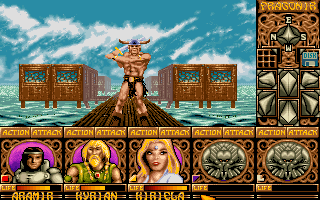
For all its atmospheric charm, Ishar: Legend of the Fortress packs design choices that will baffle modern players. The absolute worst offense is the save system: saving your game costs gold coins. In the opening hours when money is scarce, every save takes precious funds away from buying essential food and equipment, turning early mistakes into total run resets. Magazines at the time, like Zero (which scored it 89%) and CU Amiga, praised the visuals while glossing over how harsh this mechanic was on newcomers.
Combat input presents another major hurdle if you rely solely on the on-screen interface. Clicking individual attack buttons for five party members with a mouse in real-time feels sluggish, often resulting in your party taking heavy damage while waiting for the cursor to register. Veteran players bypass this issue entirely by relying on keyboard shortcuts (F1 through F10) to trigger attacks for the whole party simultaneously. Without those hotkeys, high-level combat inside regions like Zendoria and Fhulgrod turns into a frustrating exercise in cursor chasing.
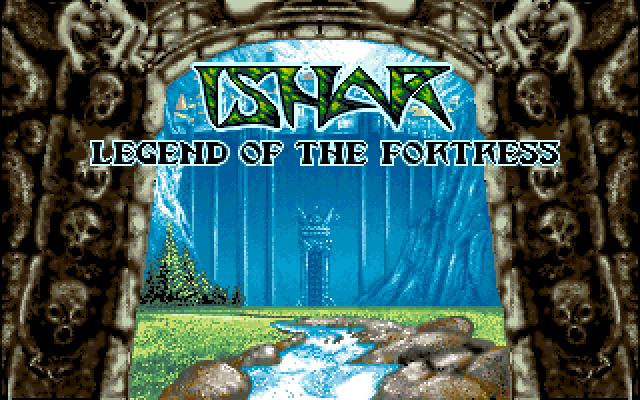
The game definitely shows its age in its constrained inventory screens and basic spell management, but its world still pulls you in. The sheer ambition of managing dynamic party personalities, combined with Fabrice Hautecloque's haunting audio work, sets it apart from typical DOS dungeon crawlers. If you enjoy classic first-person party games that refuse to hand-hold, navigating its tree-lined paths and hidden forts is well worth an evening of your time.
You can play Ishar: Legend of the Fortress free in your browser right now with zero installation required. Load up the MS-DOS version to experience the immediate tension of trying to recruit your very first companion without getting outvoted by your starting party.
Starting as the warrior Aramir, you set out to recruit a party and overthrow the sorcerer Krogh inside the citadel of Ishar: Legend of the Fortress, provided your own companions do not vote to kick you out first.
When Silmarils shipped Ishar: Legend of the Fortress in 1992, the first thing anyone noticed was the screen. Unlike the gloomy, grid-bound stone corridors of Dungeon Master or Eye of the Beholder, this game pushed players out into open country across regions like Silmartil, Kandomir, and Urshurak. Hand-drawn outdoor scenery filled the top portion of the display with bold colors, masking the brutal nature of the real-time simulation underneath.
You begin your journey alone in the shoes of Aramir, a human warrior tasked with avenging Lord Jarel and stopping Krogh before the sorcerer enslaves Kendoria. To survive, you must assemble a group of up to five adventurers, including Jarel's former allies like Olbar, Irvan, and Jon the Alchemist. Exploring the island lets you wander freely from the start, but step into the wrong zone without a full squad and the enemy hordes will chew through your front line before you can draw a single weapon.
Built on Silmarils' custom ALIS engine, the game was squeezed onto a single 3.5-inch 720kB floppy disk, or four 5.25-inch floppies for standard PC setups, requiring a modest 1.5 MB of hard drive space. Designers Michel Pernot and Pascal Einsweiler aimed to expand on their earlier title, Crystals of Arborea, by adding psychological friction to party dynamics. Every potential recruit has an alignment, and your party members actually vote on whether to accept a newcomer or expel an existing member. If your group dislikes a decision, they can flatly refuse your commands, occasionally murdering a companion overnight if interpersonal tensions run too high.
Puzzles go beyond standard key-hunting and demand specific group setups. In the region of Baldaron, drawing a crucial magical sword requires finding and recruiting a specific Black Knight who is the only hero strong enough to pull it. Other quests require sacrificing or dismissing key characters to make room for essential story NPCs. Managing these personalities while keeping everyone fed at local inns is central to reaching the final confrontation at Krogh's stronghold.

For all its atmospheric charm, Ishar: Legend of the Fortress packs design choices that will baffle modern players. The absolute worst offense is the save system: saving your game costs gold coins. In the opening hours when money is scarce, every save takes precious funds away from buying essential food and equipment, turning early mistakes into total run resets. Magazines at the time, like Zero (which scored it 89%) and CU Amiga, praised the visuals while glossing over how harsh this mechanic was on newcomers.
Combat input presents another major hurdle if you rely solely on the on-screen interface. Clicking individual attack buttons for five party members with a mouse in real-time feels sluggish, often resulting in your party taking heavy damage while waiting for the cursor to register. Veteran players bypass this issue entirely by relying on keyboard shortcuts (F1 through F10) to trigger attacks for the whole party simultaneously. Without those hotkeys, high-level combat inside regions like Zendoria and Fhulgrod turns into a frustrating exercise in cursor chasing.

The game definitely shows its age in its constrained inventory screens and basic spell management, but its world still pulls you in. The sheer ambition of managing dynamic party personalities, combined with Fabrice Hautecloque's haunting audio work, sets it apart from typical DOS dungeon crawlers. If you enjoy classic first-person party games that refuse to hand-hold, navigating its tree-lined paths and hidden forts is well worth an evening of your time.
You can play Ishar: Legend of the Fortress free in your browser right now with zero installation required. Load up the MS-DOS version to experience the immediate tension of trying to recruit your very first companion without getting outvoted by your starting party.
How Ishar: Legend of the Fortress is played — the keys the game listens to, grouped by what they do.
Highlighted keys are mapped — hover or tap one to see what it does.
Keyboard controls mirror the mouse interface. Numeric pad keys 1 to 6 control movement directions.
The on-screen keyboard and gamepad mapping the browser player uses on a phone, a tablet or a controller, as opposed to the real keys above. $PRO members make their own in the player and share them here; anyone can pick one to play with.
Cheat codes, console commands and memory pokes for Ishar: Legend of the Fortress — each one verified and attributed.
Sign in to submitaka Ishar I · Ishar: La légende de la forteresse
How Ishar: Legend of the Fortress is played — the keys the game listens to, grouped by what they do.
Highlighted keys are mapped — hover or tap one to see what it does.
Keyboard controls mirror the mouse interface. Numeric pad keys 1 to 6 control movement directions.
The on-screen keyboard and gamepad mapping the browser player uses on a phone, a tablet or a controller, as opposed to the real keys above. $PRO members make their own in the player and share them here; anyone can pick one to play with.
Cheat codes, console commands and memory pokes for Ishar: Legend of the Fortress — each one verified and attributed.
Sign in to submit