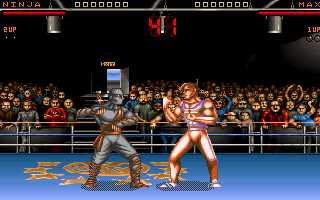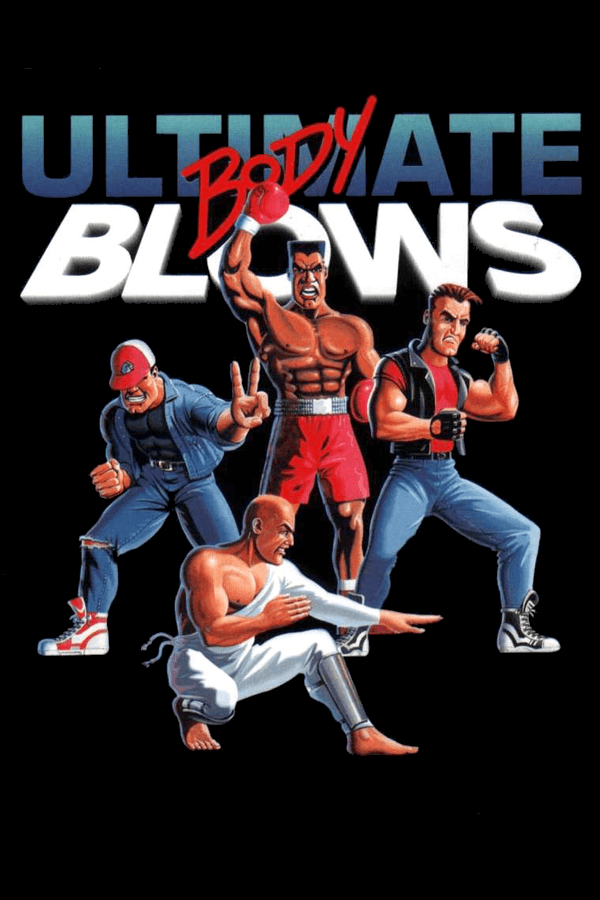

Playing Ultimate Body Blows on a PC keyboard reveals instantly why fighting fans in 1994 had such a fraught relationship with computer brawlers. Team17 jammed two complete arcade-style rosters into a single package, creating a massive 22-fighter clash that was equal parts ambitious and mechanically stubborn.
If you boot up this action game expecting the smooth directional inputs of arcade champions, your hands are in for a shock. The engine was originally built around standard one-button joysticks, which meant holding down your single attack button and pushing a direction to execute different special moves. When translated to MS-DOS hardware, that setup morphed into an awkward array of cluster keys like W/E/R, S/D, and Z/X/C, leaving players struggling to perform basic special attacks while dodging incoming fire.
The pacing of every match revolves around a peculiar button-lock system designed as a mercy mechanic. When you knock an opponent flat onto the canvas, your attack controls lock up entirely until they pull themselves back up. You cannot crowd a rising opponent for an instant wake-up hit, nor can you string together true multi-hit combos or grab a blocking enemy, because the engine omits throw mechanics altogether. Every round breaks down into a rhythmic game of spacing, jumping over fireballs, and trading high-damage special moves from across the stage.
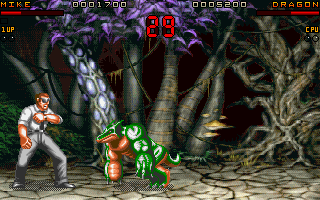
Combining the original 1993 game with its sci-fi sequel expanded the selectable lineup into an absolute carnival of character concepts. Beside standard street brawlers like the twin martial artist heroes Dan and Nik, you get a cyclone-powered businessman named Mike, a monk named Lo-Ray, an electrified Russian giant named Kossak, and a wrestler named Dug. Crossing over into the space-themed content introduces alien creatures, cyborgs, and dinosaurs across 24 distinct background stages ranging from sandy wrestling rings to foreign planet surfaces.
Computer-controlled opponents exploit every mechanical advantage they can find, making single-player matches an exercise in patience. Enemy AI routinely spams high-speed projectiles and instant-teleport techniques the moment you step into range. Defeating later opponents often means finding a single reliable special move and abusing the computer's pathfinding quirks rather than trying to play a clean tactical match.

While console purists criticized the stiff animations, the presentation on PC delivered genuine punch thanks to its audio setup. Sound Blaster cards blasted out a synth-heavy soundtrack composed by Allister Brimble and Danny Burke, giving every match an energetic driving beat that outpaced many arcade conversions of the era. The VGA graphics filled the screen with bright sprites, even if their movement lacked the extra animation frames seen in top-tier arcade cabinets.
Developer and publisher Team17 built a reputation for defensive pride, which spilled directly into the software itself. After taking sharp criticism from magazines like Amiga Power, the team inserted easter egg cheat codes into their games, letting players type in the name of the offending publication to trigger hostile messages or joke effects. That defiant attitude permeates the game, right down to the absurdly overpowered final boss, Max.
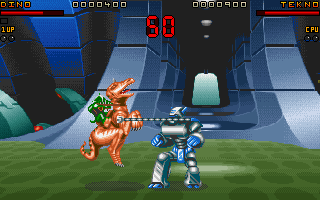
Judged strictly as a competitive fighter, it feels stiff today. The rigid move lists, complete absence of grabs, and clunky keyboard mapping keep it far from the arcade giants of 1994. Still, it captures a loud, aggressive slice of European PC design, jamming an enormous array of absurd fighters into one disk box.
You can play Ultimate Body Blows online free in your browser right now, with no installation or setup required. Most modern players expect traditional quarter-circle stick inputs, so the biggest surprise when playing this Ultimate Body Blows MS-DOS game today is discovering that holding your attack key while tapping directions is how you launch special attacks. Fire up a match, pick an alien or a cyclone-toting suit, and see how long you survive against the computer's ruthless projectile spam.
Playing Ultimate Body Blows on a PC keyboard reveals instantly why fighting fans in 1994 had such a fraught relationship with computer brawlers. Team17 jammed two complete arcade-style rosters into a single package, creating a massive 22-fighter clash that was equal parts ambitious and mechanically stubborn.
If you boot up this action game expecting the smooth directional inputs of arcade champions, your hands are in for a shock. The engine was originally built around standard one-button joysticks, which meant holding down your single attack button and pushing a direction to execute different special moves. When translated to MS-DOS hardware, that setup morphed into an awkward array of cluster keys like W/E/R, S/D, and Z/X/C, leaving players struggling to perform basic special attacks while dodging incoming fire.
The pacing of every match revolves around a peculiar button-lock system designed as a mercy mechanic. When you knock an opponent flat onto the canvas, your attack controls lock up entirely until they pull themselves back up. You cannot crowd a rising opponent for an instant wake-up hit, nor can you string together true multi-hit combos or grab a blocking enemy, because the engine omits throw mechanics altogether. Every round breaks down into a rhythmic game of spacing, jumping over fireballs, and trading high-damage special moves from across the stage.

Combining the original 1993 game with its sci-fi sequel expanded the selectable lineup into an absolute carnival of character concepts. Beside standard street brawlers like the twin martial artist heroes Dan and Nik, you get a cyclone-powered businessman named Mike, a monk named Lo-Ray, an electrified Russian giant named Kossak, and a wrestler named Dug. Crossing over into the space-themed content introduces alien creatures, cyborgs, and dinosaurs across 24 distinct background stages ranging from sandy wrestling rings to foreign planet surfaces.
Computer-controlled opponents exploit every mechanical advantage they can find, making single-player matches an exercise in patience. Enemy AI routinely spams high-speed projectiles and instant-teleport techniques the moment you step into range. Defeating later opponents often means finding a single reliable special move and abusing the computer's pathfinding quirks rather than trying to play a clean tactical match.

While console purists criticized the stiff animations, the presentation on PC delivered genuine punch thanks to its audio setup. Sound Blaster cards blasted out a synth-heavy soundtrack composed by Allister Brimble and Danny Burke, giving every match an energetic driving beat that outpaced many arcade conversions of the era. The VGA graphics filled the screen with bright sprites, even if their movement lacked the extra animation frames seen in top-tier arcade cabinets.
Developer and publisher Team17 built a reputation for defensive pride, which spilled directly into the software itself. After taking sharp criticism from magazines like Amiga Power, the team inserted easter egg cheat codes into their games, letting players type in the name of the offending publication to trigger hostile messages or joke effects. That defiant attitude permeates the game, right down to the absurdly overpowered final boss, Max.

Judged strictly as a competitive fighter, it feels stiff today. The rigid move lists, complete absence of grabs, and clunky keyboard mapping keep it far from the arcade giants of 1994. Still, it captures a loud, aggressive slice of European PC design, jamming an enormous array of absurd fighters into one disk box.
You can play Ultimate Body Blows online free in your browser right now, with no installation or setup required. Most modern players expect traditional quarter-circle stick inputs, so the biggest surprise when playing this Ultimate Body Blows MS-DOS game today is discovering that holding your attack key while tapping directions is how you launch special attacks. Fire up a match, pick an alien or a cyclone-toting suit, and see how long you survive against the computer's ruthless projectile spam.
How Ultimate Body Blows is played — the keys the game listens to, grouped by what they do.
Highlighted keys are mapped — hover or tap one to see what it does.
Custom control configurations can be adjusted through internal game setup menus or external configuration tools. Additional specific function keys for pausing or menu navigation are not listed.
The on-screen keyboard and gamepad mapping the browser player uses on a phone, a tablet or a controller, as opposed to the real keys above. $PRO members make their own in the player and share them here; anyone can pick one to play with.
Cheat codes, console commands and memory pokes for Ultimate Body Blows — each one verified and attributed.
Sign in to submitHow Ultimate Body Blows is played — the keys the game listens to, grouped by what they do.
Highlighted keys are mapped — hover or tap one to see what it does.
Custom control configurations can be adjusted through internal game setup menus or external configuration tools. Additional specific function keys for pausing or menu navigation are not listed.
The on-screen keyboard and gamepad mapping the browser player uses on a phone, a tablet or a controller, as opposed to the real keys above. $PRO members make their own in the player and share them here; anyone can pick one to play with.
Cheat codes, console commands and memory pokes for Ultimate Body Blows — each one verified and attributed.
Sign in to submit