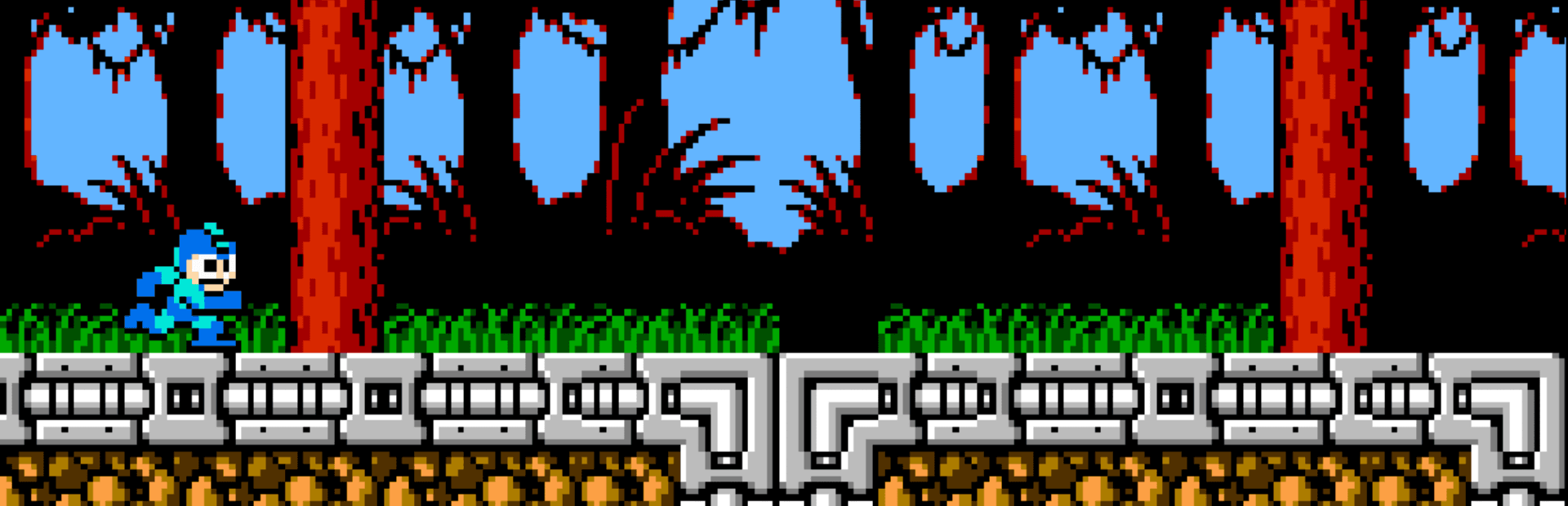
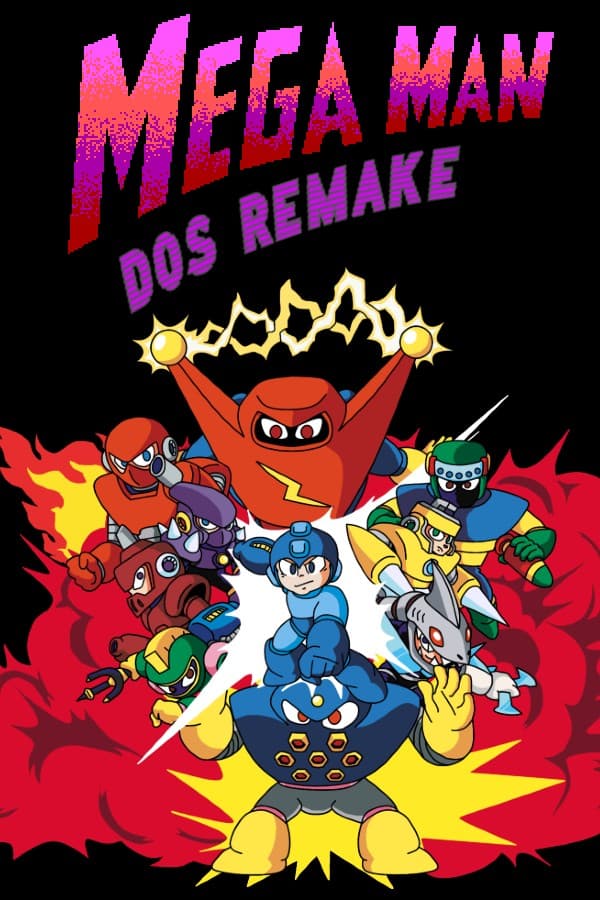

Fire up Mega Man on MS-DOS and your PC speaker immediately greets you with a sharp beep, dropping you into a strange standalone chapter where jumping is mapped to J and firing requires the spacebar.
Back in 1990, console hits rarely made smooth transitions to home computers, but the story behind this DOS release is particularly unusual. Stephen Rozner, an ex-Capcom U.S.A. programmer who previously worked on the Commodore 64 port of Street Fighter, formed Rozner Labs to handle the project. When corporate business deals shifted, Rozner ended up writing the game independently, published through Hi Tech Expressions without direct access to Capcom's original NES assembly code or graphical assets.
The result is not a direct port of the 1987 console original, but an entirely custom action platformer built from scratch. Because the developer had to recreate the entire codebase blindly, the movement physics, stage geometry, and enemy behaviors bear almost no structural resemblance to the Nintendo game. Even the sequel naming logic was bizarre: when Capcom followed this up on PC two years later, they skipped the second title entirely and released Mega Man 3 so the retail box could leverage the artwork of the current NES game on store shelves.
Instead of the typical six or eight stage select screen, this version gives you just three Robot Masters to target: Dyna Man, Sonic Man, and Volt Man. Landing your first jump immediately highlights the game's most eccentric design decision, which is a default control scheme that maps jumping to the J key and shooting to the spacebar. Handing a keyboard to anyone accustomed to standard arrow controls usually results in several accidental deaths before reaching the first ladder.
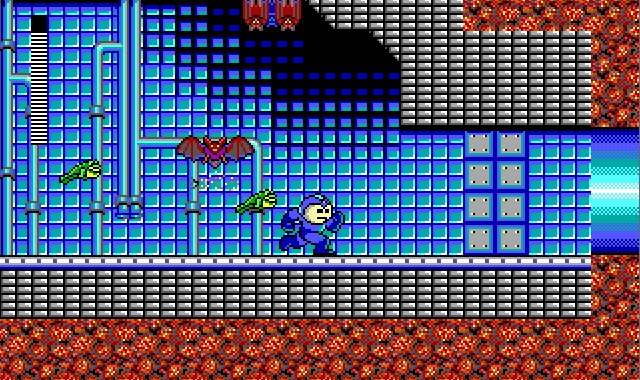
The stage layouts themselves pull no punches, throwing environmental traps at you while small generic enemies continuously respawn from the edges of the display. Volt Man's level features mechanical parrots perching on power lines alongside timing-based energy surges that will shave off half your health bar if you mistime a leap. Making matters harder, many smaller creeping enemies travel so low along the floor that your default arm cannon shots sail harmlessly over their heads, forcing you to avoid them entirely or risk taking contact damage.
Dying during a stage carries severe consequences. While you can collect energy capsules to refill your life meter or pick up energy tanks for full recovery, failing during a boss fight does not drop you at a nearby door checkpoint. Instead, losing your last life against a Robot Master sends you all the way back to the start of the level, forcing you to navigate every jump and respawning hazard from scratch.
Despite the steep punishment for failure, taking down the three Robot Masters rewards you with weapons that dramatically shift how combat feels. Defeating Sonic Man grants a wave shot that bounces cleanly off walls, making tight corridors much safer to clear. Victory over Volt Man unlocks a toggleable electric shield that orbits your character, protecting you from low-slung floor hazards that standard buster shots cannot clear.
Dyna Man drops a triggerable stick of dynamite, which gives you explosive area damage to clear stubborn clusters of machinery. Defeating each boss yields a special passkey rather than just a weapon score. Once all three keys are in your inventory, access opens to Dr. Wily's core laboratory complex, where the rogue lab assistant has hijacked the global peace-keeping supercomputer known as CRORQ.
The final gauntlet tests whether you saved your weapon energy capsules wisely. You can list your gear and inventory pickups as follows:
Sound design in this release is purely functional, driven entirely by the internal PC speaker without support for AdLib or Sound Blaster expansion cards. There are no background music tracks during stages or boss encounters, leaving you with only the harsh internal bleeps of your buster firing and the quick chirp of enemy explosions. The absence of a soundtrack gives the levels an oddly quiet atmosphere compared to the energetic chiptunes of console releases.
On modern hardware setups, the game code presents an infamous performance hurdle: it ties its game loop directly to CPU clock cycles. Without slowdown utilities active, the hero and his enemies dart across the screen at unplayable speeds, turning simple jumps into instant deaths. Running it at proper speed reveals a game that relies heavily on precision memorization rather than quick reflexes alone.
This DOS chapter sits as a platforming oddity, built under unusual conditions that set it completely apart from its console namesake. The tight level layouts, constant enemy spawns, and strict restart penalties make it a stubborn challenge, but mastering the unique weapons makes the push toward CRORQ surprisingly rewarding.
You can play Mega Man online right now, right here in your browser, with no extra files to install or setup to configure. Jump straight in, get used to that odd J and spacebar layout, and see if you can take down Sonic Man without losing your starting lives.
Fire up Mega Man on MS-DOS and your PC speaker immediately greets you with a sharp beep, dropping you into a strange standalone chapter where jumping is mapped to J and firing requires the spacebar.
Back in 1990, console hits rarely made smooth transitions to home computers, but the story behind this DOS release is particularly unusual. Stephen Rozner, an ex-Capcom U.S.A. programmer who previously worked on the Commodore 64 port of Street Fighter, formed Rozner Labs to handle the project. When corporate business deals shifted, Rozner ended up writing the game independently, published through Hi Tech Expressions without direct access to Capcom's original NES assembly code or graphical assets.
The result is not a direct port of the 1987 console original, but an entirely custom action platformer built from scratch. Because the developer had to recreate the entire codebase blindly, the movement physics, stage geometry, and enemy behaviors bear almost no structural resemblance to the Nintendo game. Even the sequel naming logic was bizarre: when Capcom followed this up on PC two years later, they skipped the second title entirely and released Mega Man 3 so the retail box could leverage the artwork of the current NES game on store shelves.
Instead of the typical six or eight stage select screen, this version gives you just three Robot Masters to target: Dyna Man, Sonic Man, and Volt Man. Landing your first jump immediately highlights the game's most eccentric design decision, which is a default control scheme that maps jumping to the J key and shooting to the spacebar. Handing a keyboard to anyone accustomed to standard arrow controls usually results in several accidental deaths before reaching the first ladder.
The stage layouts themselves pull no punches, throwing environmental traps at you while small generic enemies continuously respawn from the edges of the display. Volt Man's level features mechanical parrots perching on power lines alongside timing-based energy surges that will shave off half your health bar if you mistime a leap. Making matters harder, many smaller creeping enemies travel so low along the floor that your default arm cannon shots sail harmlessly over their heads, forcing you to avoid them entirely or risk taking contact damage.
Dying during a stage carries severe consequences. While you can collect energy capsules to refill your life meter or pick up energy tanks for full recovery, failing during a boss fight does not drop you at a nearby door checkpoint. Instead, losing your last life against a Robot Master sends you all the way back to the start of the level, forcing you to navigate every jump and respawning hazard from scratch.
Despite the steep punishment for failure, taking down the three Robot Masters rewards you with weapons that dramatically shift how combat feels. Defeating Sonic Man grants a wave shot that bounces cleanly off walls, making tight corridors much safer to clear. Victory over Volt Man unlocks a toggleable electric shield that orbits your character, protecting you from low-slung floor hazards that standard buster shots cannot clear.
Dyna Man drops a triggerable stick of dynamite, which gives you explosive area damage to clear stubborn clusters of machinery. Defeating each boss yields a special passkey rather than just a weapon score. Once all three keys are in your inventory, access opens to Dr. Wily's core laboratory complex, where the rogue lab assistant has hijacked the global peace-keeping supercomputer known as CRORQ.
The final gauntlet tests whether you saved your weapon energy capsules wisely. You can list your gear and inventory pickups as follows:
Sound design in this release is purely functional, driven entirely by the internal PC speaker without support for AdLib or Sound Blaster expansion cards. There are no background music tracks during stages or boss encounters, leaving you with only the harsh internal bleeps of your buster firing and the quick chirp of enemy explosions. The absence of a soundtrack gives the levels an oddly quiet atmosphere compared to the energetic chiptunes of console releases.
On modern hardware setups, the game code presents an infamous performance hurdle: it ties its game loop directly to CPU clock cycles. Without slowdown utilities active, the hero and his enemies dart across the screen at unplayable speeds, turning simple jumps into instant deaths. Running it at proper speed reveals a game that relies heavily on precision memorization rather than quick reflexes alone.
This DOS chapter sits as a platforming oddity, built under unusual conditions that set it completely apart from its console namesake. The tight level layouts, constant enemy spawns, and strict restart penalties make it a stubborn challenge, but mastering the unique weapons makes the push toward CRORQ surprisingly rewarding.
You can play Mega Man online right now, right here in your browser, with no extra files to install or setup to configure. Jump straight in, get used to that odd J and spacebar layout, and see if you can take down Sonic Man without losing your starting lives.
How Mega Man is played — the keys the game listens to, grouped by what they do.
Highlighted keys are mapped — hover or tap one to see what it does.
Default setting enables joystick; disable it in settings if playing strictly on keyboard.
The on-screen keyboard and gamepad mapping the browser player uses on a phone, a tablet or a controller, as opposed to the real keys above. $PRO members make their own in the player and share them here; anyone can pick one to play with.
Cheat codes, console commands and memory pokes for Mega Man — each one verified and attributed.
Sign in to submitHow Mega Man is played — the keys the game listens to, grouped by what they do.
Highlighted keys are mapped — hover or tap one to see what it does.
Default setting enables joystick; disable it in settings if playing strictly on keyboard.
The on-screen keyboard and gamepad mapping the browser player uses on a phone, a tablet or a controller, as opposed to the real keys above. $PRO members make their own in the player and share them here; anyone can pick one to play with.
Cheat codes, console commands and memory pokes for Mega Man — each one verified and attributed.
Sign in to submit