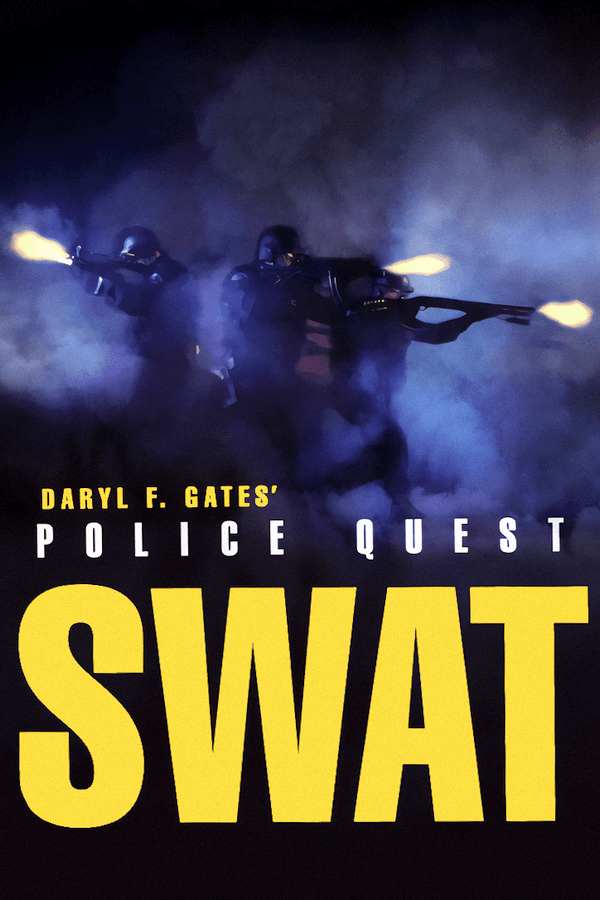
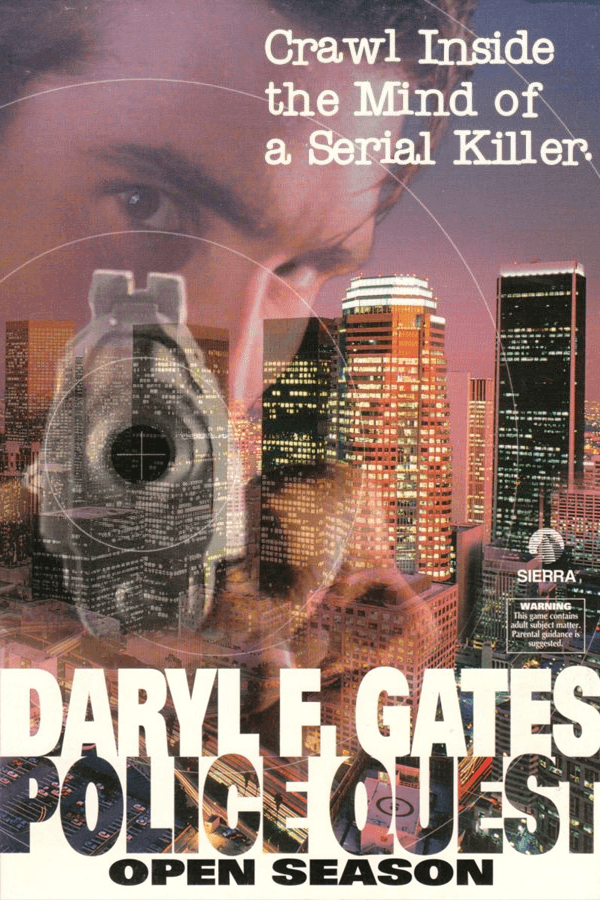

Police Quest 4: Open Season
aka Daryl F. Gates Police Quest: Open Season · PQ4 · Police Investigation 4 · Police Quest 4
Streaming build
Checking storage…813 MB
Preload in background
JIT compiler
Rate this game
- Played
- A lot
Stepping into Police Quest 4: Open Season means trading the cozy police procedural rhythm of earlier games for a bleak, digitized Los Angeles murder investigation. Playing as LAPD Homicide Detective John Carey, your morning starts not with routine traffic duty, but standing over your murdered ex-partner in a South Central alleyway.
Sierra swapped painted backdrops for digitized photography
When Sierra On-Line shipped the title in 1993, long-time series protagonist Sonny Bonds was nowhere to be found. Original designer Jim Walls had parted ways with Sierra On-Line, Inc., leaving designer Tammy Dargan, a former producer for television's America's Most Wanted, to reinvent the franchise. Prominently carrying retired LAPD Chief Daryl F. Gates's name on the box, the production abandoned the hand-painted VGA art of the third game in favor of digitized photographs of actual Los Angeles locations and filmed actors built inside Sierra's SCI engine.
The switch to digitized graphics caused plenty of arguments at launch, and it is the first thing you notice when booting up the MS-DOS version of Police Quest 4: Open Season. Low-resolution digitized backgrounds turn crime scenes into murky fields of muddy pixels. Crucial evidence sitting on the asphalt or tucked into corner nooks disappears into the compression artifacts, forcing you to sweep your cursor over every square inch of the screen just to spot interactive objects.
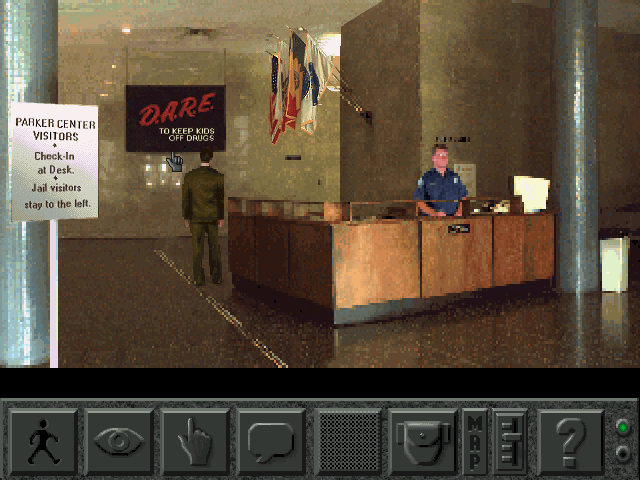
The digitized actors move with rigid, frame-skipping walk animations that look jarring against static photo plates. While the General MIDI and Sound Blaster soundtrack delivers appropriate atmospheric background noise, the visual crunch of 256-color digitized photos makes even routine navigation feel clunky compared to Sierra's hand-drawn adventure games of the same period.
Police Quest 4: Open Season forces strict LAPD procedure onto absurd adventure puzzles
The core loop follows real-world police work with punishing strictness. You collect evidence from crime scenes, take notes in your paper pad, log items into evidence bags from your car trunk, cross-reference computer records at Parker Center, and interview witnesses at locations like the Short Stop Bar and the city morgue. Forget a basic piece of protocol, such as properly tagging a spent shell casing or missing a detail on an autopsy report, and the game will happily end your run hours later with a dead end or a reprimand from your captain.
Yet for all its insistence on realistic administrative protocol, the puzzle design occasionally strays into sheer absurdity. You spend one hour typing evidence codes into your LAPD terminal line by line, and the next moment you are fashioning an improvised flamethrower out of a hairspray can and a pocket lighter to clear out a deadly encounter. That sharp contrast between dry paperwork and wild adventure logic gives the investigation a bizarre tempo.
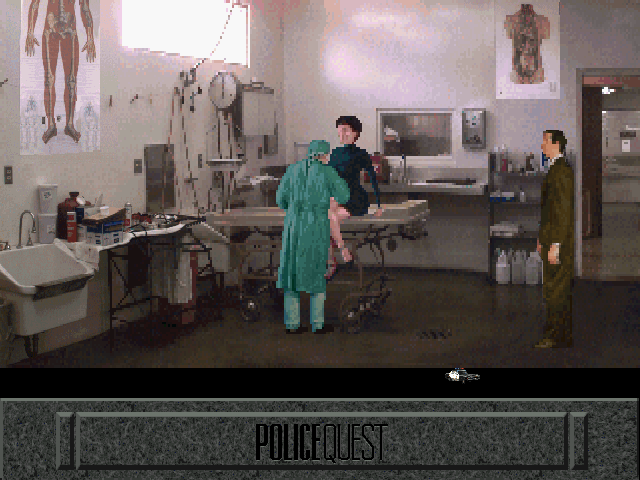
Long-time fans will spot a few quiet nods to the older games hidden behind the realistic facade. The police mainframe computer system in the main precinct is officially named "SONNY", and if you happen to check the high-score tables on the arcade cabinets inside the Short Stop Bar, Sonny Bonds still holds top rank. The manual and internal game executable file even list the project under the working title "PQ4", confirming its spot in the main sequence despite dropping the number from the box art.
Character writing took a back seat to TV-style grit
Where earlier entries drew appeal from Sonny Bonds' simple, earnest approach to police work, Detective John Carey rarely develops much of a personality. Critics at the time noted that Carey feels less like a fully realized character and more like a vessel for walking through crime scene checklists. His reaction to finding his former partner Bob Hickman and an eight-year-old boy, Bobby Washington, dead in an alley sets a somber, detached tone that persists through the whole investigation.
The storyline borrows heavily from tabloid crime television, prioritizing graphic crime scenes and shocking reveals over strong character development. Contemporary reviewers praised the gritty shift toward realistic homicide investigation, but modern retrospectives point out how heavily the game relies on reactionary tropes about urban crime and minority neighborhoods in early 1990s Los Angeles according to the game's Wikipedia documentation.
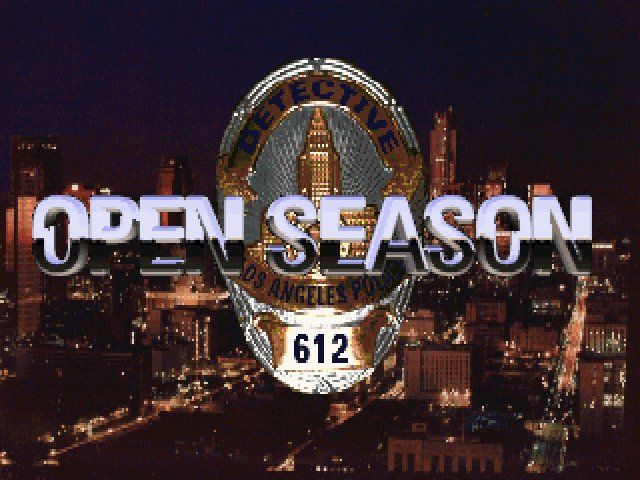
The pacing breaks down further near the climax. Major narrative threads and key suspect motivations are abruptly resolved off-screen via brief text reports rather than played through directly. The sudden twist ending leaves critical questions unanswered, leaving players who spent days cataloging evidence feeling cheated by an abrupt conclusion.
What holds up today and how to play it
If you want to spend an evening with it today, go in knowing exactly what you are getting. The technical shift to low-resolution digitized photography did not age gracefully, and pixel-hunting through dark, blocky scenes can test your patience. However, if you enjoy procedural detail, precise inventory management, and the distinct design quirks of mid-90s Sierra titles, the game provides a fascinating look at how adventure games attempted to pivot toward photorealism.
You can play Police Quest 4: Open Season online free in your browser right here. There is nothing to install, so you can jump straight into John Carey's notebook and see whether your crime scene protocol holds up against the grittiest case Sierra ever put on floppy disk.
How Police Quest 4: Open Season is played — the keys the game listens to, grouped by what they do.
- Movement
Highlighted keys are mapped — hover or tap one to see what it does.
Primary gameplay uses point-and-click mouse controls; arrow keys are used for driving sequences.
Players' controls
Touch and gamepad controls
The on-screen keyboard and gamepad mapping the browser player uses on a phone, a tablet or a controller, as opposed to the real keys above. $PRO members make their own in the player and share them here; anyone can pick one to play with.
Make your own touch controlsPRO
- 1Open the editorSign in below, then pick what to make. The game starts with the editor open over it.
- 2Place your keysAdd keys and drag them where your thumbs rest, or map a controller's buttons. Test plays the game with them; Save keeps them, and you play with them from then on.
- 3Share themShare them right after saving in the game, or name and share them here. Players vote, and the best become this game's controls for everyone.
Go PROSee how it worksSign in+20 XP for sharing · +50 XP if yours become the game's own
- The game's own controlsKeyboardGamepadWhat every player starts with.In use
3 screenshots
From the archive
No gameplay video yet
No gameplay video for Police Quest 4: Open Season yet. Sign in to add one.
No reviews yet
Tell the community what you think of Police Quest 4: Open Season. Reviews are public and tied to your username.
No archived manuals for Police Quest 4: Open Season yet
No manuals archived for this title yet. Sign in to upload the first scan.
Cheat codes, console commands and memory pokes for Police Quest 4: Open Season — each one verified and attributed.
Sign in to submitNo cheats yet for this title
Know a working cheat, poke or trainer? Add it with the button above. Moderators check every entry before it goes live.
No archived soundtrack for Police Quest 4: Open Season yet
No soundtrack archived for this title yet. Sign in to upload the first rip.
No save states for Police Quest 4: Open Season yet
No save states for this title yet. Sign in to share one.
Discussions
Sign in to post- Threads0
- Total posts0
- Online now6
Community · Police Quest 4: Open Season
Who's contributing, and what's new
- Reviews0
- Threads0
- Uploadsapproved0
- Contributors0
Recent activity