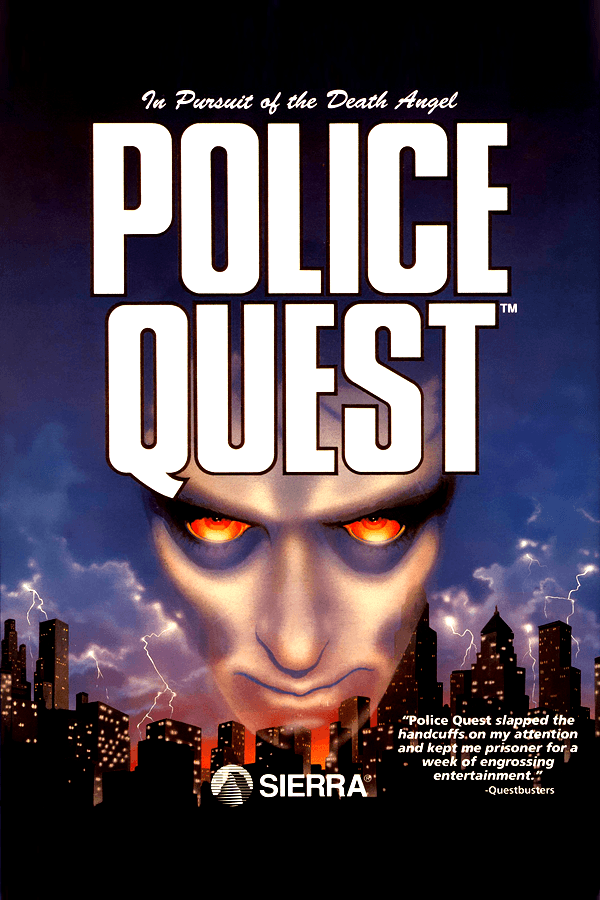

By forcing you to walk a full circle around your patrol car before turning the key, Police Quest: In Pursuit of the Death Angel proved that real police work was far more unforgiving than standard video game heroics.
By the late 1980s, Sierra On-Line founder Ken Williams wanted a police simulator that felt grounded in genuine law enforcement work rather than Hollywood action tropes. He brought in Jim Walls, a retired California Highway Patrol officer, to design an adventure game structured strictly around department regulations. The result was a game where typing or clicking the wrong procedural response during a routine traffic stop could get officer Sonny Bonds killed or fired faster than any monster in a dungeon.
When Sierra decided to update their early catalog for modern PC hardware, they brought the town of Lytton back with a complete face-lift. The 1992 release replaced the old text parser with Sierra's SCI 1.1 engine, introducing 256-color VGA graphics, hand-drawn background art, point-and-click icon navigation, and expanded FM and MIDI sound tracks that gave Sound Blaster card owners a proper kick of brass and synth.
The narrative plays out as a grounded police procedural. You play as patrol officer Sonny Bonds on the night beat, handling hit-and-run investigations, ticketing reckless drivers, and arresting drunk motorists. As you clear routine calls, a wider narcotics conspiracy emerges involving a kingpin known as the Death Angel, real name Jesse Bains, forcing Bonds from daily patrol duties directly into dangerous undercover work.
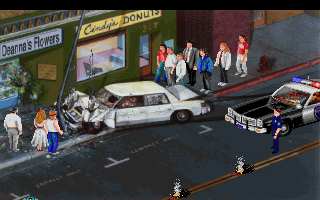
In the original 1987 release, driving through Lytton meant manually steering your vehicle using the arrow keys down grid-like streets, turning on a dime at high speeds or crashing instantly into walls. The 1992 version completely reworked this system into an automated navigation display. You select a destination on the city map or click turn icons, sparing players the constant road deaths that plagued the original text-parser release.
The interface shift from typing commands like "get radio" or "check tires" to a context-sensitive icon bar changed the pacing completely. You click the eye icon to inspect items, the hand icon to open doors or grab evidence, and the talk icon to interview witnesses or question suspects. Dialogue was rewritten to fit the cleaner mouse-driven flow, making the procedural instructions easier to read while maintaining the official police tone.
Even with the mouse controls, the game still relies heavily on the physical reference material packed inside the original box. You are expected to look up real police radio codes in the physical manual to report traffic stops and dispatch calls correctly. Failing to memorize these codes or ignoring department handbook procedures will stall your investigation or result in administrative penalties.
Traditional adventure puzzles ask you to combine odd items in absurd ways, but this game demands that you strictly follow standard operating protocol. The difficulty comes from remembering every single step of administrative duty before taking action. If you fail to inspect your patrol car before leaving the station lot, a flat tire will end your career before you reach the first street corner.
The city jail provides one of the most famous fail states in early PC gaming. When you pull up to the booking facility with an arrested suspect, you must walk over to the wall lockers and secure your service firearm inside before stepping into the cell block. If you forget this step and walk through the door carrying your sidearm, the prisoner will overpower you, snatch your gun, and shoot you dead on the spot.
This strict adherence to protocol extends to every phase of the investigation. Forgetting to retrieve a hidden microphone pen from your office drawer before going undercover at the hotel will not kill you immediately, but it permanently soft-locks the finale when you reach the hotel casino later without the proper wire equipment.

The final act shifts from basic street patrol to high-stakes undercover work. To infiltrate the hotel gambling den where Jesse Bains runs his operations, Sonny Bonds must dye his hair blond and pose as a high-rolling gambler. This section changes the tone from quiet procedural administration to a tense, cautious sting operation inside a dark criminal den.
In the original 1987 version, players were forced to win a mandatory, drawn-out game of poker to gain access to the executive suites where Bains was hiding. Developers recognized how frustrating random card draws were for adventure game fans, so the 1992 remake made the poker mini-game optional, allowing players to bypass the card table and focus directly on setting up the bust with their wire gear.
Even during the undercover climax, the strict rule set never lets up. Drawing your gun half a second too late, missing the cue to transmit audio to your backup team, or forgetting to check your disguise in the hotel bathroom mirror will lead to an instant bullet and a game-over screen. It demands trial, error, and frequent save files.
This 1992 remake published by Sierra On-Line, Inc. was one of the stranger experiments from Sierra's VGA catalog. While the strict protocol rules and instant game-over triggers feel harsh compared to modern adventure standards, they create real tension that standard inventory puzzles simply cannot match. Every action carries real consequences, and reaching the end requires discipline rather than wild guessing.
What holds up best is the painted VGA art and the detailed simulation of small-town police work. What fails to hold up is the hidden soft-lock design, which can force you to restart from an early save file if you missed a single piece of evidence hours prior. Despite that flaw, anyone who enjoys classic detective fiction or historical Sierra releases should try a full playthrough with the manual nearby.
You can play Police Quest: In Pursuit of the Death Angel free in your browser right now, with nothing to install and no setup required. Load up the MS-DOS game, grab your police manual codes, and see if you can manage to book your very first drunk driver without getting shot in the jail lobby on your very first shift.
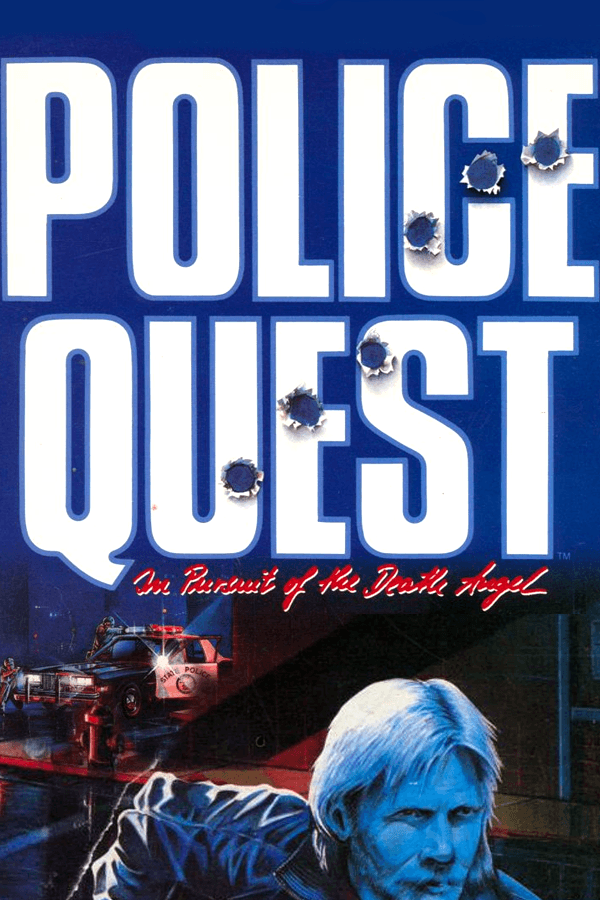
By forcing you to walk a full circle around your patrol car before turning the key, Police Quest: In Pursuit of the Death Angel proved that real police work was far more unforgiving than standard video game heroics.
By the late 1980s, Sierra On-Line founder Ken Williams wanted a police simulator that felt grounded in genuine law enforcement work rather than Hollywood action tropes. He brought in Jim Walls, a retired California Highway Patrol officer, to design an adventure game structured strictly around department regulations. The result was a game where typing or clicking the wrong procedural response during a routine traffic stop could get officer Sonny Bonds killed or fired faster than any monster in a dungeon.
When Sierra decided to update their early catalog for modern PC hardware, they brought the town of Lytton back with a complete face-lift. The 1992 release replaced the old text parser with Sierra's SCI 1.1 engine, introducing 256-color VGA graphics, hand-drawn background art, point-and-click icon navigation, and expanded FM and MIDI sound tracks that gave Sound Blaster card owners a proper kick of brass and synth.
The narrative plays out as a grounded police procedural. You play as patrol officer Sonny Bonds on the night beat, handling hit-and-run investigations, ticketing reckless drivers, and arresting drunk motorists. As you clear routine calls, a wider narcotics conspiracy emerges involving a kingpin known as the Death Angel, real name Jesse Bains, forcing Bonds from daily patrol duties directly into dangerous undercover work.
In the original 1987 release, driving through Lytton meant manually steering your vehicle using the arrow keys down grid-like streets, turning on a dime at high speeds or crashing instantly into walls. The 1992 version completely reworked this system into an automated navigation display. You select a destination on the city map or click turn icons, sparing players the constant road deaths that plagued the original text-parser release.
The interface shift from typing commands like "get radio" or "check tires" to a context-sensitive icon bar changed the pacing completely. You click the eye icon to inspect items, the hand icon to open doors or grab evidence, and the talk icon to interview witnesses or question suspects. Dialogue was rewritten to fit the cleaner mouse-driven flow, making the procedural instructions easier to read while maintaining the official police tone.
Even with the mouse controls, the game still relies heavily on the physical reference material packed inside the original box. You are expected to look up real police radio codes in the physical manual to report traffic stops and dispatch calls correctly. Failing to memorize these codes or ignoring department handbook procedures will stall your investigation or result in administrative penalties.
Traditional adventure puzzles ask you to combine odd items in absurd ways, but this game demands that you strictly follow standard operating protocol. The difficulty comes from remembering every single step of administrative duty before taking action. If you fail to inspect your patrol car before leaving the station lot, a flat tire will end your career before you reach the first street corner.
The city jail provides one of the most famous fail states in early PC gaming. When you pull up to the booking facility with an arrested suspect, you must walk over to the wall lockers and secure your service firearm inside before stepping into the cell block. If you forget this step and walk through the door carrying your sidearm, the prisoner will overpower you, snatch your gun, and shoot you dead on the spot.
This strict adherence to protocol extends to every phase of the investigation. Forgetting to retrieve a hidden microphone pen from your office drawer before going undercover at the hotel will not kill you immediately, but it permanently soft-locks the finale when you reach the hotel casino later without the proper wire equipment.
The final act shifts from basic street patrol to high-stakes undercover work. To infiltrate the hotel gambling den where Jesse Bains runs his operations, Sonny Bonds must dye his hair blond and pose as a high-rolling gambler. This section changes the tone from quiet procedural administration to a tense, cautious sting operation inside a dark criminal den.
In the original 1987 version, players were forced to win a mandatory, drawn-out game of poker to gain access to the executive suites where Bains was hiding. Developers recognized how frustrating random card draws were for adventure game fans, so the 1992 remake made the poker mini-game optional, allowing players to bypass the card table and focus directly on setting up the bust with their wire gear.
Even during the undercover climax, the strict rule set never lets up. Drawing your gun half a second too late, missing the cue to transmit audio to your backup team, or forgetting to check your disguise in the hotel bathroom mirror will lead to an instant bullet and a game-over screen. It demands trial, error, and frequent save files.
This 1992 remake published by Sierra On-Line, Inc. was one of the stranger experiments from Sierra's VGA catalog. While the strict protocol rules and instant game-over triggers feel harsh compared to modern adventure standards, they create real tension that standard inventory puzzles simply cannot match. Every action carries real consequences, and reaching the end requires discipline rather than wild guessing.
What holds up best is the painted VGA art and the detailed simulation of small-town police work. What fails to hold up is the hidden soft-lock design, which can force you to restart from an early save file if you missed a single piece of evidence hours prior. Despite that flaw, anyone who enjoys classic detective fiction or historical Sierra releases should try a full playthrough with the manual nearby.
You can play Police Quest: In Pursuit of the Death Angel free in your browser right now, with nothing to install and no setup required. Load up the MS-DOS game, grab your police manual codes, and see if you can manage to book your very first drunk driver without getting shot in the jail lobby on your very first shift.
aka Police Quest 1 VGA · Police Quest 1 VGA remake · Police Quest I · Police Quest I VGA · Police Quest: In Pursuit of the Death Angel (VGA)
How Police Quest: In Pursuit of the Death Angel (SCI Remake) is played — the keys the game listens to, grouped by what they do.
Highlighted keys are mapped — hover or tap one to see what it does.
Driving and actions are handled via the point-and-select icon interface or keyboard shortcuts. The SCI remake replaces text parser input with direct mouse/icon interaction.
The on-screen keyboard and gamepad mapping the browser player uses on a phone, a tablet or a controller, as opposed to the real keys above. $PRO members make their own in the player and share them here; anyone can pick one to play with.
Cheat codes, console commands and memory pokes for Police Quest: In Pursuit of the Death Angel (SCI Remake) — each one verified and attributed.
Sign in to submit
Police Quest: In Pursuit of the Death Angel1987
Police Quest: In Pursuit of the Death Angel (SCI Remake)1992 · this pageCheat codes, console commands and memory pokes for Police Quest: In Pursuit of the Death Angel (SCI Remake) — each one verified and attributed.
Sign in to submit
Police Quest: In Pursuit of the Death Angel1987
Police Quest: In Pursuit of the Death Angel (SCI Remake)1992 · this page