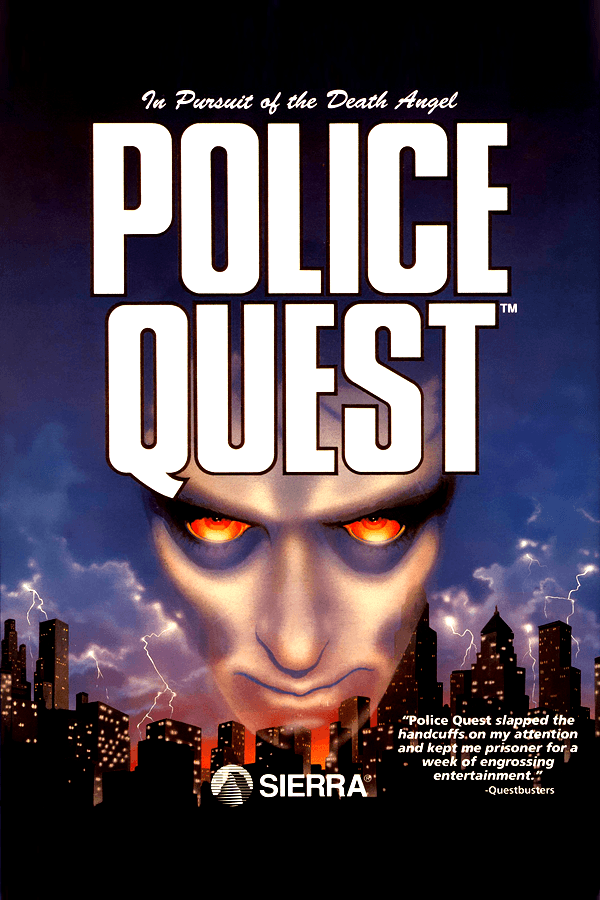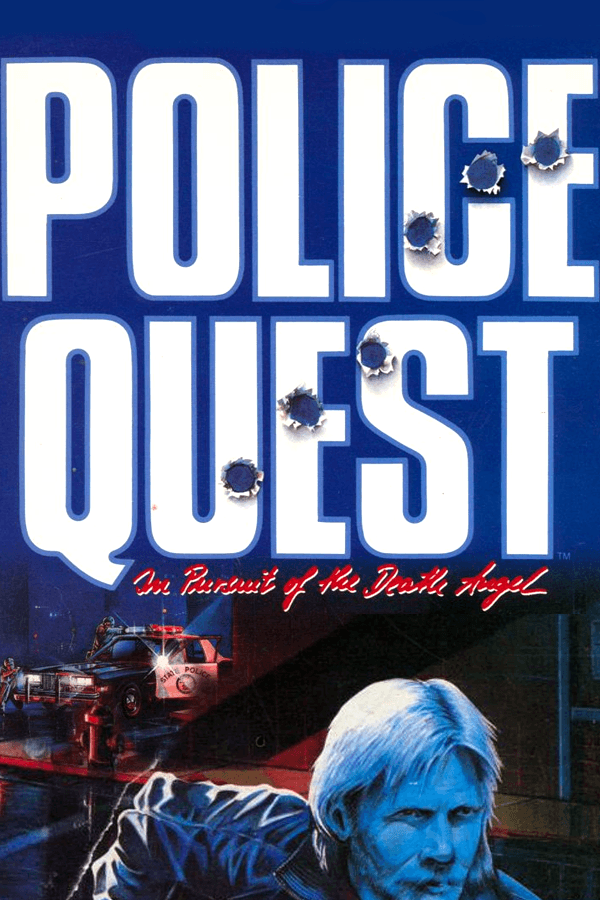
Police Quest: In Pursuit of the Death Angel
Before you ever catch a drug lord in Police Quest: In Pursuit of the Death Angel, you will get fired for failing to inspect your squad car tires or shot in the back for forgetting to lock up your firearm.
Procedural realism makes Lytton an unforgiving town
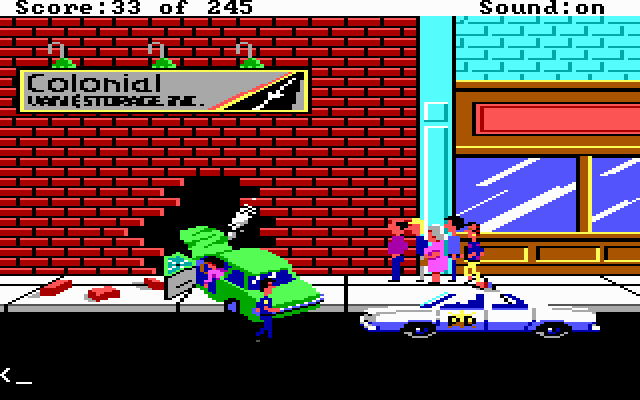
You begin your shift as officer Sonny Bonds in the fictional town of Lytton, California. You walk into the station, pull your nightstick and pen from your locker, and head out to the parking lot. If you walk straight to your cruiser and drive away, your shift ends immediately in failure because you forgot to check the tires. The game expects absolute obedience to real police handbooks before it lets you tackle serious crime.
This emphasis on standard protocol separates the title from other graphic parser titles of its day. Instead of rubbing weird inventory items together to unlock doors, you spend your time filling out traffic citations and writing down license plate numbers in your notebook. The bundled manual served a real purpose: you had to read it cover to cover to survive basic traffic stops without getting blown away by an angry commuter.
Why Police Quest: In Pursuit of the Death Angel traded magic for a rulebook
The concept came directly from real emergency services experience. Sierra On-Line co-founder Ken Williams met retired California Highway Patrol officer Jim Walls in 1985 and pitched the idea of a realistic simulation. Walls had been recovering from a shooting incident and channeled his career experience directly into the design. Sierra designers Roberta Williams and Mark Crowe helped shape the story, while programmers Al Lowe, Greg Rowland, and Scott Murphy brought the mechanics to life.
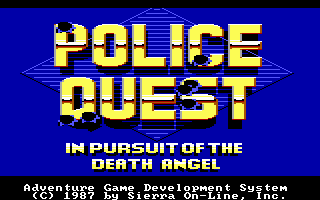
Built using Sierra's original Adventure Game Interpreter engine, the project stood apart from fantasy questing. Players used keyboard commands to type instructions while navigating Sonny using arrow keys across third-person screens. Margaret Lowe supplied the internal speaker music, framing the dry hum of station life and highway patrols. Sierra On-Line, Inc. created a dark horse in their lineup that prioritized law enforcement precision over bizarre logic puzzles.
Top-down driving and the constant threat of instant failure
When you step into your cruiser, the view switches from a third-person walking camera to a top-down road map. Driving requires actual manual steering through city streets while obeying traffic signals and watching for speeders. If you turn down a one-way street the wrong way or ignore a red light, you crash your vehicle and face a game over screen. Driving fast only becomes allowed when you flip on your siren during emergency dispatches.
The steering mechanics feel stiff, and one wrong press on the arrow keys can slam your cruiser directly into a building wall. High-speed vehicle chases require fast reflexes and clear spatial planning. These arcade sequences added tension, but they also frustrated players who came expecting a quiet detective investigation. You can read more about the development background on Wikipedia.
From routine patrol to going undercover against Jesse Bains
After handling fender benders, drunk drivers, and street disputes, Sonny earns a promotion to the Narcotics division. The narrative focus shifts from routine highway patrols to tracking down Jesse Bains, a dangerous drug kingpin known as the Death Angel. The cases get heavier, requiring you to carefully collect evidence, handle suspect handoffs, and manage wiretaps without breaking chain of custody protocols.
The climax requires Sonny to dye his hair, pose as a high roller in a local hotel casino, and infiltrate Bains' inner circle. Even during deep undercover work, procedure dictates whether you survive. Forget to grab your radio extender, fail to calibrate your piece, or leave key evidence back at the station, and the mission ends in disaster. A successful detective run relies on an exact order of operations:
- Conducting a full walkaround of your squad car before every shift.
- Securing sidearms in the station gun locker before entering booking cells.
- Reading suspects their Miranda rights immediately upon arrest.
- Logging physical evidence inside the property locker with proper paperwork.
Strict rules created a distinct experience in 1987
Retrospective critics often call out the game for being dry and overly strict, but that rigidity gives the town of Lytton its real weight. In many adventure games from 1987, you could trial-and-error your way through puzzles by clicking everything in your backpack. Here, acting out of order gets you killed or fired. Booking a prisoner without stowing your gun in the hallway locker leads directly to the arrestee taking your weapon and shooting you on the spot.
That tension makes standard tasks feel surprisingly serious. When you pull over a suspect, your hands get sweaty because you know one wrong command sequence ends the run. The graphics push simple EGA palettes, but the text parser forces you to think like an actual officer on duty. The formula proved popular enough to spawn a long-running series that sold over 850,000 copies across its first four entries.
Ready to start your shift in Lytton
You can play Police Quest: In Pursuit of the Death Angel MS-DOS game directly right here in your browser. When the prompt opens, grab your gear from the locker, step out into the parking lot, and remember to walk around your cruiser to check those tires before turning the key.