

Wizardry V: Heart of the Maelstrom
aka BS Wizardry 5 · ウィザードリィ5 · ウィザードリィV 災渦の中心
Rate this game
- Played
- A lot
To survive Wizardry V: Heart of the Maelstrom, you do not just map eight floors of chaotic, shape-shifting dungeon; you pack a dedicated Bishop back in town just to identify cursed junk without wiping out your main squad.
Wizardry V: Heart of the Maelstrom breaks the old grid
The fifth entry in Sir-Tech's flagship franchise stopped treating dungeons like neat, square grids of isolated monster encounters. Designed by David W. Bradley and Andrew C. Greenberg, the game reworked the series' underlying framework to allow massive, non-square mazes, interactive non-player characters, and tactical distance ratings for weapons.
Your goal seems standard enough on paper: create a six-man party in the town of Llylgamyn, head down into the Temple of Sages, and rescue the Gatekeeper, who has been trapped deep within the Maelstrom by the sorceress SORN. Achieving that target requires navigating complex physical spatial puzzles that go far beyond finding secret doors. To reach the deepest chambers, you end up doing ridiculous tasks like finding a Rubber Duck to prevent your party from drowning in deep water, or hunting down suit cards to appease four Card Lords waiting on the eighth level.
The combat itself demands much tighter positioning than previous entries in the role-playing series. Front-line fighters hold the line while back-row characters use polearms or ranged weapons to strike safely, and Thieves can finally vanish into the shadows to land devastating backstabs. Classic high-level spells like the TILTOWAIT nuke return to bail you out when forty enemies drop on your party at once, but raw damage output is rarely what keeps you alive during a long crawl.
Where the maze bites back
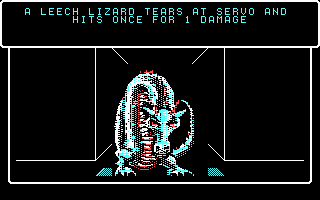
The 1988 DOS release is notorious for punishing minor mistakes with permanent consequences. Without casting the DUMAPIC spell constantly, you have zero in-game visual map, meaning progress depends entirely on keeping a physical sheet of graph paper next to your keyboard. One step into an invisible teleporter trap can send your party straight into solid stone, instantly erasing your progress and killing the entire squad.
The dungeon also introduces anti-magic zones that carry bugs capable of disabling your spellcasting across entire levels once triggered. Couple that with high encounter rates and status ailments like poison that tick down health rapidly while you try to navigate back up to town, and every dive becomes an exercise in risk management. When high-level loot comes in unidentified, smart players leave a dummy Bishop character sitting safely back at the tavern; you let him test the mystery gear, and if it turns out to be cursed, you simply delete the character and start over rather than paying a fortune to uncurse a main party member.
Reviewers at the time were split on whether the depth justified the friction. Writing for Computer Gaming World in early 1989, Dennis Owens considered the game a major step forward for the series, even as he lamented how often you had to swap floppy disks on original home computer releases. Dragon Magazine was similarly positive, rating it 4 out of 5 stars. Yet long-time fans still shudder at the visual monotony, as every floor renders using the same repetitive stone textures, turning late-game navigation into a test of mental endurance.
How Bradley changed Sir-Tech's flagship formula
What many players did not realize when they unboxed the game was that its story did not start life as a sequel at all. David W. Bradley had written the adventure as an independent project, but Sir-Tech Software, Inc. acquired the design and had him adapt the narrative into the established Llylgamyn lore. Though development finished around 1986, the publisher held the finished code back until 1988 to give Wizardry IV: The Return of Werdna room to breathe on store shelves.
That extra polish time went into building NPC interaction mechanics directly inside the maze. Instead of every monster attacking on sight, you encounter friendly travelers, merchants, and strange creatures mid-dungeon. You speak to them by typing actual text keywords into the parser, extracting clues and trading essential items rather than simply hacking through every door.
For players who love to grind, Murphy's Ghost sits right there on the early floors, offering a safe, repeatable fountain of experience points to get your fresh recruits up to speed. If you survive long enough to clear the campaign, deep secrets like the infamous hidden Level 777 await parties powerful enough to take on the engine's absolute toughest challenges.
Play Wizardry V: Heart of the Maelstrom online today
The reliance on strict level grinding and manual mapping means this entry will test your patience, but its expanded combat mechanics and dense dungeon puzzles make it one of the most rewarding party-builders of its decade. The missing convenience of modern RPGs is matched by a genuine sense of danger every time you open a door in the lower depths.
You can play Wizardry V: Heart of the Maelstrom free in your browser right now as an MS-DOS game, with nothing to install and no hardware configuration required. Fire up a fresh party, grab a sheet of physical graph paper, and see if you can solve the Maelstrom without getting your squad trapped inside a solid wall.
How Wizardry V: Heart of the Maelstrom is played — the keys the game listens to, grouped by what they do.
- Movement
- Action
- Interface
Highlighted keys are mapped — hover or tap one to see what it does.
Control map is incomplete as detailed shortcut mappings for every menu tier are omitted in surviving digitized reference documentation.
Players' controls
Touch and gamepad controls
The on-screen keyboard and gamepad mapping the browser player uses on a phone, a tablet or a controller, as opposed to the real keys above. $PRO members make their own in the player and share them here; anyone can pick one to play with.
Make your own touch controlsPRO
- 1Open the editorSign in below, then pick what to make. The game starts with the editor open over it.
- 2Place your keysAdd keys and drag them where your thumbs rest, or map a controller's buttons. Test plays the game with them; Save keeps them, and you play with them from then on.
- 3Share themShare them right after saving in the game, or name and share them here. Players vote, and the best become this game's controls for everyone.
Go PROSee how it worksSign in+20 XP for sharing · +50 XP if yours become the game's own
- The game's own controlsKeyboardGamepadWhat every player starts with.In use
2 screenshots
From the archive
No gameplay video yet
No gameplay video for Wizardry V: Heart of the Maelstrom yet. Sign in to add one.
No reviews yet
Tell the community what you think of Wizardry V: Heart of the Maelstrom. Reviews are public and tied to your username.
No archived manuals for Wizardry V: Heart of the Maelstrom yet
No manuals archived for this title yet. Sign in to upload the first scan.
Cheat codes, console commands and memory pokes for Wizardry V: Heart of the Maelstrom — each one verified and attributed.
Sign in to submitNo cheats yet for this title
Know a working cheat, poke or trainer? Add it with the button above. Moderators check every entry before it goes live.
No archived soundtrack for Wizardry V: Heart of the Maelstrom yet
No soundtrack archived for this title yet. Sign in to upload the first rip.
No save states for Wizardry V: Heart of the Maelstrom yet
No save states for this title yet. Sign in to share one.
Discussions
Sign in to post- Threads0
- Total posts0
- Online now6
Community · Wizardry V: Heart of the Maelstrom
Who's contributing, and what's new
- Reviews0
- Threads0
- Uploadsapproved0
- Contributors0
Recent activity